
These Marsupials Were Thought Extinct for 6,000 Years. Scientists Found Them Alive in Remote Rainforest
Published March 13 2026, 8:22 a.m. ET
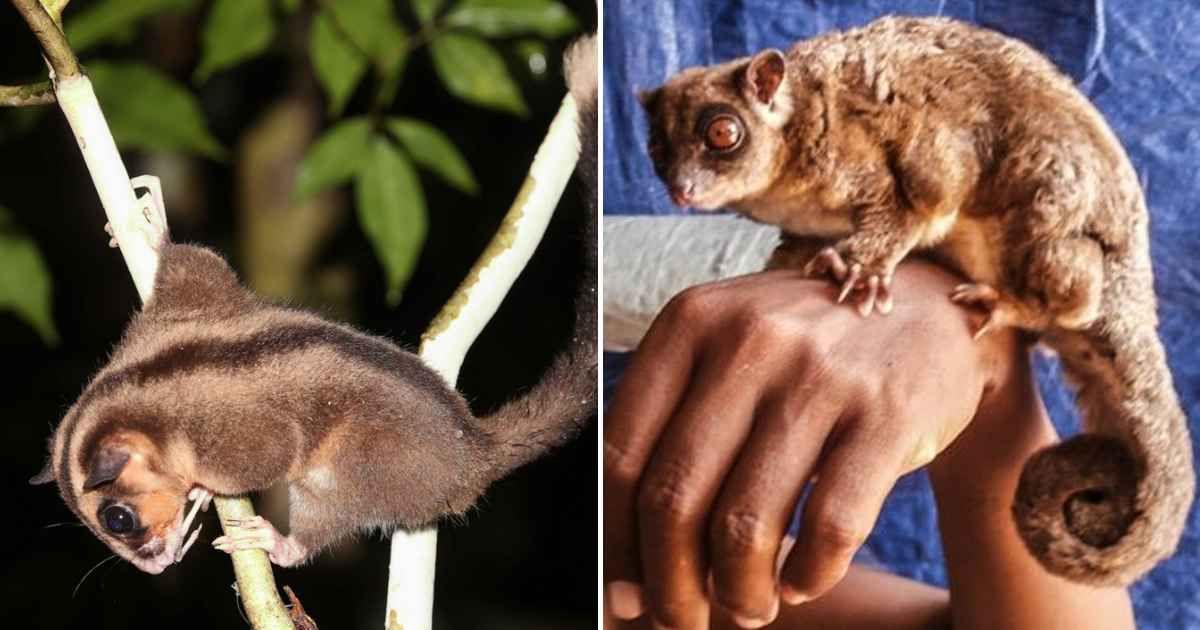
(L-R) pygmy long-fingered possums (Dactylonax kambuayai) and the ring-tailed glider (Tous ayamaruensis) (Cover Image Source: (L) Wikimedia Commons/Carlos Bocos; (R) Arman Muharmansyah/Australian Museum)
With no trace for 6,000 years, scientists presumed two marsupial species extinct. But, surprise! All this time, the creatures have been living in the remote rainforests of Western New Guinea, away from the hustle and bustle. The details of the discovery, published in Records of the Australian Museum, revealed that the identified marsupials were pygmy long-fingered possums (Dactylonax kambuayai) and the ring-tailed glider (Tous ayamaruensis). Both marsupials, now categorized under the Lazarus species, were found living in the remote rainforests on the Vogelkop Peninsula of New Guinea. Animals belonging to the Lazarus taxon 'appear' to come back from their presumed death, living healthy lives despite being considered extinct. Such species are only recorded in fossil history, which makes the 'rediscovery' even more thrilling.
"The discovery of one Lazarus taxon, even if thought to have become extinct recently, is an exceptional discovery," lead researcher Tim Flannery, an Australian Museum Distinguished Visiting Fellow, said in a statement. "But the discovery of two species, thought to have been extinct for thousands of years, is remarkable," he added. The pygmy long-fingered possum has bold stripes on its fur that make it stand apart. That isn't the only unique feature that the tiny marsupial possesses. It also has one unusually long finger on each hand, which is almost twice as long as the next largest finger. According to the researchers, the species' last known existence dates back to before the Ice Age in Australia, the period during which several iconic megafaunas were lost.
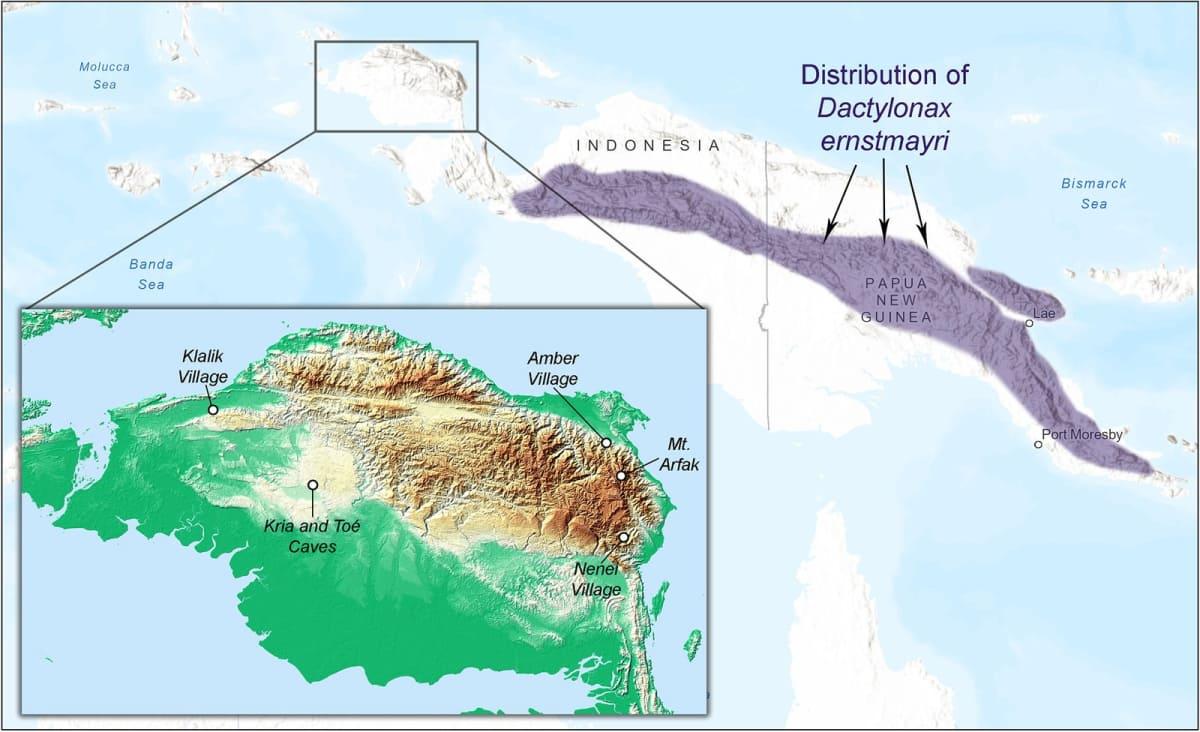
Distribution map of the pygmy long-fingered possum, Dactylonax kambuayai, in Vogelkop localities.
The second species discovered was the ring-tailed glider. A species that's not only the closest living relative to the Australian greater glider but also represents the first newly described genus of New Guinean marsupial since 1937. They measure smaller compared to their Australian counterpart and possess a strong tail and unfurred ears. Similar to other gliders, this species also nests within the hollows of trees. Moreover, the species has great cultural significance within local communities. “Referred to locally as Tous by some Tambrauw and Maybrat clans, the glider is a sacred animal," Rika Korain, a Maybrat woman and co-author of the paper, said. Considered a manifestation of ancestors’ spirits and central to an educational practice referred to as 'initiation,'" she revealed.
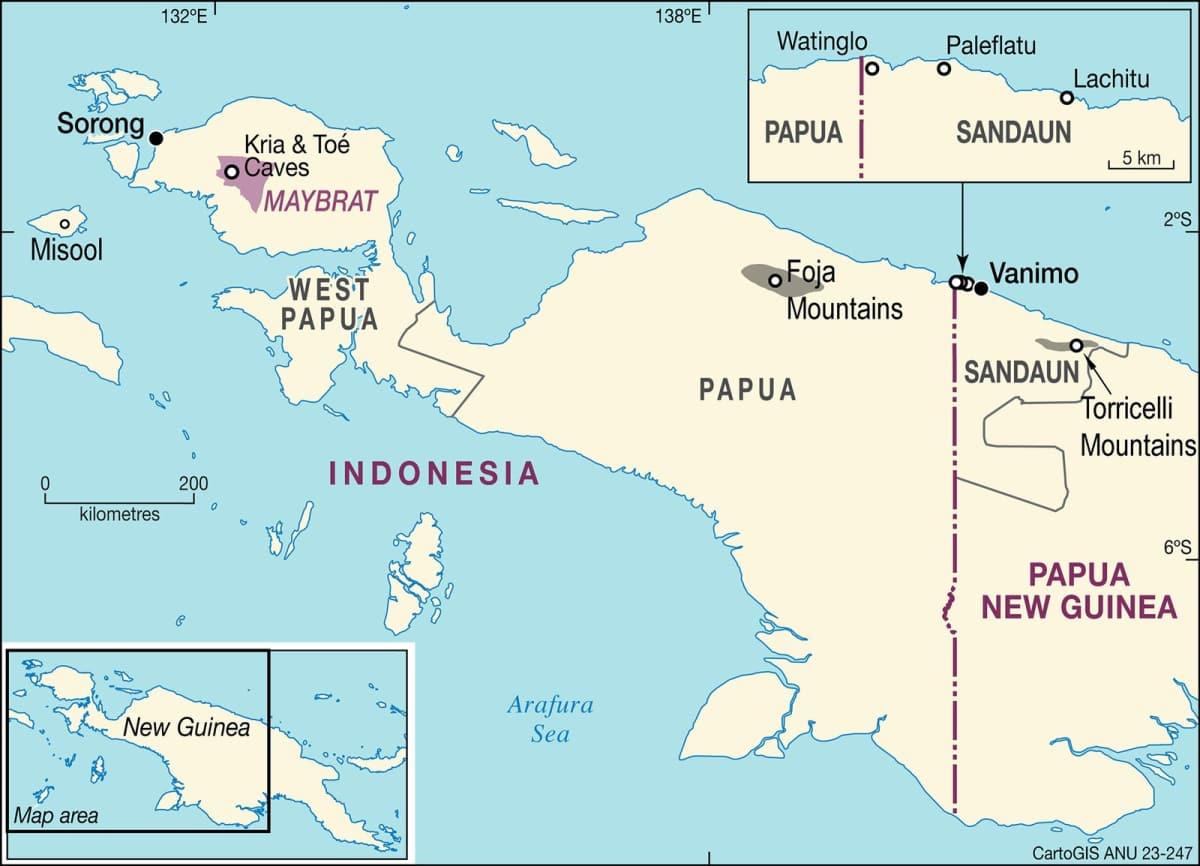
Map of the area where the ring-tailed glider, Tous ayamaruensis, is found.
Korain credited the Tambrauw clan for their indigenous knowledge on the species, without which the discovery would not have been possible. Dr. Aksamina Yohanita of the University of Papua also appreciated the collaborative efforts of researchers and the local communities in the identification of the elusive creatures. “I’m very proud that Papuan researchers contributed to these landmark discoveries and want to thank the people of the Misool, Maybrat, and Tambrouw regions who supported us in the field,” she added. The Global Wildlife Fund, with the Minderoo Foundation, supported the research, making it a success. After achieving the remarkable feat of identifying two Lazarus taxon species, the researchers aim to continue the conversation of species survival, extinction, and hidden habitats by raising new questions.
This research has also highlighted the importance of fossil records in discoveries. Species that apparently went extinct could have merely adapted to a new habitat, possibly in some of the remotest places of the world. Such discoveries help realize that there might be more species out there. "The findings underscore the critical importance of preserving these unique bioregions and the value of collaborative research in uncovering and protecting hidden biodiversity," Flannery pointed out.