
Hidden Camera Captures World’s Cutest Predator Once Thought Extinct Roaming in a U.S. Forest
Published Jan. 27 2026, 9:18 a.m. ET

A coastal martin captured in a forest.
Remote cameras hidden in a forest captured an elusive and rare mammal in its glory. The coastal marten, also known as the Humboldt marten, is a ferret-sized carnivore captured in an adorable pose, as it leans on a bark of a tree. The spotting was not a cute capture of a wild animal, but it was essential to know that the coastal marten exists despite nearly being pushed into extinction in the 20th century. These creatures were thriving until human activities, such as hunting, prompted their population to decline, so much so that they were presumed extinct. In 2022, scientists from Oregon State University's Institute for Natural Resources conducted a three-month-long project to detect coastal marten populations east of the northern California town of Klamath.
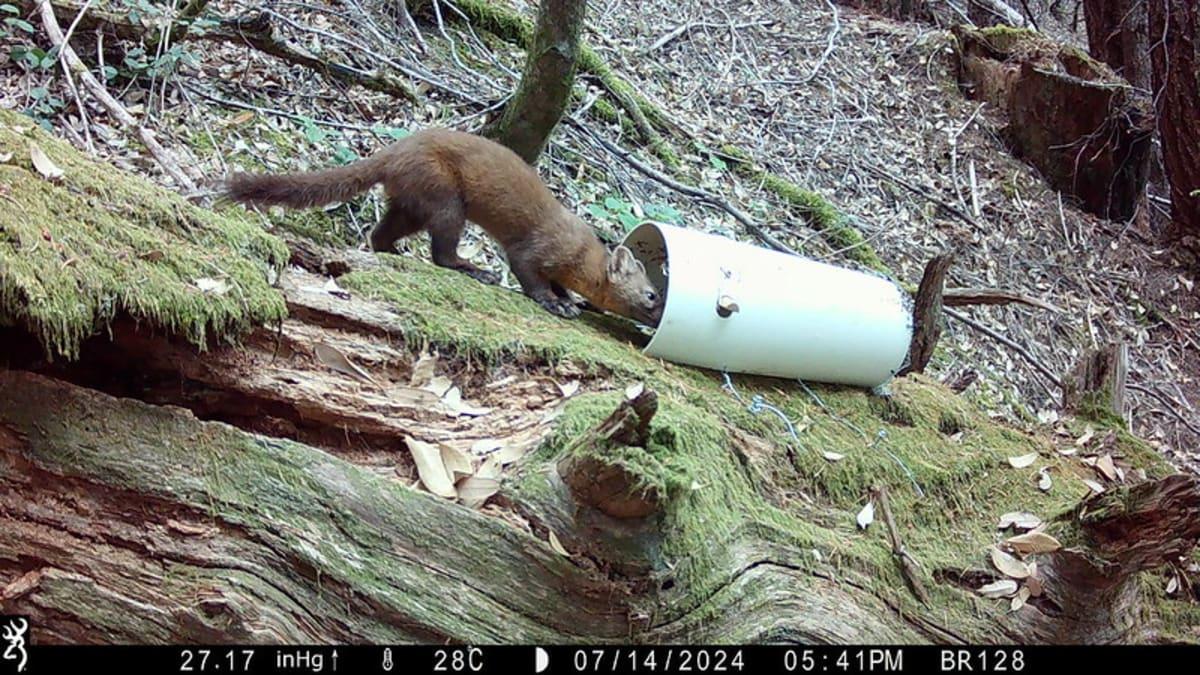
A coastal martin at the opening of a hair snare.
The research team used non-invasive tools, like hair snares and remote cameras, to conduct their study without disturbing the species’ natural habitat, according to Global Ecology and Conservation. Through genetic analysis of the collected hair samples, the team identified 48 different individuals, including 28 males and 18 females. The coastal marten population was spread across the entire study area and was found in larger numbers at elevations in forested ridgetops with consistent accumulation of winter snow. Low elevation regions, such as ravines and riparian areas within the coastal forest, were also found to be highly populated with coastal martens. The knowledge about areas densely populated with rare and tiny creatures is crucial for authorities to make informed decisions about conservation and land management.
Even though the creatures were found in considerable numbers, they are still threatened by the changing climate. “Coastal martens like forests with old-growth characteristics and those types of forests are being threatened by the effects of climate change, including more frequent and severe wildfire, and certain forest management practices,” said OSU wildlife ecologist Sean Matthews. “Beyond that, there’s a lot we don’t know about this species, including information as basic as what forests do coastal martens still occupy, how many martens are there, and are these populations increasing?” The species was listed as threatened under the federal Endangered Species Act, making conservative efforts crucial at this stage. The marten population in northern California and southern Oregon is significantly small.
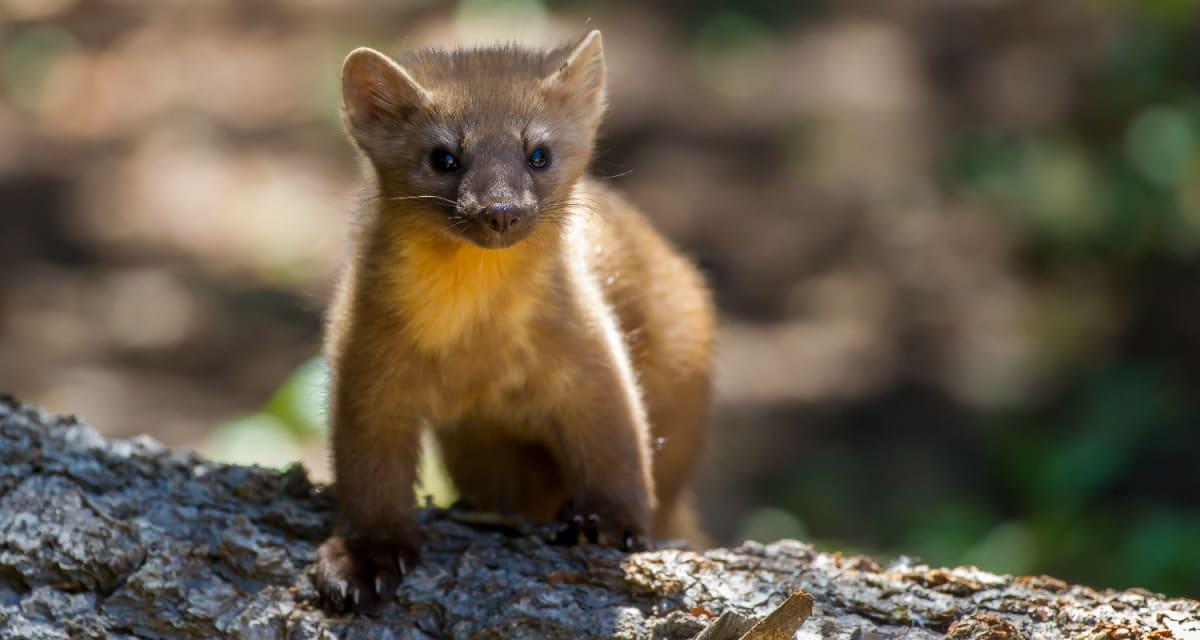
Adorable marten on a log, looking at the camera.
Whatever small number of them left in the region are exposed to road accidents, at risk of contracting rodenticides or other diseases, and might face habitat loss in the future. According to Matthews, the coastal martens are some of the most “adorable animals” that roam the Pacific Northwest forests. However, when it comes to the value of their fur, people do not pay attention to their cute features. It becomes all about the business, and these creatures are drained to their last drop in the aftermath. They were believed to be extinct long ago, until a small population resurfaced in the coastal woods of northern California in 1996.
“Martens tend to select forest stands with greater than 50% canopy cover and lots of large-diameter trees, snags, and hollow logs,” said study lead and OSU faculty research assistant Erika Anderson. “Structural complexity with coarse woody debris helps them hunt and also provides cover from predators and competitors.” Anderson revealed that during the 30-year-long conservation efforts, the experts realized that the distribution and demography of the marten population are heavily dependent on forest conditions.