
This Button-Sized Animal Was Once Written off as Extinct. Years Later, Conservation Changed Its Fate
Published Feb. 9 2026, 7:18 a.m. ET

The greater Bermuda snail (Poecilozonites bermudensis) officially saved with help from Chester Zoo conservationists
On the outskirts of western England, inside the storybook town of Cheshire, lately the zookeeper Katie Kelton from the Bug Team has been busy chopping lettuce, sweet potatoes, and carrots, not to prepare a party buffet, but to feed some tiny button-sized creatures resting and reproducing in plastic trays. Dubbed Bermuda snails (Poecilozonites bermudensis), these teeny spiral-shelled creatures were once thought to be lost forever from the North Atlantic Archipelago. In 2014, a flicker of hope emerged. In a damp and overgrown alleyway in Hamilton, some of these snails were spotted clinging to the machines of an air-conditioning unit. The water drops oozing from the machines had created an optimized survival environment for them.
The Bermuda government handed over the last few survivors to Chester Zoo, challenging the staff to multiply them. The snails were brought to the zoo, screened for parasitic infections, fattened up with nutrients, and then released in the wild, each with a parting gift of a body marker so scientists could continue keeping an eye on them.
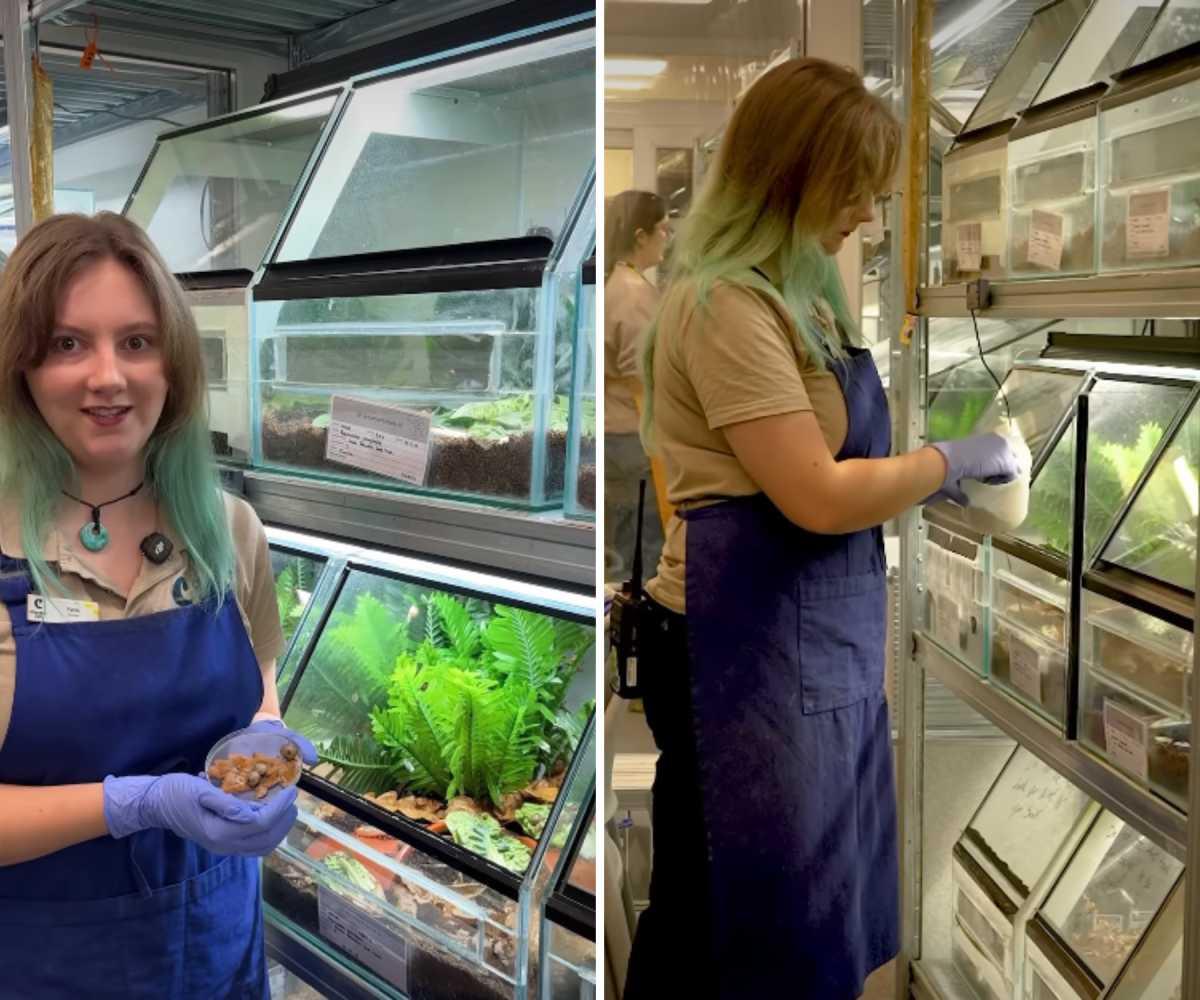
Keeper Katie Kelton from the Bug Team of Chester Zoo working on the Bermuda snail restoration project
In a new study soon to be published in Oryx, the International Journal of Conservation, researchers are celebrating their success story. The team has worked hard to laboriously reverse the dwindling snail population. Since 2019, millions of snails have been bred inside the zoo, and more than 100,000 snails have been released in the wild. The recovery has been hailed on IUCN’s “Reverse the Red” day, which is a global initiative to reverse the biodiversity loss and rebuild the biosecurity. This project is being conducted side-by-side with other nature regeneration projects led by the government.
At one point in time, decades ago, the snails were abundant in the environment. But with intensifying global heating, they started disconnecting and losing their optimal habitat. To make matters worse, predators like the rosy wolf snails and carnivorous flatworms were reintroduced in the area. These predators ate them up. Following the little thread of hope offered by 2014, conservationists plunged into the restoration efforts. After years of effort, the population is finally declared safe from extinction. The team describes it as a “landmark moment” and a “once in a career” experience. Six hundred miles from the nearest mainland in an archipelago in the North Atlantic Ocean, six colonies of snails have successfully established themselves.
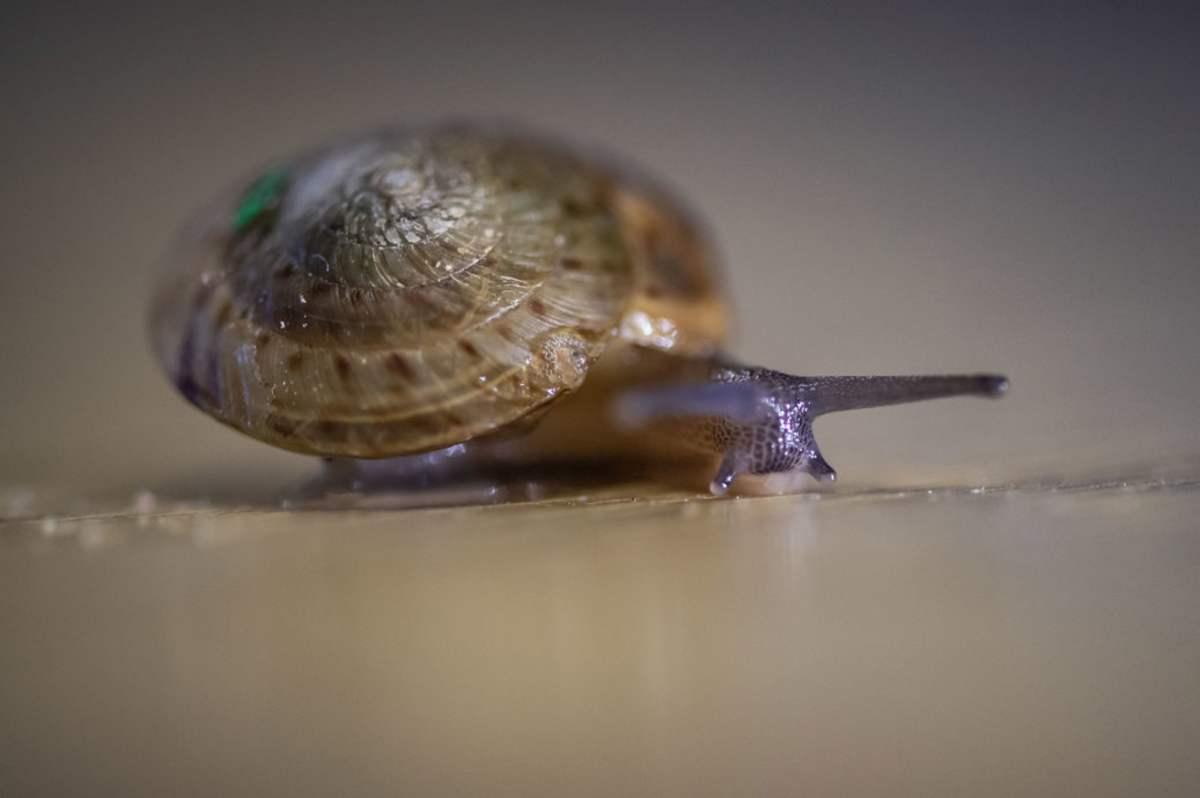
The greater Bermuda snail is a tiny, button-sized snail once thought to be extinct
Dr. Gerardo Garcia, Animal & Plant Director at Chester Zoo, describes this as an “incredibly good feeling.” She added that it is very rare for a team to be able to announce that, having brought animals into human care and released them, their work is done. “The fact the snails are firmly established in six areas is massive," Garcia exclaimed. To carry out the whole procedure, the team utilized animal husbandry programs by breeding snails in specially designed pods at the zoo, creating the best conditions for multiplication. After the population reproduced, they painstakingly released them into the protected woodland habitats.
Gerardo described the process of finding the reintroduction areas “like a war game” where the expanding population was represented by flags on a map. “It has been extremely gratifying to be involved with this reintroduction program. It is remarkable to think we only began with less than 200 snails and have now released over 100,000,” remarked Dr. Mark Outerbridge, a wildlife ecologist at the Department of Environment and Natural Resources in Bermuda.
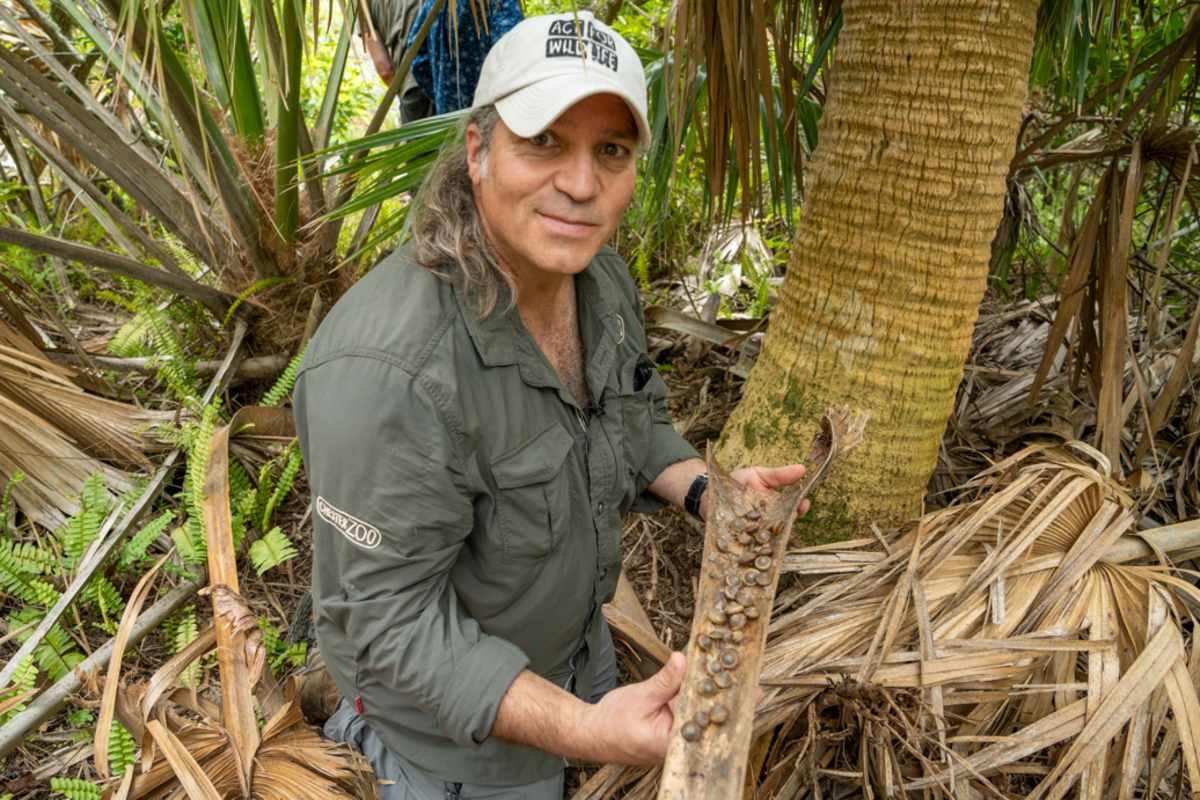
Dr Gerardo Garcia in the field taking part in the reintroduction of the greater Bermuda snail
Tamás Papp, the invertebrates assistant team manager at Chester Zoo, said, “It’s every conservationist’s dream to help save a whole species—and that’s exactly what we’ve done,” per The Guardian. In conversation with IFLScience, Papp reflected on how this success story teaches us about the power of collaboration. "This scientific confirmation that we’ve saved them is testament to the role zoos can play in preventing extinction and in the power of collaboration and is something everyone involved will carry in their heart," Papp added.