
Mardi Gras Usually Creates Over 1,000 Tons of Waste. This Year, A Cleanup Crew Has Made It Greener
Published Feb. 20 2026, 9:23 a.m. ET

(L) Volunteers collect cans after the Mardi Gras carnival 2025; (R) Volunteers sorting through waste cans
There's a time of the year when people hop on the streets adorned with fancy masks, costumes, beads, and trinkets. As bright and colorful as the last day of the Carnival season might appear, the aftermath isn't as pleasant. In New Orleans, Mardi Gras can generate more than 1000 tons of plastic every year and about 1,123 tons of waste in recent years, as per the city's Sanitation Department. “It’s an environmental catastrophe,” said Brett Davis, who runs a nonprofit group, Grounds Krewe, as reported by The New York Times. New Orleans is especially sensitive to climate change because of frequent hurricanes and coastal erosion. Despite the vulnerable state, the weeklong celebrations of the carnival go on in full swing. The beads and baubles exposed in the environment might momentarily seem like jewels, bedazzling the city, but when they enter the trash, they are nothing more than plastic waste.

Volunteers assembling throw packets for the Mardi Gras carnival
However, Grounds Krewe, in coalition with other NGOs, city officials, and scientists, is trying to come up with a green solution to this larger-than-life street celebration. They are aiming to make the festivities as eco-friendly as possible, hoping to incorporate everything from reusable beads to reorienting the culture of Carnival in a way that prioritizes the environment. Apparently, the carnival has more downsides than simply plastic pollution. According to a 2013 study, 60 percent of Mardi Gras beads contain an unsafe amount of lead. The thousands of tons of beads released through the long celebration are found to have clogged catch basins that are useful for clearing floodwaters, as per another 2018 study.
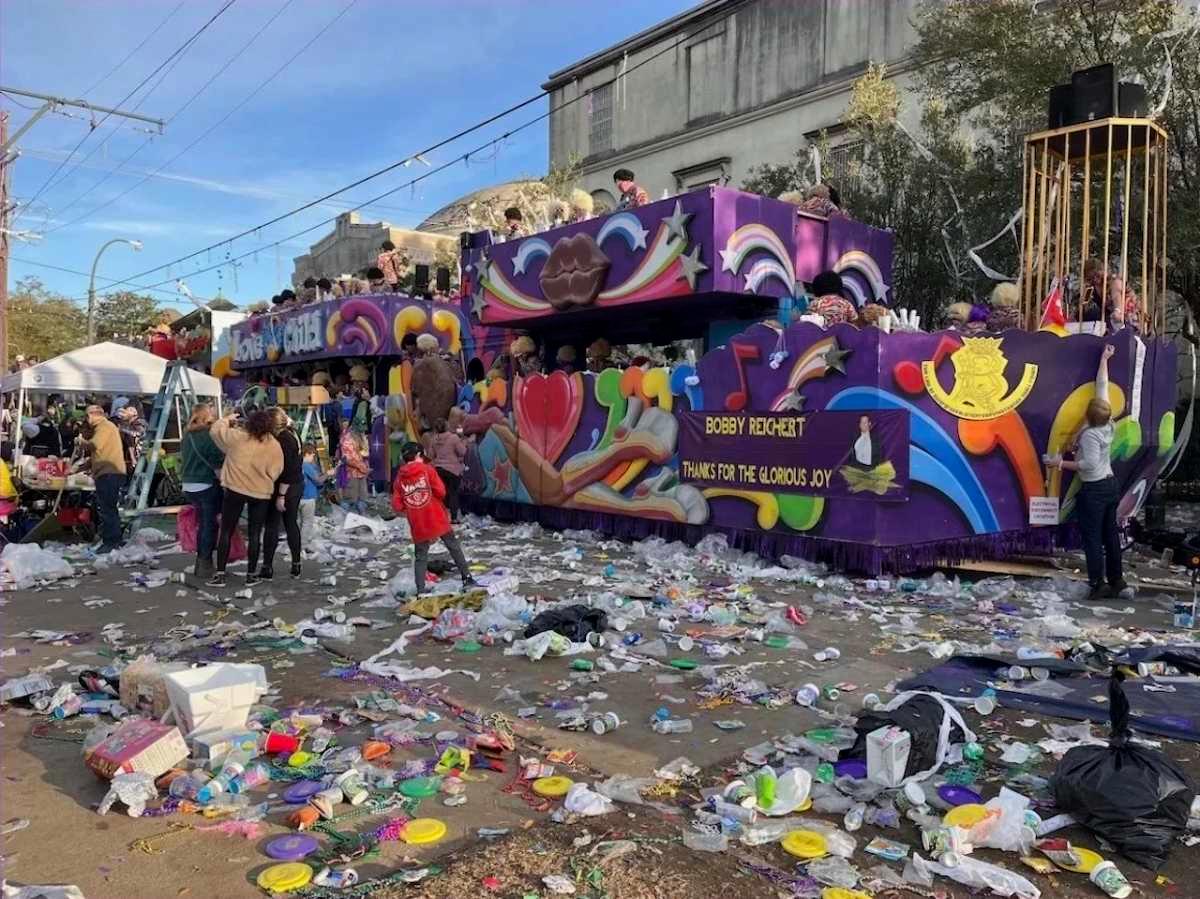
Mardi Gras generates more than 1000 tons of plastic every year
“The city used to measure the success of Mardi Gras based on the trash collected,” said Kevin Ferguson, the Chief of Staff and Deputy Mayor for the administration of New Orleans Mayor. “But there are a lot of reasons we have to make a change," he added. Mardi Gras's origin dates back to the 1920s, when social clubs that ran parades threw glass beads from floats. However, that didn't do as much damage to the environment as compared to what people witness today. Lydia Blackmore, a curator at the Historic New Orleans Collection, a museum and research center, revealed that Mardi Gras back in the day was “not nearly in the tonnage we have gotten to know.” Gradually the carnival turned from a harmless celebration to an event with an agenda.

Grounds Krewe volunteers showing recycled beads
After the 1970s, the inexpensive goods from China became readily available in the United States, and the festival became a marketing opportunity. Social groups began selling novelties and "throw packages" to their members. Since sponsors were never allowed for the carnival, these sales became an essential financial source over the years. Eventually, the carnival became a spectacle with fog machines, indie bands, and elaborate floats. “When I was a kid, we caught everything that came off the floats. There was a big hoopla about who was going to get it. Now it’s a carpet, a river of waste," said Mr. Davis, who has been contributing to the efforts of Mardi Gras clean-up since 2018.
However, thanks to the efforts of the Recycle Dat! coalition group, there's been an improvement. In 2025, the team collected 74,500 pounds of bottles, cans, plastic, and parade throws, much more than the collection of the previous two years. “It’s very ethical recycling,” said Don Bates, the owner of Osprey Initiative, a company in the coalition. “Everything we sort has a final destination already identified," he added.