
Scientists Copy Nature’s Trick to Invent Material That Could Eliminate ‘Forever Plastic’
Published Jan. 6 2026, 4:01 a.m. ET

Chemist Yuwei Gu (at left) and graduate student Shaozheng Yin employ a gel permeation chromatography machine to measure the size of polymers and how they break down.
The cell walls of plants, the silk spun by spiders, the bark of rubber trees, the hardy outer shells of insect bodies; all these and a dozen other items found in nature are composed of a substance called polymers, a natural cousin of plastic. Like pearls or beads strung in a necklace, polymers are formed by chains of monomers that bond together with water molecules. When the time is right, microbes colonize these polymer strands and release enzymes that loosen the water molecules and separate monomers, releasing them for nutrient recycling.
However, the polymers found in non-natural objects, such as Tupperware lunchboxes or Ziploc bags, don’t disintegrate as smoothly as those found in naturally occurring polymers. Why so? The dilemma jolted scientist Yuwei Gu into a spiral of questions while he was hiking on a quiet trail of New York’s Bear Mountain State Park. In a study published in Nature Chemistry, he documented this curious conflict he experienced and how he found a way out of it, also inventing a new type of plastic. The mystery lies in chemistry.
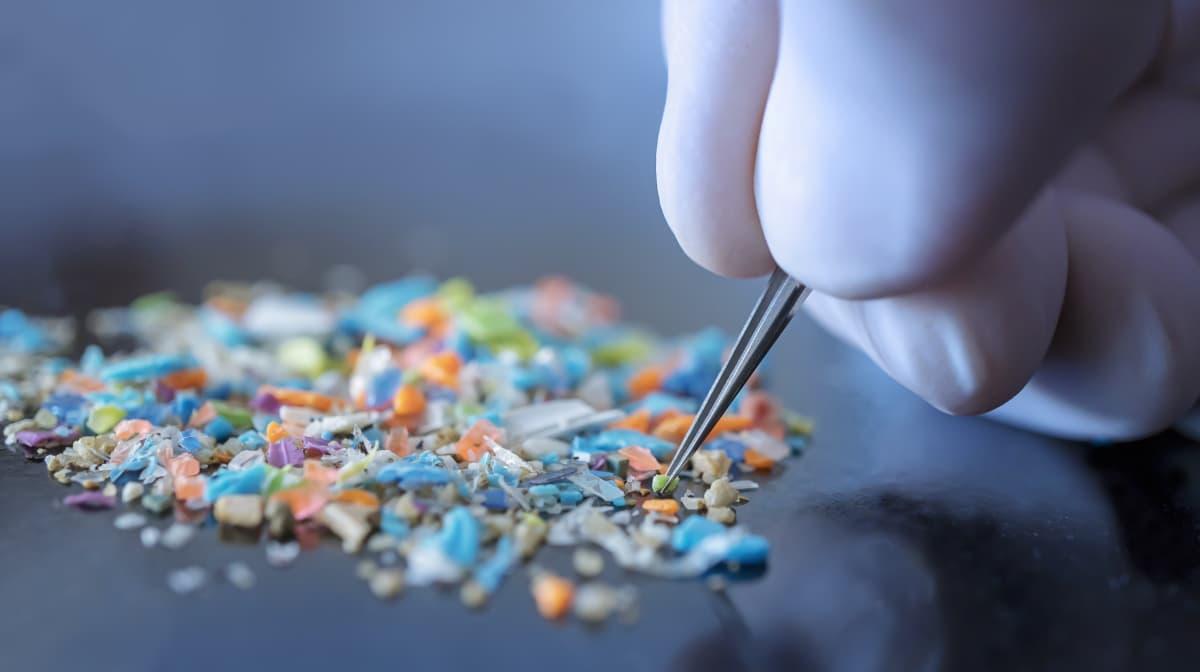
Macro shot of a person with medical gloves and tweezers inspecting a pile of microplastics.
While clambering along the wooded trails, Gu’s attention was suddenly pulled away to a sight he might have seen tons of times but left unnoticed. This time, however, the jarring sight was eye-opening. Bottles of plastic were littering the trails. Some were drifting in a lake. A nest of questions materialized in his head, and he headed back to his team at Rutgers University to resolve the precarious dilemma. “If nature can build polymers that serve their purpose and then disappear, Gu reasoned, perhaps human-made plastics could be made to do the same,” he speculated.
Gu's idea was to imitate the “structural trick” that nature uses to create the precise chemical geometry of polymers, to design a new type of synthetic polymer. Eventually, he and his team became convinced of the idea. The goal was to create a synthetic polymer that was programmed for self-destruction when the time is right. Typically, polymers are formed by long chains of repeating molecular units, or monomers. The chemical bonds between monomers are glued together, much like a network of steel cables. The stronger the bonds, the tougher the plastic. However, at the right time, these polymers surrender to these natural forces and break down for ecological recycling, and so do the polymers found in DNA, RNA, proteins, and cellulose.
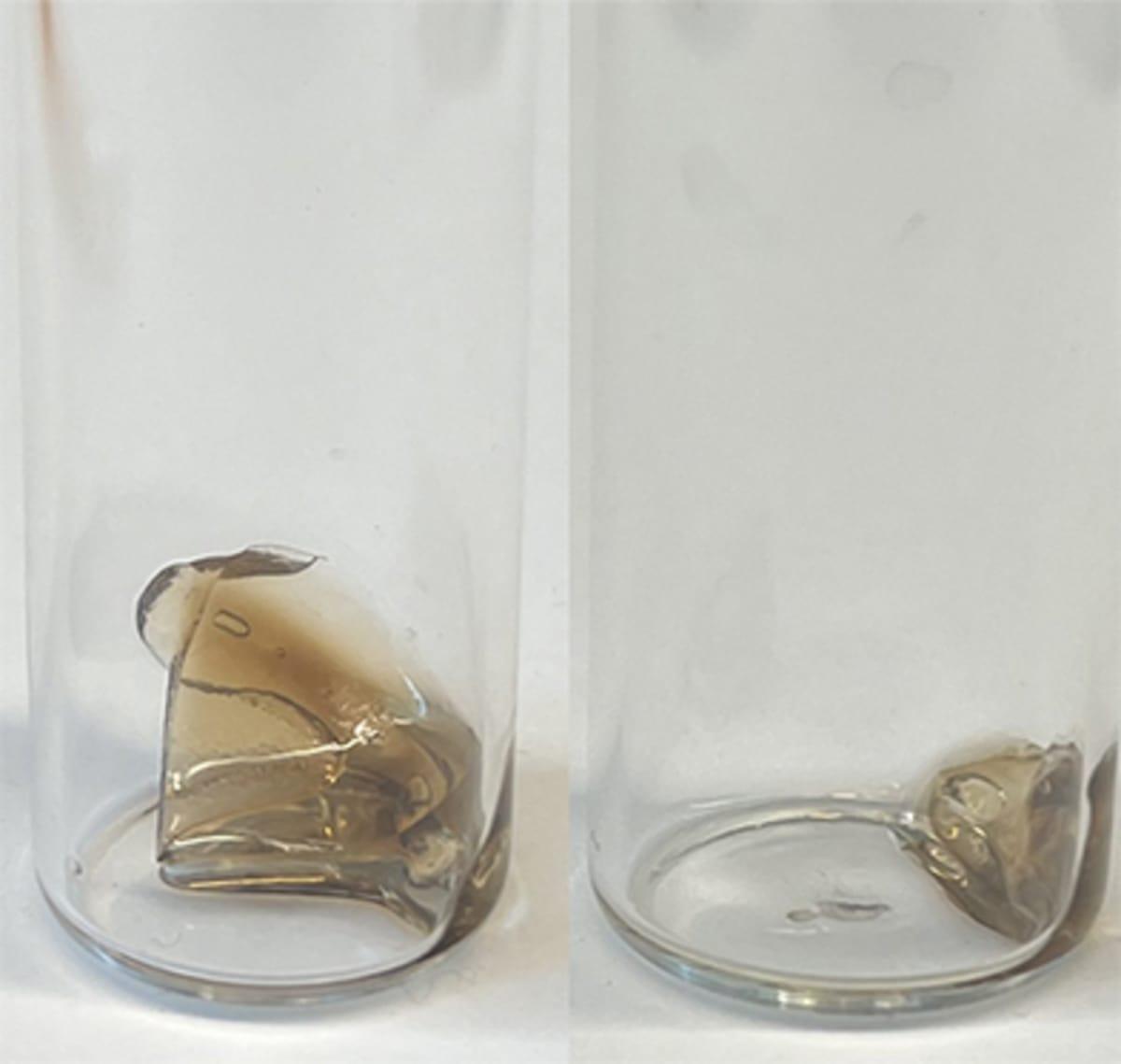
A sample of poly(dicyclopentadiene) plastic made with the Rutgers scientists’ process using degradable chemistry. The chemical structure is designed so the plastic starts breaking down on its own within a few days at normal room conditions. On the left is the original sample; on the right is the same sample after 18 hours in the open air.
Cells in the human body use the same mechanism to recycle protein molecules. DNA unzips itself from time to time for replication and cloning. Gu copied nature's chemical program by engineering tiny “weak points” into the polymer backbone and controlling their geometrical orientation and positioning, all this without changing the chemical identity of the material. The synthetic polymer was programmed to break itself down under everyday triggers and dismantle entirely under extreme influences of heat and mechanical stress.
Much like folding a paper along a line so it tears cleanly, Gu’s team targeted the geometry of the polymer’s chemical bonds. They added tiny stress concentrators that the molecules would use to break down the plastic. This method, Gu reflected, is a practical, chemistry-based way to redesign these materials so they can still perform well but then break down naturally afterward.
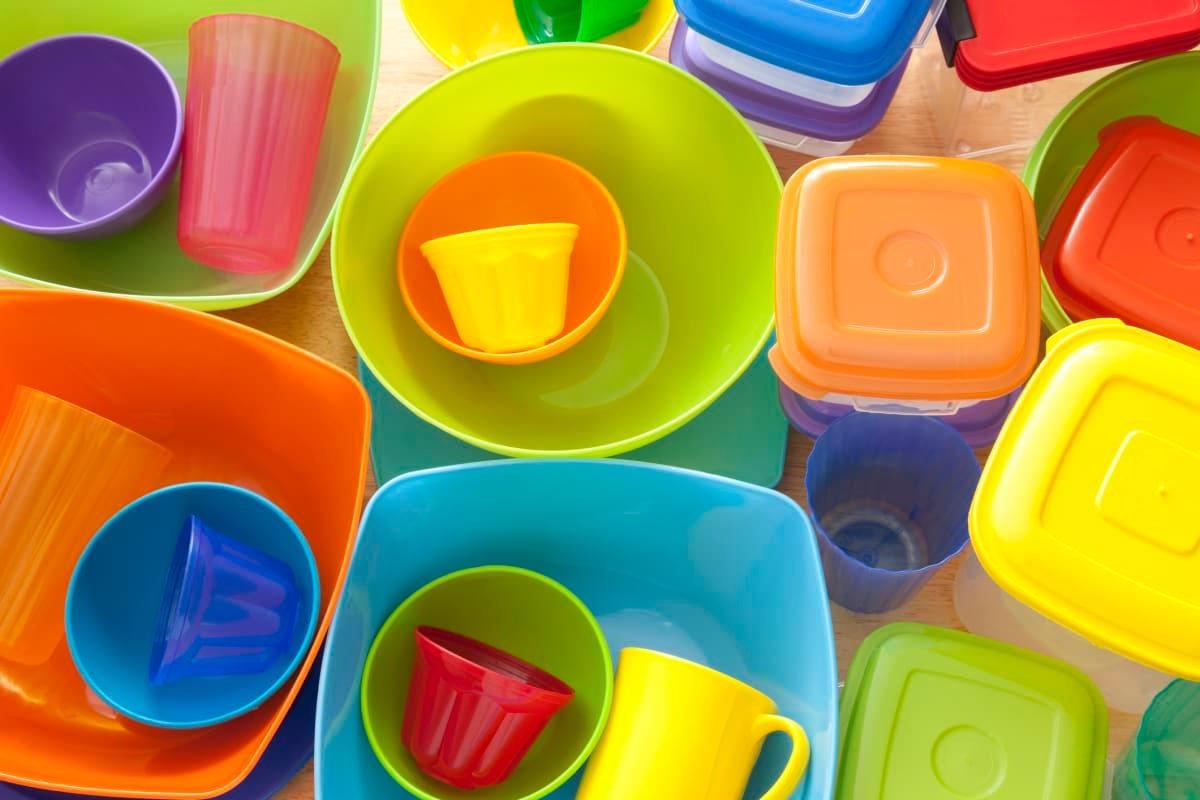
Plasticware including colorful tubs, mugs, bowls, bins, and boxes
The utility of this research goes way beyond the global plastic crisis. Imagine ordering food in a plastic package and seeing the plastic unspool itself in a few days. Imagine seeing the towering heaps of plastic bottles gradually disappear from your nearest landfill, because it doesn’t take them hundreds of years anymore to decompose. With Gu’s invention, the world could become a much better place, the air cleaner, the oceans safer, and humans happier.