
This Seemingly Cozy Winter Activity is Responsible for More Than 20% of America’s Air Pollution
Published Jan. 26 2026, 4:41 a.m. ET

Man adding wood to fireplace
On a cold winter evening, tossing another log or wood chip into the fireplace sounds cozy. But this fleeting moment of coziness chars up the atmosphere with traces of smoke that are invisibly choking up the planet. The billows of smoke spiraling from the tongues of glowing embers and leaping upwards blanket the skies in a disorientating haze of toxic fog scientists call “air pollution.”
For years, scientists have been investigating emissions from vehicle exhaust, power plants, smokestacks, construction sites, and wildfires to dig up information about air pollution, but only recently they realized that they had been missing something vital. In a new study published in Science Advances, researchers from Northwestern University documented how woodburning is the dominant contributor to air pollution.
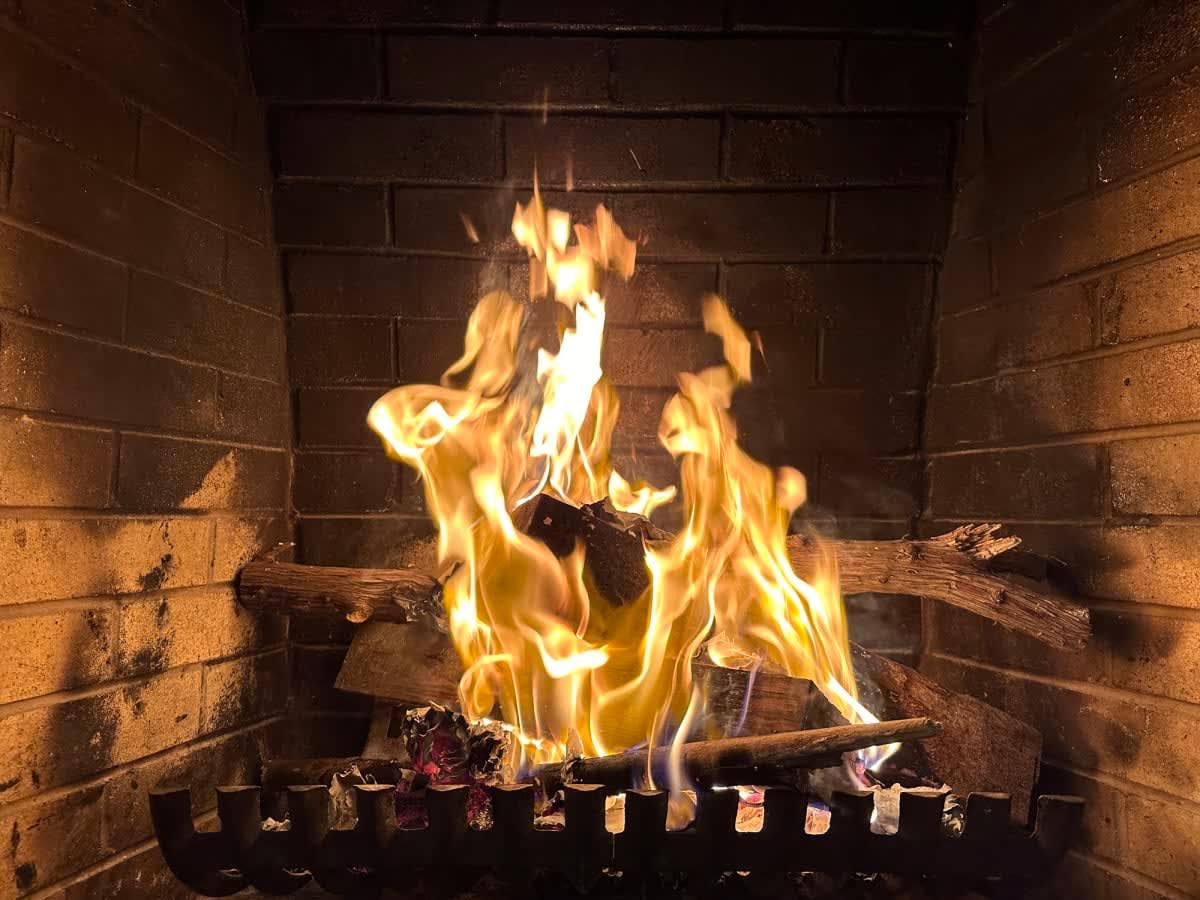
Wood logs burning in a fireplace
Each time you put a cookstove on a flame or set a matchstick to a stack of glossy papers, you unknowingly release a complex mix of tiny solid particles and liquid droplets into the air outside. Called “particulate matter (PM),” this mix is the same substance that is released through dust, soot, smoke, and pollen. Once these chemicals get liberated in the air, they hang around networking with the molecules of humidity, precipitation, and sunlight, becoming excited. The sweeping winds haul up these particles and carry them over long distances, concentrating them in “urban hotspots.”
Researchers proposed that by controlling Residential Wood Burning (RWB), we can also bring this air pollution under control. Nearly 2 percent of the homes in America, approximately one-fifth of the nation, suffer from amplified exposure to particulate matter, something which has caused nearly 8,600 premature deaths per year. Particularly, the urban and suburban communities are vulnerable to these dense emissions. Once the tiny airborne particles seep into the lungs or the bloodstream, they can trigger disease in the body, even causing death.

Woman coughing while engulfed in a haze of air pollution
To conduct the study, researchers collected RWB data from the National Emissions Inventory (NEO), the US Environmental Protection Agency’s detailed air pollution accounts. The data included estimates of national household surveys, housing data, climate conditions, and appliance types, with high-resolution atmospheric modeling. The models were designed to simulate how pollution moves through the air, with details for weather, wind, temperature, terrain, and atmospheric chemistry.
One of the study researchers, Daniel Horton, explained in a press release that wood-burning emissions enter the atmosphere based on meteorological touchpoints. Some emissions, he said, are primary pollutants like black carbon, while others are constituents and secondary species of particulate matter pollution. To map out the pollution-affected areas, Horton, lead researcher Kyan Shlipak, and other scientists divided the continental US into a 13 x 13 feet square grid.
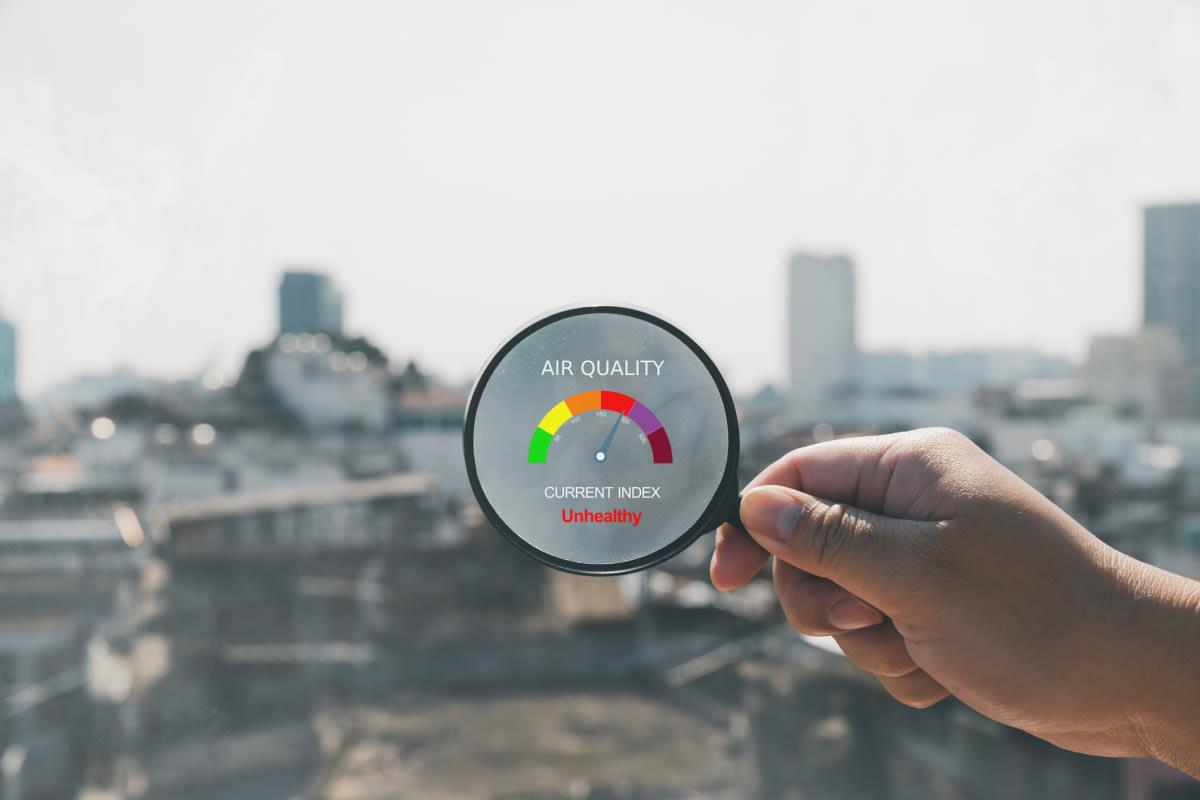
Person measuring Air Quality Index to track air pollution
For each square, they modelled the amount of pollution generated each hour, how pollution moves through the air, and where it accumulates or disperses over time. The grid enabled them to pinpoint the hotspots where pollution is concentrated. They ran the model twice, and several interesting observations emerged from the analysis. One observation, in particular, was related to the effects of pollution on people of color.
As Horton reflected, while a major portion of the RWB-based emissions comes from the suburbs, pollutants emitted into the air don’t typically stay put. When this pollution is transported through the winds over densely populated cities, people become susceptible to environmental stressors. Black people, especially, are more vulnerable to this risk. Shlipak suggests using alternative appliances to heat homes instead of burning wood. For instance, facilitating a home-heating system for cleaner burning and inculcating more smokeless solutions in day-to-day activities.