
Iran War Disrupts U.S. Farmers' Spring Planting as Fertilizers Run Short. Will This Affect Food Supply?
Published March 16 2026, 6:42 a.m. ET

A farm worker labors in a field near Arvin, California. California's Central Valley is one of the nation's most important agricultural and oil-producing areas.
It's been over two weeks since the U.S. and Israeli forces unleashed a joint attack on Iran. Now, the ripple effect of 'Operation Epic Fury' has reached the grassroots levels, affecting farmers and crop yields. Danger looms over this year's spring farming season as U.S. farmers are about 25% short of usual farming supplies, including fertilizer, according to The Fertilizer Institute, which represents the U.S. fertilizer supply chain, as reported by Reuters. Experts fear that the fertilizer shipment destined for the country might be rerouted to other destinations offering higher prices amid the war. In that case, the farming supplies will become more scarce, further impacting the food supply chain.
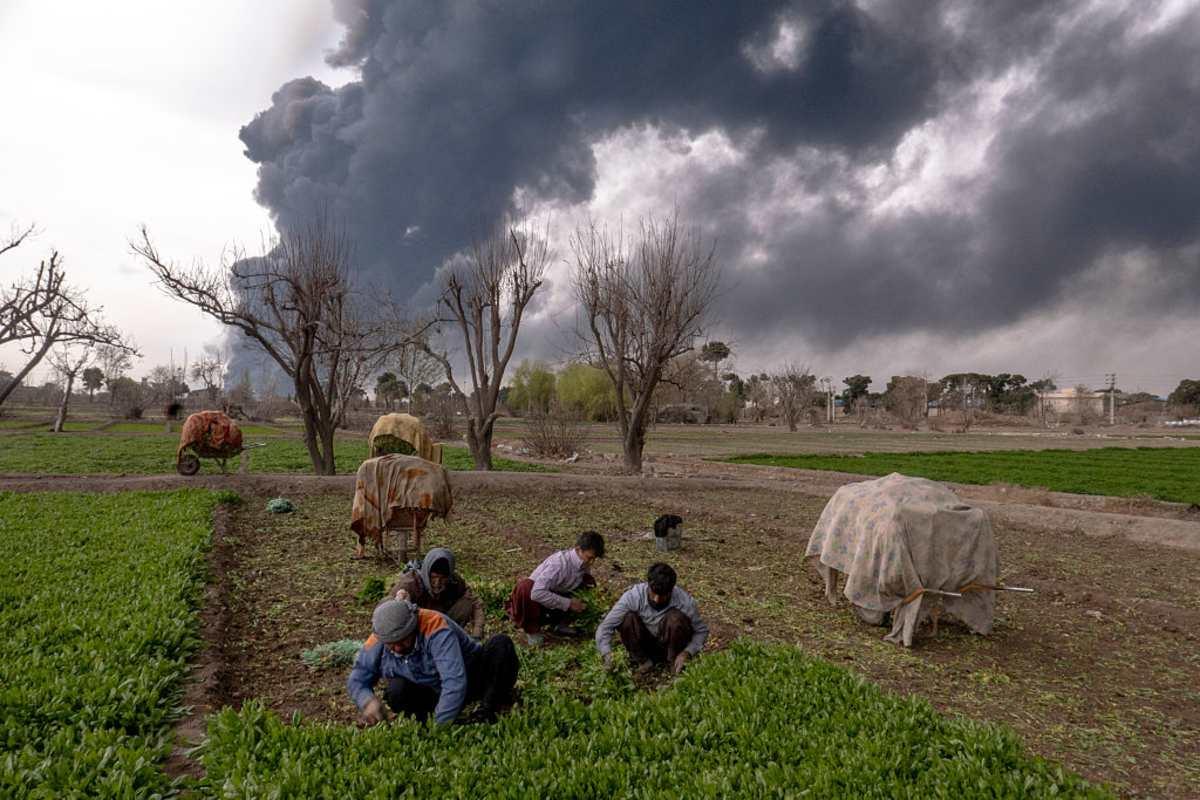
Farm workers harvest crops as smoke billows after overnight airstrikes on oil depots, March 8, 2026, in Tehran, Iran.
"Not only am I worried about incoming vessels being turned around to other, better-paying destinations, there's an argument to be made, if somebody was willing to go and buy up (supply on) barges, to load them onto a vessel and export it," said Josh Linville, a fertilizer market analyst at StoneX. The war has also affected one of the world's most essential trade routes, the Strait of Hormuz. John Newton of the American Farm Bureau Federation noted that about 40% to 50% of some of the most in-demand fertilizers in the world are transported through the aforementioned trade route. "The only thing prohibiting transit in the Strait right now is Iran shooting at shipping. It is open for transit, should Iran not do that," said Defense Department Secretary Pete Hegseth. Although Hegseth has assured that the U.S. military is fighting to keep the shipping lane open, continued attacks on the trade route can damage future transits.
In a letter, the American Farm Bureau Federation has warned that a disruption in fertilizer shipments could severely impact spring planting and crop production. The Strait of Hormuz is used to transport major fertilizers, including urea, ammonia, nitrogen, phosphate, and sulfur-based products. According to the group, if fertilizers become difficult to obtain or too expensive to purchase, the farmers might either reduce fertilizer use or postpone planting, which would directly affect the food supply chain in the U.S. "Not only is this a threat to our food security—and by extension our national security—such a production shock could contribute to inflationary pressures across the U.S. economy," the group wrote.
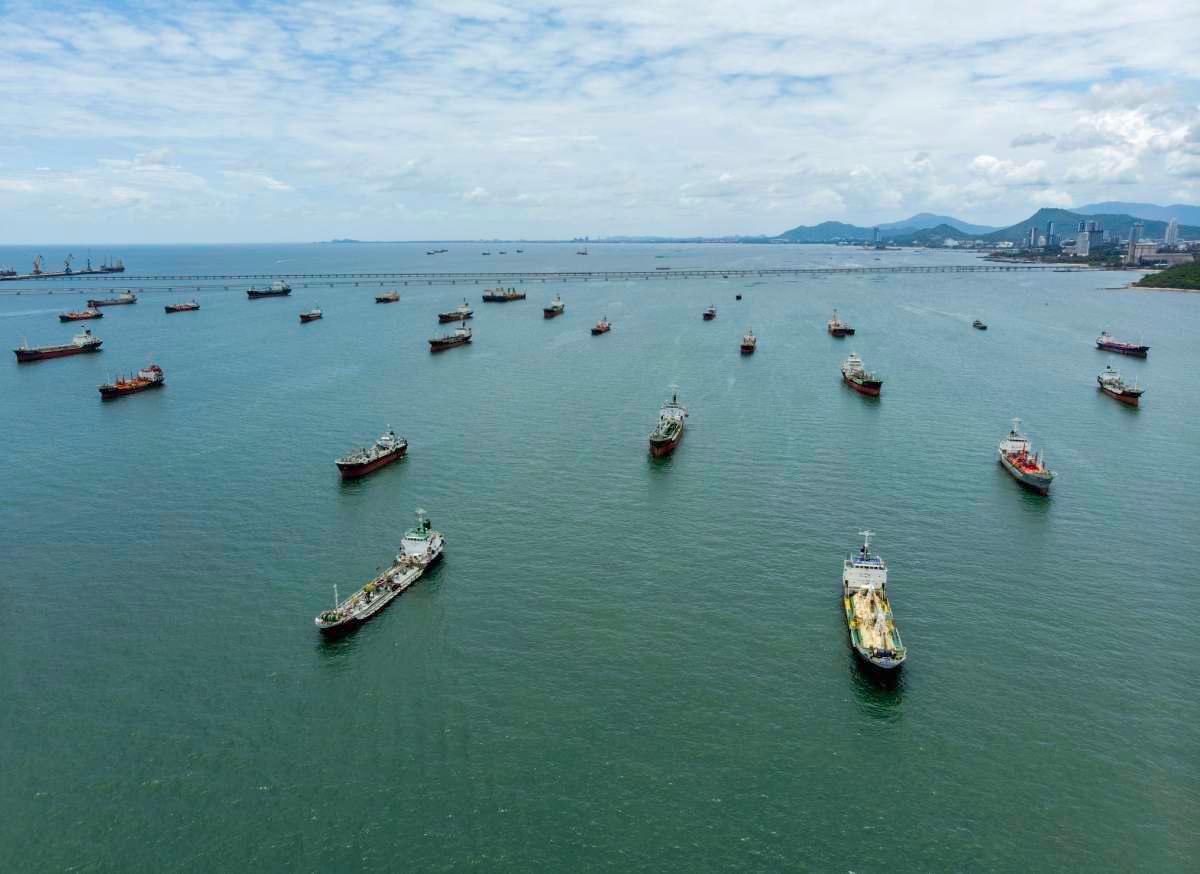
Aerial view of oil tankers and gas tankers being stranded after the closure of the Strait of Hormuz.
"There's still time for farmers to adjust. But the longer this conflict persists, the longer that strait remains closed, the greater the consequences can be," added Newton. Besides China, most countries don't have a strategic fertilizer reserve to fall back on. Moreover, the U.S. fertilizer dealer system doesn't hold stocks, leaving the country vulnerable to sudden shortages. Quick action to prevent disruptions in the U.S. fertilizer supply chain is the need of the hour. Failure to do so would continue farmers' struggle to grow crops and feed families across America. "We are deeply concerned that failure to act could lead to disruptions to the food supply chain not seen since 2022 when food price inflation reached 40-year highs," the group added.
U.S. Agriculture Secretary Brooke Rollins recently revealed that the Trump administration is "looking at every potential avenue" to prevent the price of fertilizer from soaring. The White House press secretary also hinted that the administration might waive the Jones Act, which is a century-old law that requires ships moving between ports in the U.S. to be made in America and operate with mostly an American crew.