
Toxic Black Rain Falls From Iran’s Smoke-Filled Skies, Causing Environmental Alarm. Could It Reach U.S.?
Published March 12 2026, 7:28 a.m. ET

Plumes of smoke rise over the oil depot tanks that were hit in Tehran, Iran, on March 8, 2026.
As the U.S. and Israeli forces continue their joint attack on Iran, the country is drowning in hazardous toxins. It began with explosions, towering plumes of smoke followed, and toxic "black rain" fell across the capital city of Tehran over the weekend. On March 8, several oil facilities across Iran were struck for the first time since the war began. Four oil facilities caught on fire, releasing tremendous amounts of smoke in the aftermath. A dense layer of black smoke had cloaked the city, with soot covering cars, streets, and even people's balconies. Talking about the thick smoke in the sky, Iran’s deputy health minister, Ali Jafarian, told Al Jazeera, "The whole city was dark until the afternoon." When the smoke-filled cloud ruptured, the rain that followed didn't bring relief but toxins. Not crystal clear, but dense black water droplets fell from the sky in Tehran, and locals reportedly complained about their eyes burning and their throats aching.
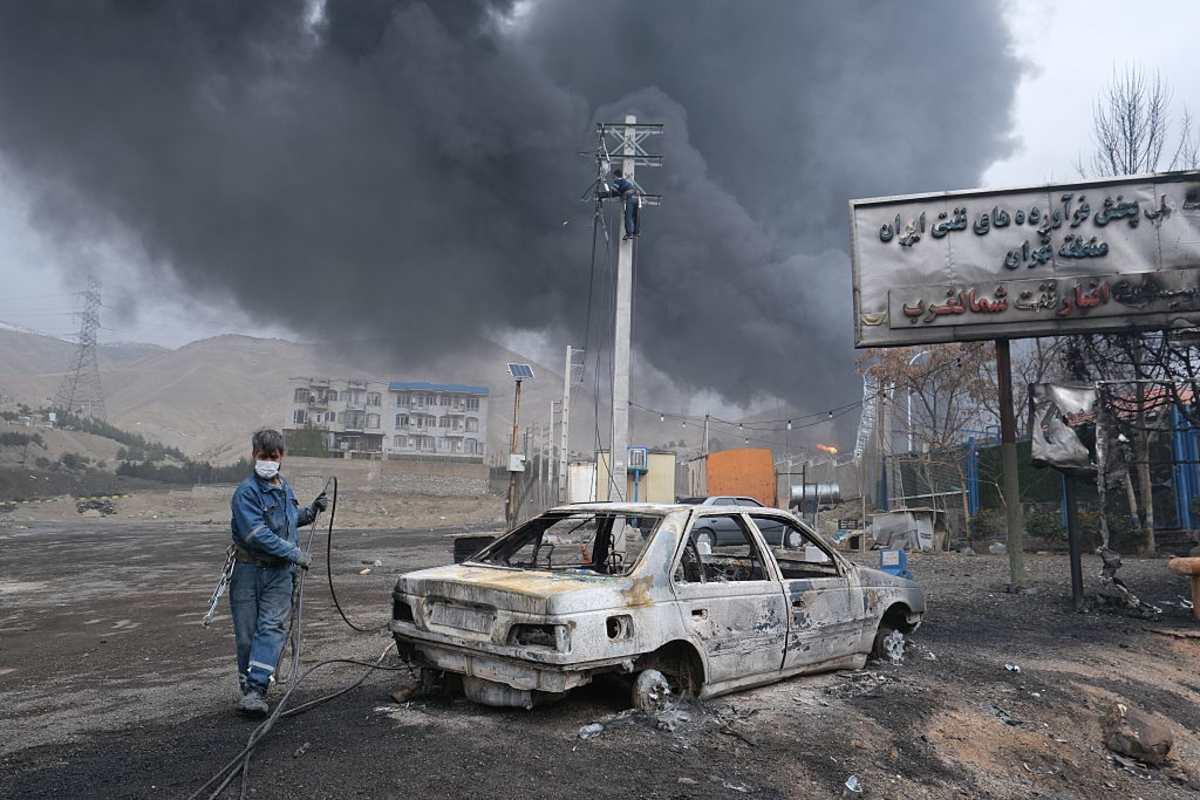
Soot-covered streets and cars after the attack on Iran's oil facilities.
According to Dr. Akshay Deoras, a research scientist at the University of Reading in the U.K., the "black rain" or acid rain contained a mixture of soot and fine particulate matter released from the explosions. “The airstrikes on oil depots released soot, smoke, oil particles, sulfur compounds, and likely heavy metals and inorganic materials from the buildings, whilst a low‑pressure weather system, which typically sweeps across Iran and West Asia around this time of year, created conditions favorable for rainfall,” he explained, as per The Guardian. Deoras revealed that the sulfur and nitrogen compounds released from the oil fires can produce acids that can merge with rainwater.
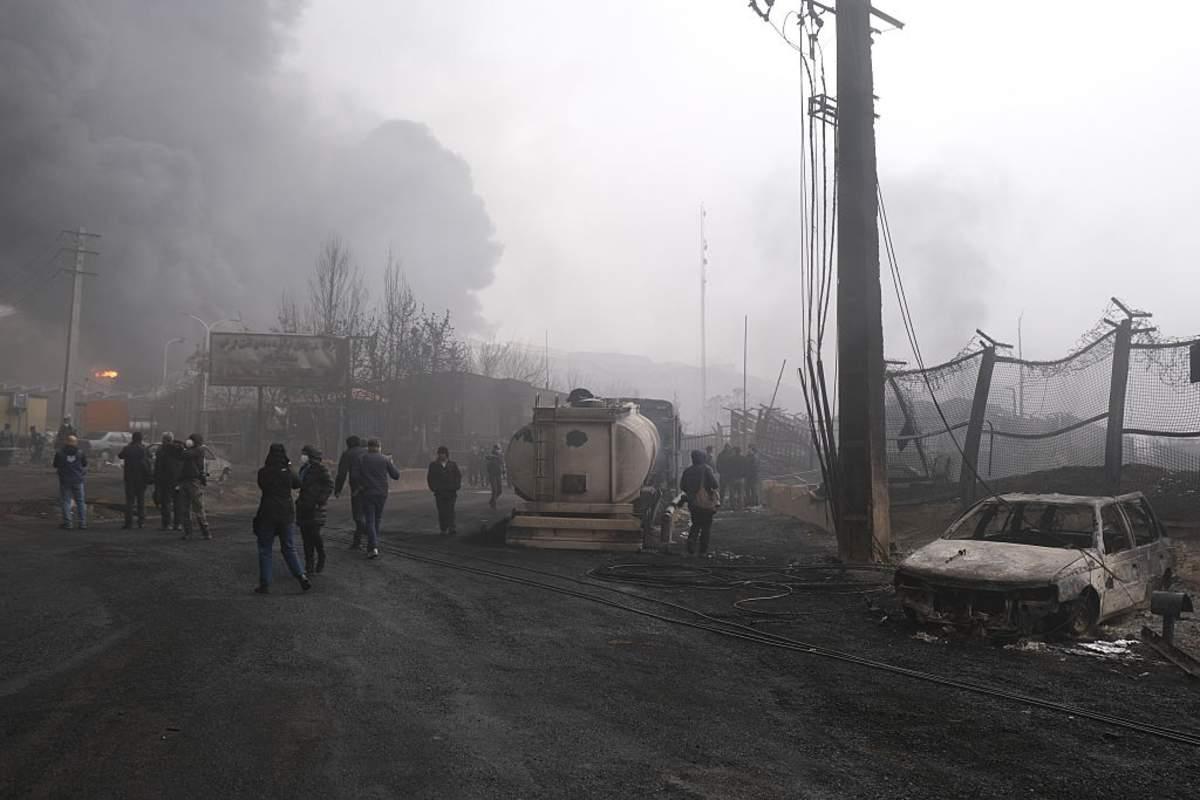
People walk on the soot-covered streets of Iran as a massive plume of smoke takes over the sky.
“The risks to human health come from inhaling or touching the smoke and particles. Immediate impacts can include headaches, irritation of the eyes and skin, and difficulty breathing," the scientist added. If the black rain mixed with water gets consumed, people might face gastrointestinal symptoms like stomachaches, heartburn, and more. “If you get raindrops on your skin, yes, there will be some potentially carcinogenic compounds on your skin, but you can that wash off,” said Anna Hansell at the University of Leicester in the U.K., according to New Scientist. “If they get into your nose and mouth, they might persist for longer, but very fine smoke particles in the air can penetrate deep into the lungs and potentially get into the bloodstream," she added.
Even though oil droplets and larger particles fall out of the atmosphere fast, smaller ones can be carried by the wind for miles on end. Local contamination after massive atmospheric emissions is immediate, but long-range dispersal of these particles from the Iran strikes at low concentrations might even reach as far as Washington DC, according to the outlet. However, it is more likely that the smoke would reach other parts of Iran and the Middle East.
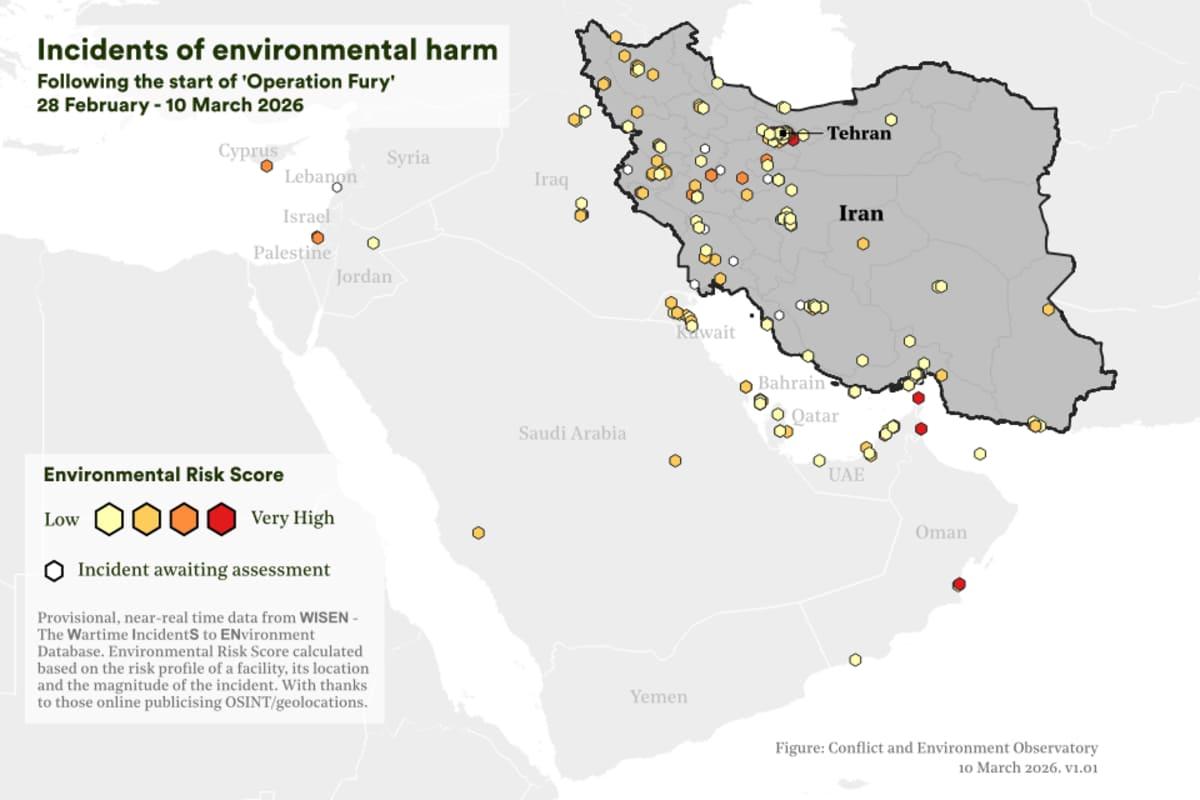
Map of Iran with regions highlighted based on environmental impact from the war.
The head of the World Health Organization (WHO), Tedros Adhanom Ghebreyesus, elaborated on the risk of the contamination. “Damage to petroleum facilities in Iran risks contaminating food, water, and air – hazards that can have severe health impacts, especially on children, older people, and people with pre-existing medical conditions. Rain laden with oil has been reported falling in parts of the country," he wrote on X.
WHO spokesperson Christian Lindmeier, in a press briefing in Geneva, spoke about the environmental and health crisis that might befall Iran amidst continued war. "The black rain and the acidic rain coming with it is indeed a danger for the population, respiratory mainly," he said, according to Reuters. Iran had advised residents to stay indoors as much as possible, and Lindmeier believes that to be the correct approach. "Given what is at risk right now, the oil storage facilities, the refineries that have been struck, triggering fires, bringing serious air quality concerns, that is definitely a good idea," he added. "Piecing together the war’s environmental footprint and its potential impacts on people and ecosystems will be a huge task," Doug Weir, director of the Conflict and Environment Observatory, said.