
Western U.S. Is Facing Its Worst Snow Drought. And It Foreshadows Water Shortages and Wildfires
Published Feb. 6 2026, 4:33 a.m. ET

Satellite image, taken January 15, 2026, shows a stark lack of snowpack across the mountains of the western U.S.
The mountain peaks of the western U.S., once blanketed with thick winter snow, are now unusually brown. The remaining snowpack is melting at a swift rate. If this continues, water scarcity will be inevitable. This winter, the region experienced one of the worst snow droughts in decades. Although experts have taken note, the impact of the snow drought will be worse once summer begins. The region witnessed large-scale precipitation, but in the form of rain, which is not helpful when snowmelt has a larger contribution to freshwater.
The western U.S. largely relies on a healthy snowpack as a freshwater source rather than the rainfall that blessed the region in abundance this year. Rain tends to run off the surface instead of recharging the reservoirs and aquifers. That's why the springtime snowmelt is essential for a consistent water supply.
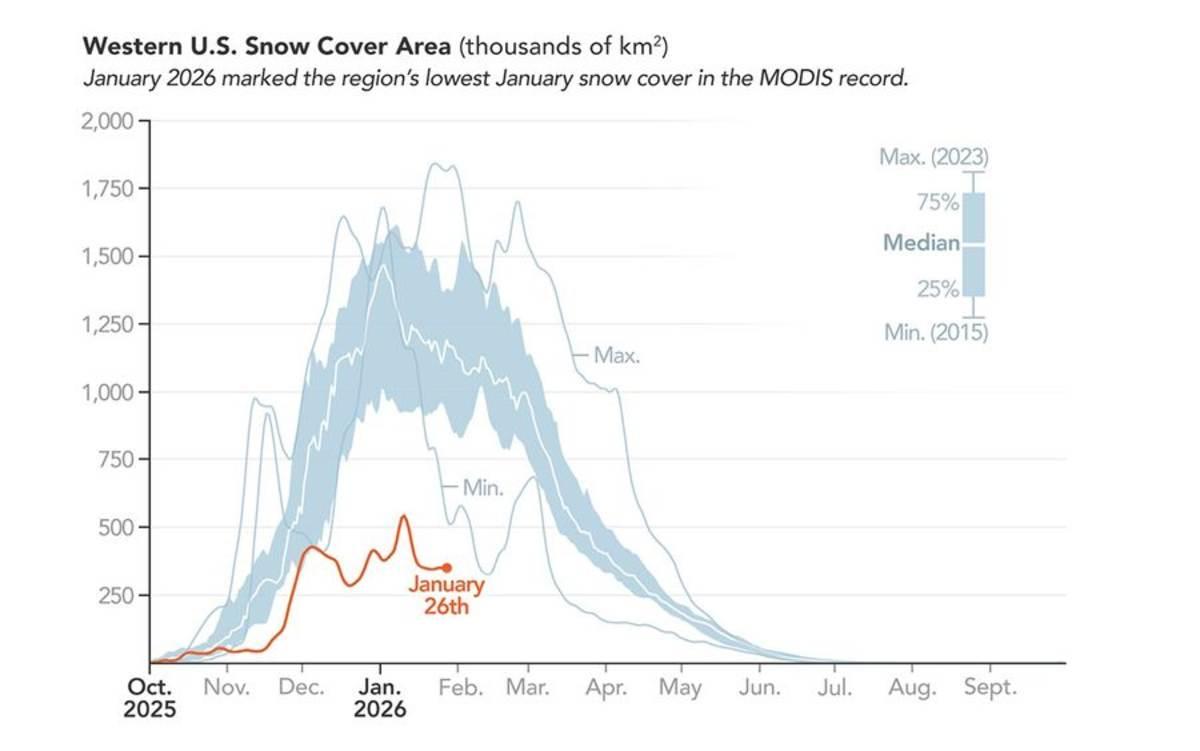
Graph showing decline in Western U.S. snow cover in January 2026.
A dry spell lasting through January 2026 has pushed the snowpack decline over the edge, with most states receiving 50% or less of their normal precipitation, according to a recent announcement. It also reported on the region's essential water supply basins, like the Deschutes, Humboldt, Yakima, Rio Grande, and Upper Colorado, suffering from critical snow drought. The shift from snow-clad mountain peaks to brown and barren landscape happened from rising temperatures that changed snow precipitation into rain.
While the water scarcity risk is frightening enough, there are more downsides to the escalating snow drought in the region. The risk of wildfires also increases in this scenario. The more snowpack melts and droughts spread, the drier the land becomes, becoming prone to catching fire.
“When we have very large snowpack years, like 2023 in the Sierra Nevada, there is less risk of fire, especially earlier in the summer season,” Dan McEvoy, a climatologist at the Desert Research Institute’s Western Regional Climate Center, said in an earlier interview. “But then we look at years like 2021, 2022, and 2020, which are all drought years, and very active wildfire years. Those are years with less snowpack that melted out earlier. So there definitely is that connection between wildfire danger and the amount of snow that’s on the ground,” he explained.
NOAA revealed that the snowpack in western America between the years 1955 and 2020 declined by 20% on average. NASA's Terra satellite, equipped with the MODIS (Moderate Resolution Imaging Spectroradiometer), captured a satellite image of snowpack on the western U.S. mountains on January 15 (cover picture).
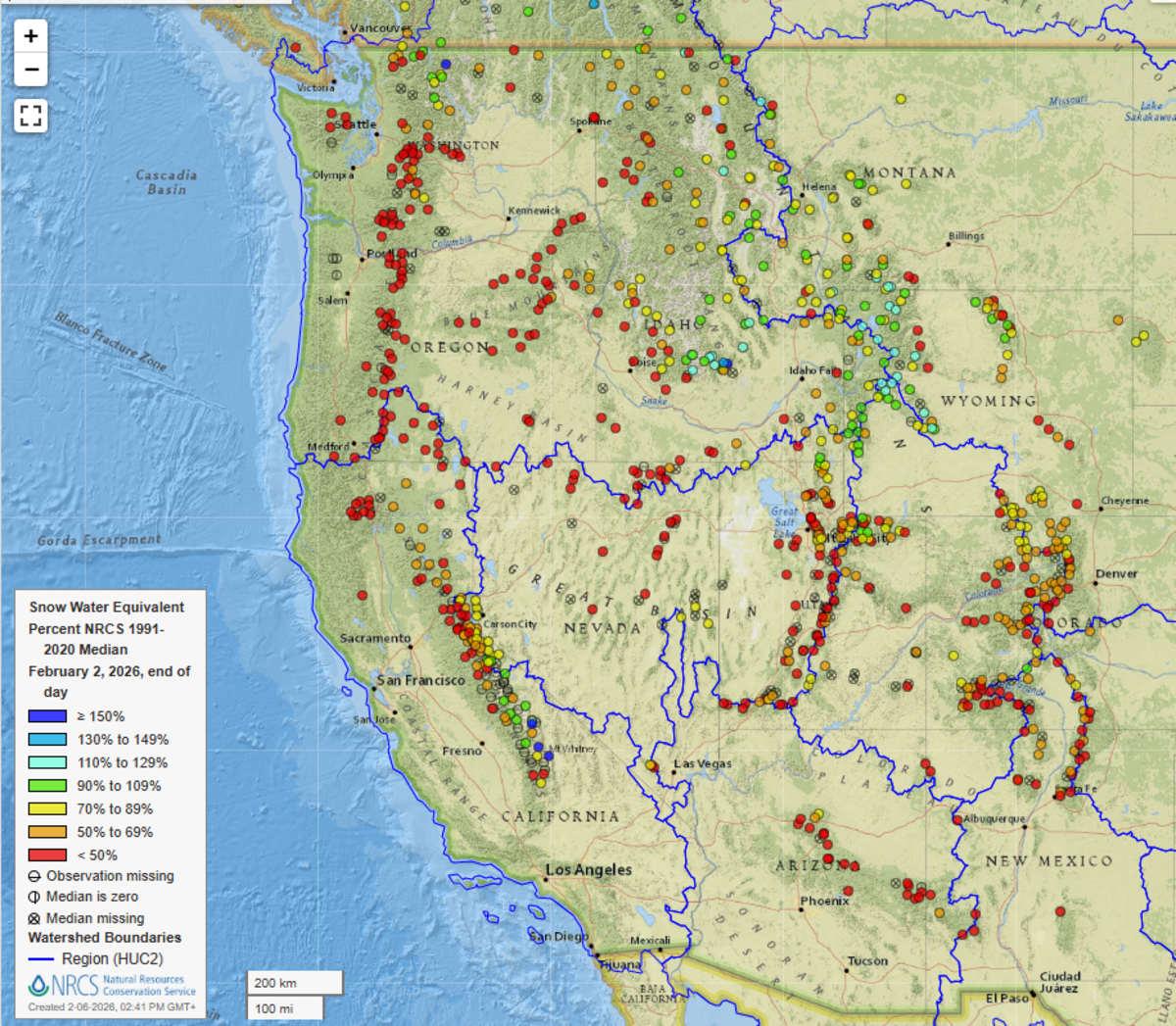
Snowpack is commonly assessed by the amount of water stored in the snow. The data reflects how current levels compare with historical averages for the date and reveal Western U.S. snow drought.
About 142,700 square miles of the surface were found covered in snow, which is the lowest coverage recorded by MODIS since 2001. Although a slight increase was observed a few days later, it isn't enough. On the brighter side, the months of February and March remain, and experts are anticipating a redemption. Speaking to Colorado Politics, Rocco Snart, the fire planning branch chief for Colorado’s Division of Fire Prevention and Control, admitted he's eager to witness how the remaining winter months unfold. “If this weather exists [in the spring] and doesn’t transition into something more favorable, it could be extremely problematic for us,” he told Colorado Politics.
Snowpack in the western U.S. is important not just ecologically but economically as well. For those who rely on winter recreational activity as their source of income, the lack of snowpack might leave them destitute. National parks that host winter sports, attracting flocks of visitors, will also be majorly impacted if the snow drought continues. Moreover, water scarcity risk will also affect key economic sectors like agriculture, recreation, and energy.