
Farmers in Italy Tried Using Falling Volcanic Ash as Fertilizer and Found Unexpected Results
Published March 2 2026, 8:38 a.m. ET

(L) Mount Etna ashfall; (R) Sicilian farmer Andrea Passanisi's farm. (Cover Image Source: (L) Getty Images | Roberto Schillaci; (R) Facebook | @Andrea Passanisi)
For many years, farmers have been facing the wrath of volcanic ash falling from the sky. Despite being viewed as an inconvenience for the longest time, a new approach has switched gears. Turning a liability into an asset, a Sicilian project has discovered the agricultural benefits of volcanic ash. Andrea Passanisi, a tropical and citrus fruit producer, uses the ash released from the eruptions of Mount Etna as fertilizer in his 100-hectare (247-acre) stretch of land. Located in the slopes and valleys of Europe’s highest and most active volcano, many small-town farmers have suffered from the accumulation of volcanic ash, but apparently, that won't be a problem anymore. According to The Guardian, Passanisi and his family have been dealing with the nuisance of Etna's ash for generations.
Living in the Sicilian town of Giarre, the 41-year-old farmer witnessed an average of 12,000 tons of ashfall daily after every eruption. According to the outlet, Catania, the second largest Sicilian city, received 17,000 tons of ash daily. For years, the invasion of volcanic ash was believed to be harmful, especially to farmlands. However, a five-year project by the University of Catania found that the discharge from Mount Etna can be used beneficially. “It allows us to use fewer chemicals, which makes fertilizing cheaper and more sustainable, respecting the equilibrium of nature without abusing it,” Passanisi said. “It’s the future of agriculture," he emphasized. This study marks the first interdisciplinary effort that aims to solve the issue of volcanic ash dispersal.

Andrea Passanisi, a tropical and citrus fruit producer who uses volcanic ash as fertilizer.
Paolo Roccaro, an environmental engineering professor who pioneered the research, revealed that a tangible solution to managing volcanic waste had become the need of the hour. “When the explosive phenomena with heavy release of ashes began to intensify after 2011, it led to a need to find a systemic solution to manage it," he said. To dig for the potential agricultural scope of Etna's volcanic ash, the researchers explored its chemical characteristics. The team hopes to eventually determine its uses in other fields as well, including material for road construction, ink for 3D printers, and wall insulation for water purifiers. While these aspects are yet to be explored, farmers like Passanisi have begun to utilize its agricultural quality. Emilio Sciacca, a vineyard owner in Linguaglossa, a town 23 miles from the volcano, is also among those benefiting from Etna's volcanic ash.
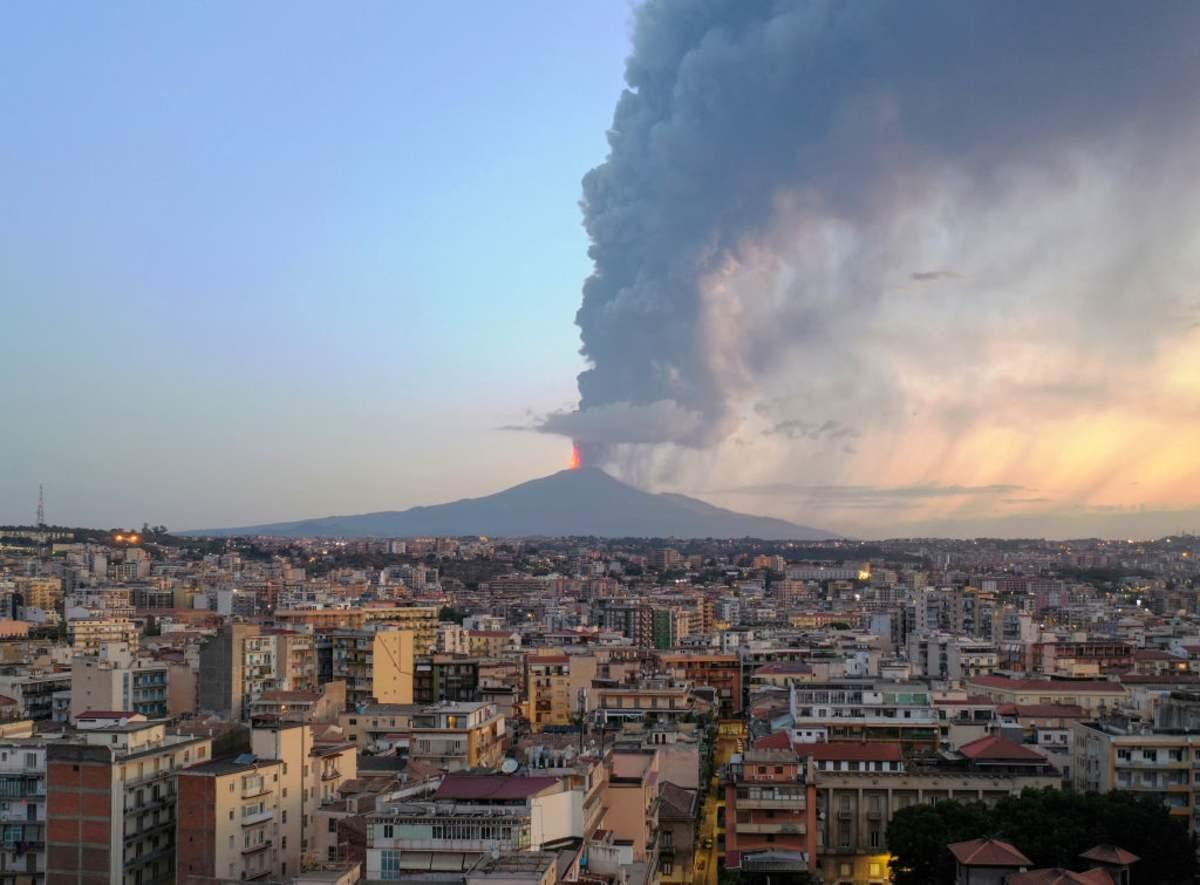
Mount Etna spewing lava and ash as seen from the city of Catania, Sicily.
“Etna’s ash represents an added value for volcanic soils, a gift for us producers that literally falls from the sky,” Sciacca said. Earlier, farmers or producers would go through the tedious process of cleaning the ashes from the grounds. But now, Sciacca leaves the ash on his farmland after learning that it helps drain excess water from the soil. Moreover, the iron, aluminum, and silica present in the ashes work as additional fertilizers. “In this unique geological context, we can never ignore the volcanic nature of the soil and its magnificent nuances; we have to learn to embrace them and let them become our strength," he emphasized. However, the new agricultural asset has certain drawbacks when it comes to commercial use.
Roccaro revealed that the volcanic waste is "intended for special disposal at authorized landfills, which entails significant costs for municipalities and therefore for the community." In 2021, several Sicilian towns faced bankruptcy because of cleaning costs, and since then, no companies have registered to collect, refine, and relocate ashes for production purposes. "For now, the goal is to instill the idea that this alternative approach can work, to make its systemic reuse more palatable in the near future," Roccaro added.