
Fatal Shark Attacks Jumped 125% Worldwide in 2025. These 7 U.S. States Were Most Affected
Published March 16 2026, 4:33 a.m. ET

Fatal shark attacks have made a massive leap in numbers.
A new study has reported a significant increase in shark attack deaths in 2025. Data from the International Shark Attack File, run by the Florida Museum of Natural History, shows there were 65 unprovoked shark bites recorded worldwide last year. Out of those cases, nine turned fatal, compared with four deaths in 2024. The United States reported the highest number of unprovoked encounters, with 25 incidents, accounting for approximately 38% of all cases globally. Researchers also documented 25 “provoked” bites, which happen when someone approaches, touches, or otherwise interacts with a shark before the bite occurs.
One of the incidents last year turned deadly for swimmer Erica Fox, who was killed in a shark attack off the coast of Santa Cruz in December 2025. Fox was swimming near Lovers Point when she was suddenly pulled underwater. In the U.S., Florida recorded the highest number of shark encounters overall. The state logged 11 unprovoked bites, which made up about 17% of all shark attacks worldwide that year. Several of those incidents occurred in Volusia County, home to New Smyrna Beach, often nicknamed the “Shark Bite Capital of the World.” Other states reporting shark bites in 2025 included California, Hawaii, South Carolina, New York, North Carolina, and Texas.
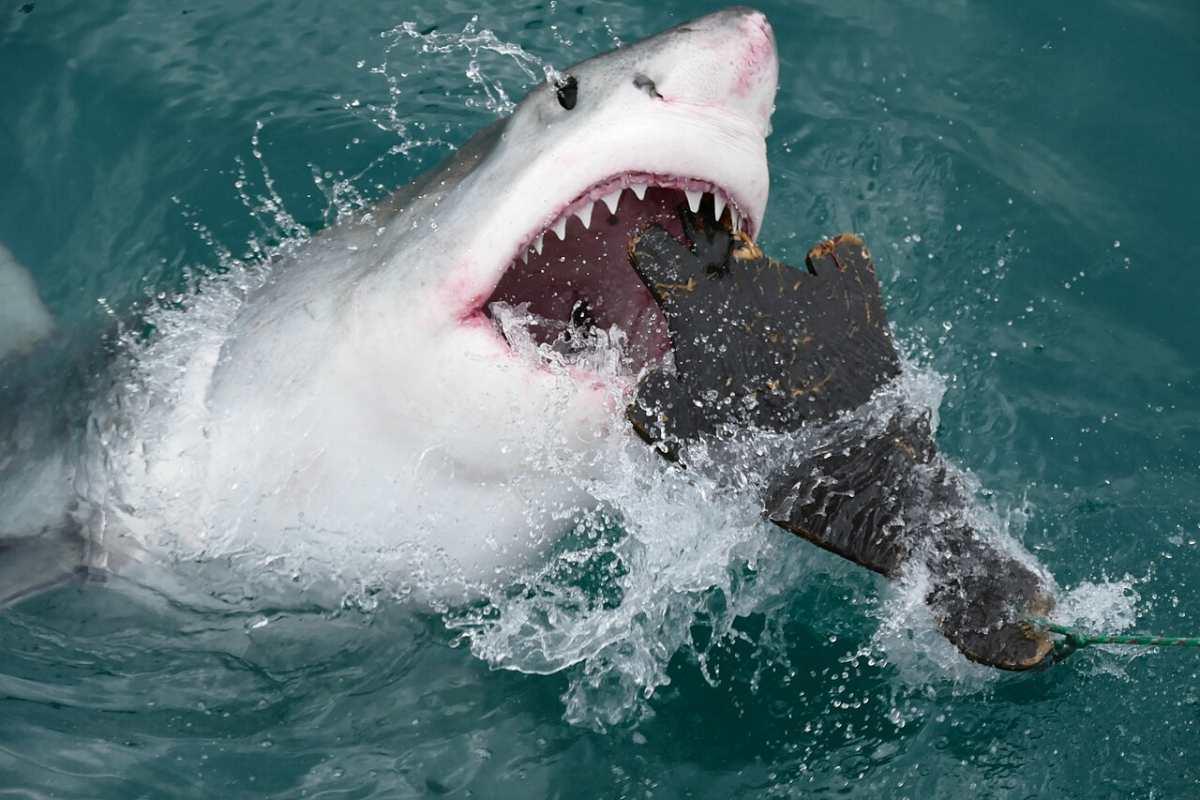
A shark in California killed Erica Fox, a 55-year-old swimmer, in late 2025.
“While the number of fatalities in 2025 was considerably higher than in 2024, there have been years in the past in which fatalities were also higher,” the report stated, per PEOPLE. Even though Florida regularly records more shark encounters than any other U.S. state, the latest numbers actually show a bit of a slowdown. The stats were actually lower than Florida’s recent five-year average of around 19 attacks annually. Even in Volusia County, the reported bites are lower than the county’s 10-year average of about nine incidents and far below the spike of 17 bites recorded in 2021.
Meanwhile, Australia had the second-highest number of unprovoked shark bites in 2025, with 21 reported incidents, out of which 5 were shark-bite fatalities. Three of those victims were surfers who were attacked while out on the water. One of the cases involved Mercury Psillakis, a 57-year-old surfer who was killed by a large shark off the coast of Sydney on January 25, 2025. One reason experts often point to is that Australian waters are home to the ocean’s so-called “big three” shark species linked to the most serious attacks: the Great white shark, Tiger shark, and Bull shark. These sharks are large, powerful predators with sharp, serrated teeth and extremely strong jaws.
“If these bites occurred anywhere other than Australia, they would probably have resulted in even more fatalities. Their beach safety is second to none. Within minutes of a bite, they’ve got helicopters airborne ready to respond,” Gavin Naylor, director of the Florida Program for Shark Research at the Florida Museum of Natural History, said, per Deeper Blue.
Shark attack numbers around the world have actually stayed pretty steady over the years. Data from the International Shark Attack File shows that the 10, 20, and 30-year averages for unprovoked bites are very close to each other, with only a difference of about four cases. So while some years may look dramatic, the long-term trend is surprisingly consistent. However, according to records, shark populations have been declining. “Out of the 1200 species, 30% of them are categorized as endangered. That’s a lot, especially because these animals have managed to persist for about 330 million years. They’ve been through the Permian Extinction and Cretaceous Extinction. Clearly, they’re resilient, yet here we are,” Naylor said.