
WATCH: Yellowstone Wolf Chases Elk for Nearly 4 Miles. Then, One Bold Kick Changes Everything
Published March 12 2026, 9:23 a.m. ET

Video frames show a wolf chasing after an elk at Yellowstone National Park.
When a wolf, one of Yellowstone's fiercest predators, sets its eyes on a prey, it can go to any lengths, literally. For a tour guide and their client, the day started as a usual wildlife outing until they witnessed the raw display of prey and predator interaction. In a recent video, captured by guide Andrea Baratte of Yellowstone Adventure Tours, a wolf can be seen chasing after an elk, and it went on for a while. The "incredible chase" extended up to four miles, giving visitors plenty of time to soak in the glory of the wildlife. The bull elk attempted to kick the wolf away in the middle of the chase. Although the kick didn't strike the wolf, it created space and gave the elk time to outrun the predator.
Baratte shared the video on Instagram, elaborating on the scene he and his client got to witness live. The video shows a wolf running after a lone elk, but according to the guide, the incident involved "wolves and 2 elk." Baratte, along with his client, visited the site in the morning when they stumbled upon the incredible chase from a safe distance. “The chase stretched over a 3.5-4mile span and the wolves did not succeed. Wolves have a low hunting success rate of about 10-15% in Yellowstone’s northern range," he explained. During the chase, the prey and predator crossed a herd of bison, a large herbivore that's prominently present within the national park.
Although the herd moved away from the chase track, they maneuvered into defensive positions to protect their own kin. The short clip gave a larger-than-life glimpse of the prey-predator dynamics that are often at play at Yellowstone National Park. Elk and bison in the park are large herbivores who thrive in the summers but are equally vulnerable in winter. These grazers need vegetation to sustain themselves, but the snow-covered lands in winter leave them starving. Finally, when the snow melts and fresh vegetation grows in the northern range, it quickly attracts these large herbivores. However, grazing on fresh forage after months of scarce food most often has a reverse effect on elk and bison, leading to intestinal issues and even death.
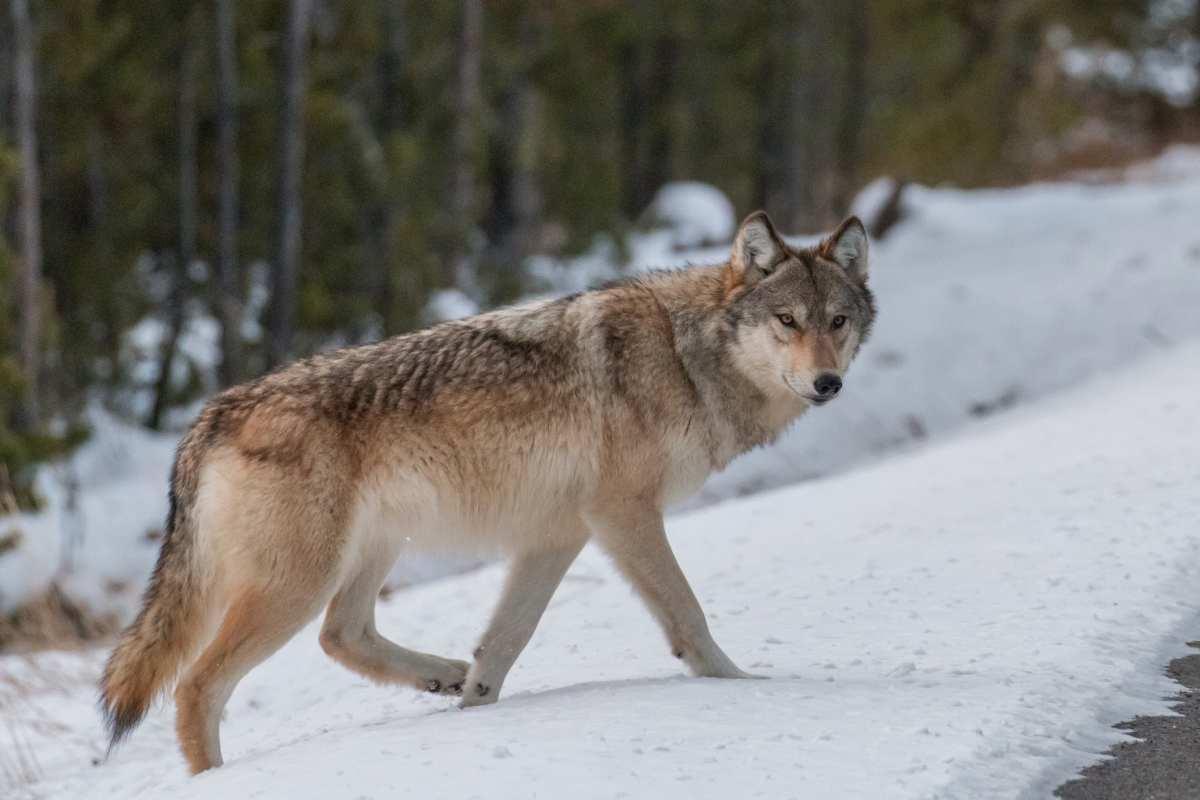
A wolf roaming in the valley of Yellowstone National Park
Eventually, their lined-up carcasses become a feast for bears who break their hibernation at the end of winter. Even though it seems unfair that one species thrives at the cost of others, it is simply nature at play, a cycle that maintains ecological balance. Recently, another chasing incident at Yellowstone made headlines. A bison, separated from its herd, became the target of a large pack of wolves. Hounding beasts followed the lone bison together, yet the latter managed to outmaneuver the predator. Bison are extremely heavy and can seriously injure or even kill smaller animals with one thump. Therefore, wolves don't dare to approach a herd of them, but only when a bison is alone or stranded.
When it comes to chasing, it's difficult for the top-heavy bison to run faster, let alone outrun fast runners like wolves. However, this was a rare case where a lone bison managed to escape an entire pack of Wapiti wolves. "The Wapiti pack on the move. They came up short from this chase and headed up river," wrote Allan Hathaway, a wildlife photographer who captured the video.