
Close Call in Yellowstone Caught on Camera as Bison Charges at Tourist Breaking Park Rules
Published Feb. 18 2026, 4:09 a.m. ET

(L) Man walking too close to bison; (R) Yellowstone bison charging at the visitor.
Time and time again, Yellowstone visitors have been warned not to approach wild animals too closely. Perhaps it's the urge to go viral or generate internet clout that keeps drawing people toward this reckless behavior. Recently, another tourist made headlines after almost being attacked by a bison in the national park. The blatant indifference towards the National Park Service's (NPS) rules is deliberate at this point. The NPS advises visitors to maintain a distance of at least 25 yards from a bison and approach more dangerous wild animals from a distance of 100 yards. But some "tourons," or tourist morons, think it's cool to break rules made for their safety. The individual captured in the video decided to take a closer look at a Yellowstone bison and paid the consequences.
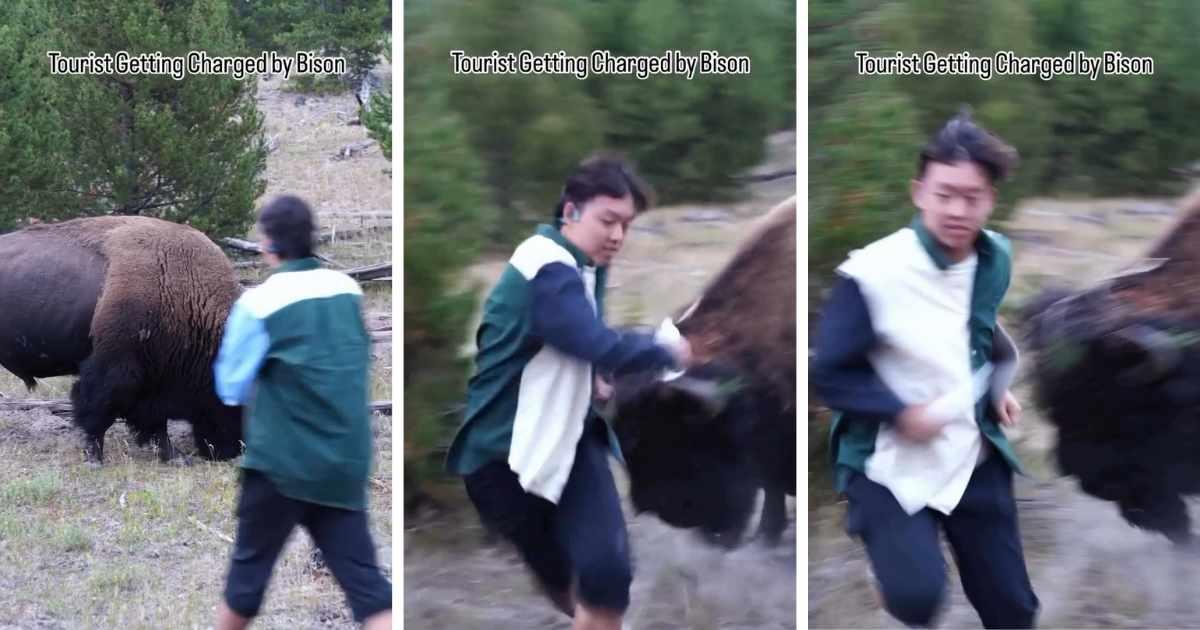
Bison charging at an intruding visitor in Yellowstone.
The bison evidently didn't enjoy its personal space being invaded and retaliated immediately. It turned to the man who carelessly wandered into the field where he was grazing. Eventually, the bison turned aggressive and charged at the man, who sprinted out of fear once he witnessed the reaction. Bison are extremely powerful and heavy, weighing about 2,000 pounds, and run at high speeds of 30 miles per hour, making it challenging for humans to escape. If they charge at full force, it would be a life-or-death situation.
The man who approached the wild inhabitant of Yellowstone too closely was saved by the mercy of the bison, who didn't charge with full potential. The video was posted on Instagram by @touronsofnationalparks, a page known for posting videos of national park visitors behaving recklessly with the wild animals.
"Keeping a safe distance of at least 25 yards from bison is crucial because they are wild animals and can be unpredictable," the caption read. Bison also have weak eyesight and often perceive someone approaching them as a threat. Suddenly making a close approach to bison can startle them, prompting a reaction. Also, there's no way to guess a bison's reaction as they charge without warning, leaving little to no time for the "tourons" to run away. "They can quickly become aggressive if they feel surprised, threatened, or if they’re protecting their territory," the caption added.
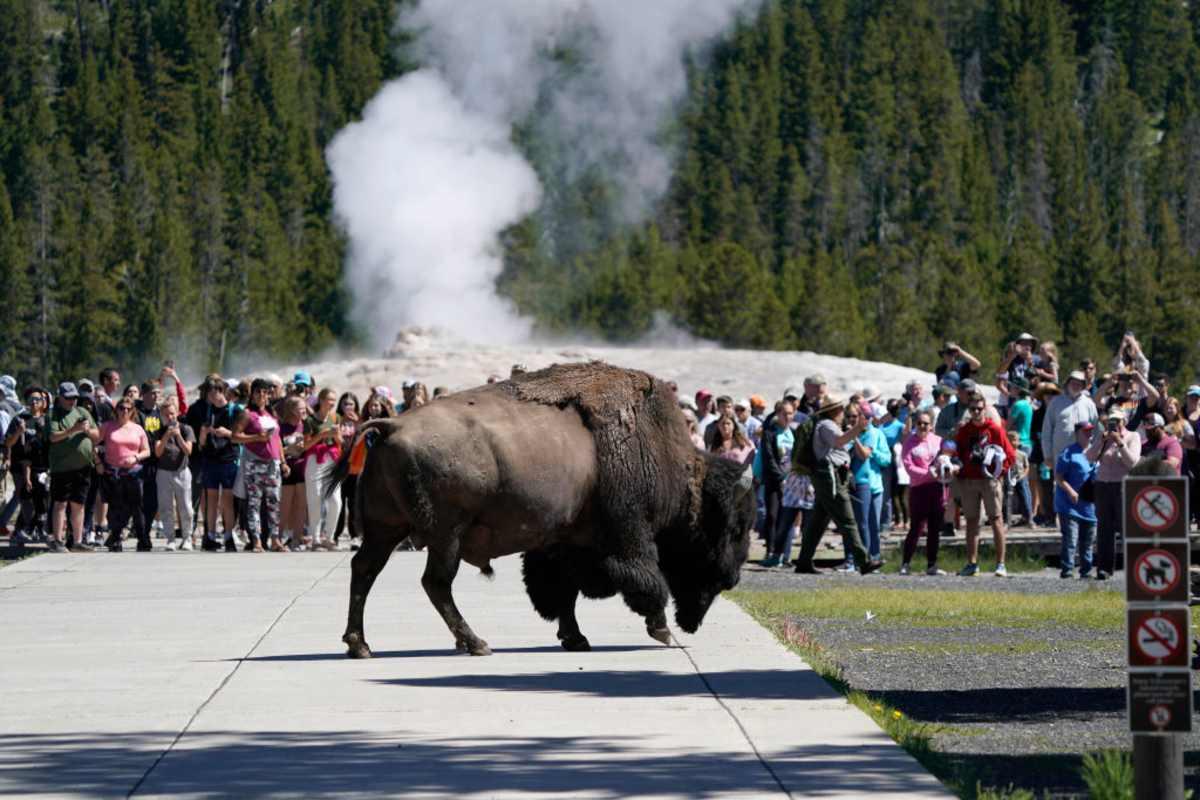
In 2025, two people were injured by Yellowstone's bison after approaching it too closely.
Female bison, especially, are protective of their young ones and could react aggressively to a potential danger. The protective mama mood is something not to be messed with. Another danger of approaching wild animals closely is disease transmission. "Like any wild animal, bison can carry diseases like brucellosis, which can be transmitted to humans through contact with their bodily fluids," the outlet wrote.
Despite there being so many consequences, visitors have continued to invade areas of the wild within the national parks and put themselves at risk. Last year, a similar fateful incident occurred that left a man injured. A 30-year-old from Randolph, New Jersey, decided to get too close to a Yellowstone bison, triggering an aggressive reaction from the animal. The bison attacked the man with its horn, leaving him with minor injuries. According to the NPS, the man was gored by the bison after a large group got too close to the animal.
Having endured a few minor injuries, the Randolf native was immediately treated and transported by the park's emergency medical personnel. This was one of the bison attack cases at Yellowstone reported in 2025. Being cautious and diligently following NSP tourist guidelines is the only way to prevent these frequent accidents.