
South Korea Builds Robot To Fight 1,000-Degree Fires — Breakthrough For Disaster Response Tech
Published March 16 2026, 7:03 a.m. ET

Firefighters standing next to Hyundai Motor Group's Unmanned Firefighting Robot for dangerous rescue missions.
Raging fires that reach temperatures in the thousands of degrees can be difficult to tame even by the most skilled firefighter. That's where Hyundai Motors' new marvel comes into the picture. A sci-fi-esque robot that can diffuse extremely hot blazes without putting any lives at risk. The company has launched a driverless ground drone built over a chassis with an installed hose that can douse even the most disastrous fires. Originally intended for military use, the transformer-like build of the autonomous robot also comes with thermal imaging sensors to see through thick smoke. In addition to dousing fires, the hose can light up dark areas, facilitating easy search and rescue. The automobile giant plans to replace daring firefighters with their autonomous counterparts to make fire rescues more efficient.
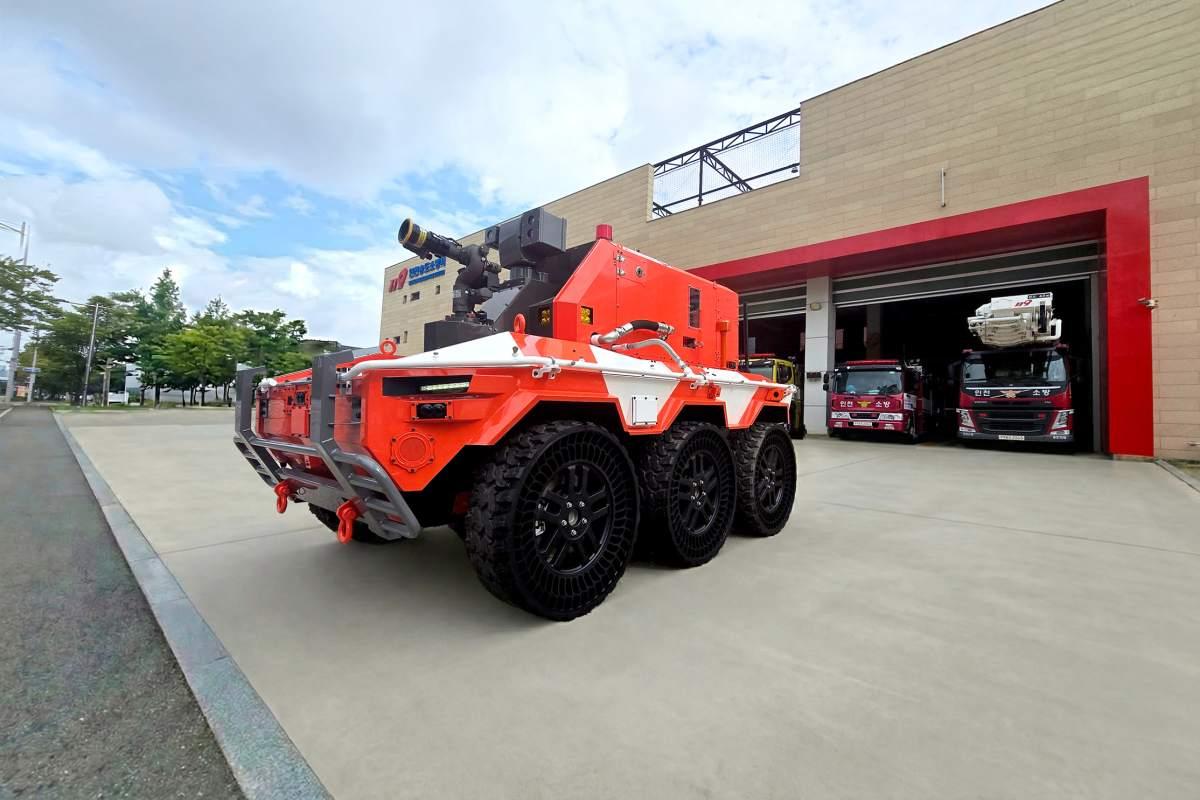
The unmanned firefighting robot.
Hyundai aims to send the bright red behemoth to areas experiencing extreme fire blazes. Before the firefighters arrive, the robot would map out safe escape routes and start to diffuse the blazes. "It remotely identifies and assesses the situation, approaches the fire’s source and directly extinguishes the blaze," Hyundai said in a press release. “By tackling dangerous situations in place of people, the robot ultimately protects the lives and safety of firefighters and citizens,” the company added.
Considering the number of wildfires witnessed in the U.S. in recent years, this adaptation could prove beneficial. Firefighters walk the thin rope hanging between life and death during each rescue. According to South Korea’s National Fire Agency's data, approximately 1,788 firefighters were killed or injured in the past decade, as cited by Hyundai.
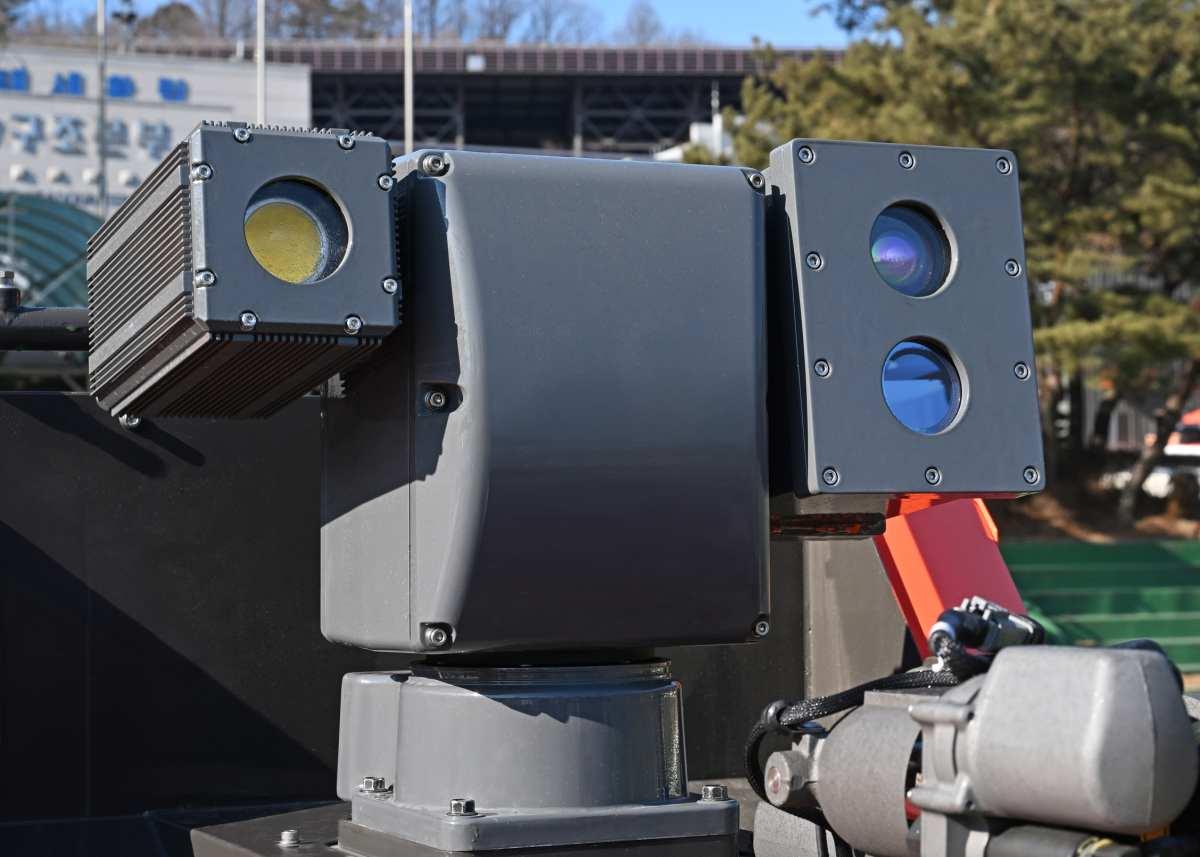
AI vision cameras are mounted on the robot.
The U.S. National Fire Protection Association (NFPA) has reported 62 deaths of firefighters responding to the 2024 fires alone. Even those who survive are exposed to harmful levels of toxic smoke or are injured from falling debris. Relying on the firefighting robot instead would reduce the rate of accidental deaths within the community. Moreover, features like a self-spraying water-cooling system and an insulation structure within the robot have enhanced its durability and heat resistance up to 1472°F. The Unmanned Firefighting Robot also "integrates ‘unmanned electrification technology’ with remote operation, vision enhancement, and a thermal management package."
The robot is built to detect surrounding obstacles and terrains to avoid collision risk, especially in curvaceous pathways. With a top speed of about 31 miles per hour, it can also maneuver through inclines of up to 60 percent. That means the autonomous technology can enter complicated enclosures to tackle fires. Another impressive feature is an independent motor with waterproof electrical modules installed in each wheel to minimize the risk of malfunction.
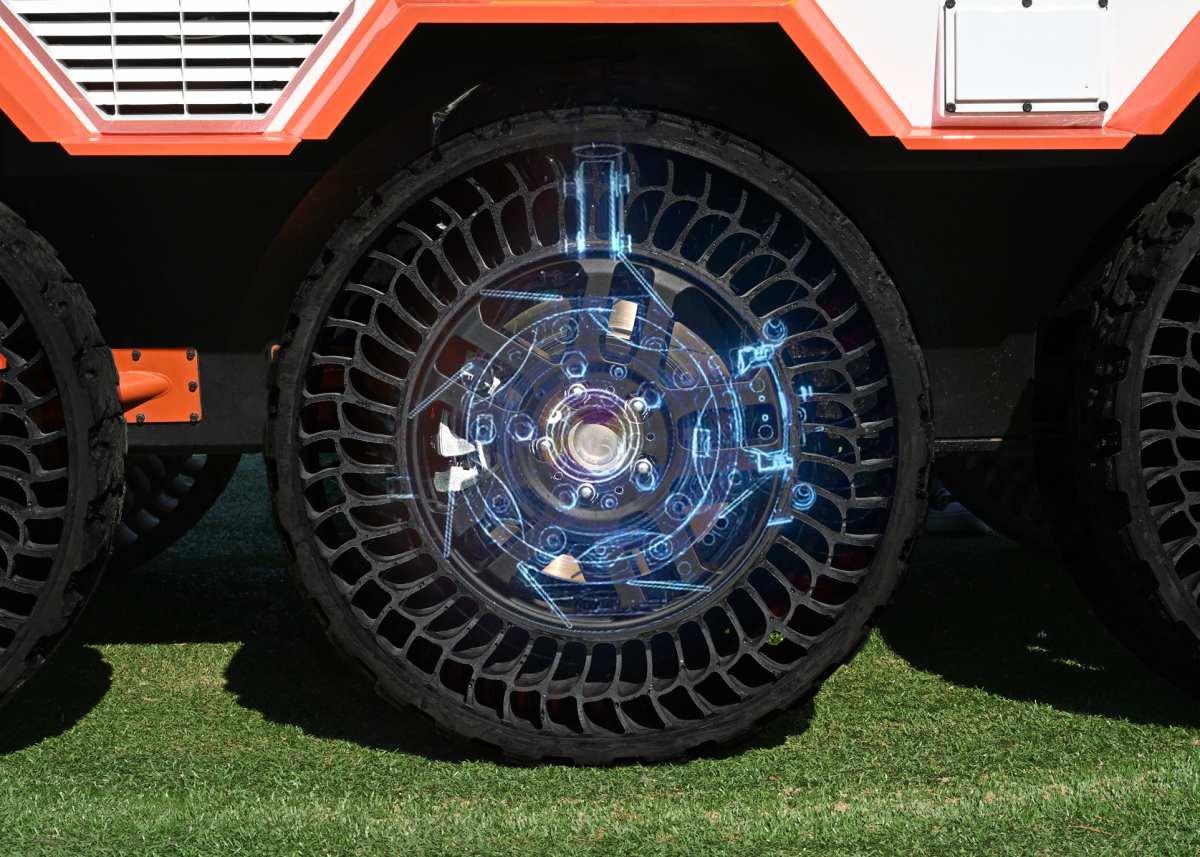
Each wheel of the firefighting robot has its own independent motor with waterproof electrical modules.
Although the automobile company has yet to reveal the cost of the product, it has donated two pairs of the robots to firefighting stations in South Korea. Seung-ryong Kim, Acting Commissioner of the National Fire Agency, believes that even if the innovation is unprecedented, it serves a bigger and more powerful purpose.
“The true value of this robot is not merely its heat resistance or fire suppression power, but its role as a ‘Physical AI’ that operates in actual disaster sites," he said in a statement. "In extreme environments where firefighters cannot enter, it will collect and learn from real-world operational data to develop into a sophisticated disaster response platform. This will usher in an era of hybrid convergence where humans and robots overcome their respective limitations, marking a ‘paradigm shift for AI in firefighting,'" he explained.