
Scientists Create Tiny 'Electronic Dolphin' Robot That Could Swallow Up Oil Spills in Oceans
Published March 10 2026, 8:09 a.m. ET

The RMIT‑designed Electronic Dolphin minibot, fitted with a front‑mounted filter and pump system for skimming oil from water surfaces.
Oil spills are slowly eating away at the ocean, damaging natural habitats, coastal wildlife, and much more. But the most stressful part of this issue is the cleanup that requires significant effort and cost. It seems the solution to efficient oil spill clean-up isn’t as far-fetched as previously believed. New research led by RMIT University engineers in Australia has unraveled a breakthrough design that takes humanity one step closer to managing oil spills in the ocean. Presenting the “Electronic Dolphin” minibot that eats up the oil spills using an innovative filtering system, inspired by sea urchins. According to the research published in the journal Small, the device will efficiently collect oil spills from the surface of water. The device shaped like a dolphin is as large as the size of a sneaker.
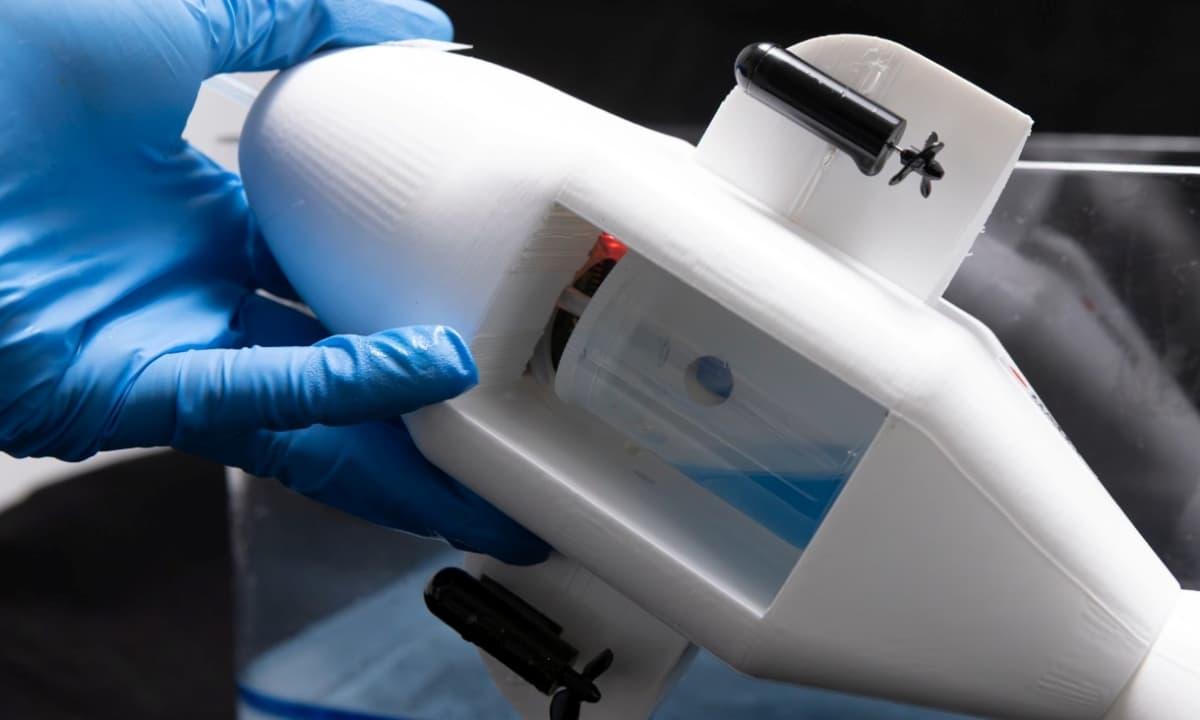
An RMIT researcher holds the Electronic Dolphin minibot above a test tank, revealing the internal chamber partially filled with blue kerosene oil collected during clean‑up trials.
Its filtration technique repels water while absorbing oil, allowing it to efficiently get rid of slicks, or thin layers or patches of concentrated oil found on the surface of the water. Lead researcher Dr. Ataur Rahman, from RMIT's School of Engineering, believes the innovation to be an excellent clean-up solution as it doesn’t require responders to be exposed to hazardous conditions. "Oil spills can take a huge environmental and economic toll. We wanted to create a system that can be deployed quickly, steered accurately, and used in areas that are too risky for people to access," he said in a statement. While the latest model is a proof-of-concept design, Rahman revealed that the team has higher goals in terms of solution-centric innovation for the oil spillage issue.
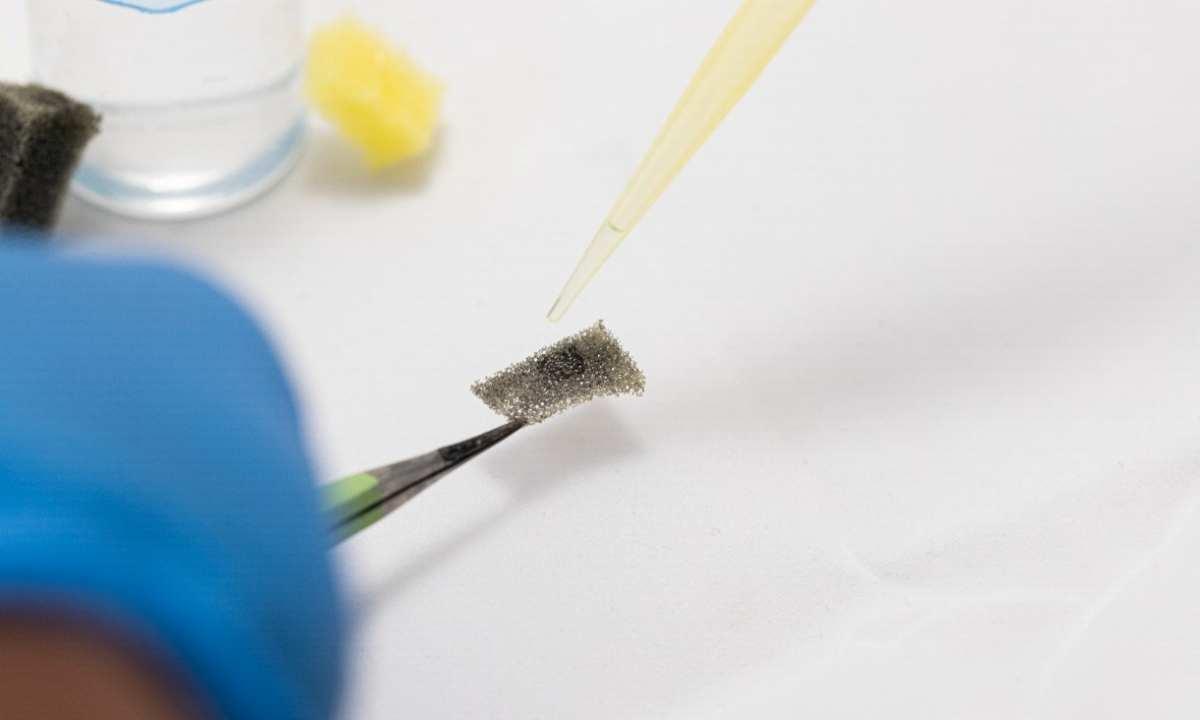
A researcher applies oil to the coated filter material to demonstrate its rapid absorption while remaining water‑repellent.
“We have a long-term vision of creating dolphin‑sized robots that can vacuum oil, return to base to empty their tanks, recharge, then redeploy automatically – repeating the cycle until the job’s done," he added. The experimental minibot lasts for 15 minutes on its current battery. However, in the future, researchers aim to increase the durability by enhancing the pump size and scaling up the oil‑storage capacity. Rahman explained that the earlier oil clean-up materials were hazardous to nature. Moreover, they were fixed filters that required manual operations. The new model has overcome that shortcoming with an environmentally friendly material. “Our new technology is made using an eco-friendly coating for filters we developed,” Rahman added. The coated filter is placed in front of the minibot alongside a pump that pushes the absorbed oil into an onboard collection chamber.
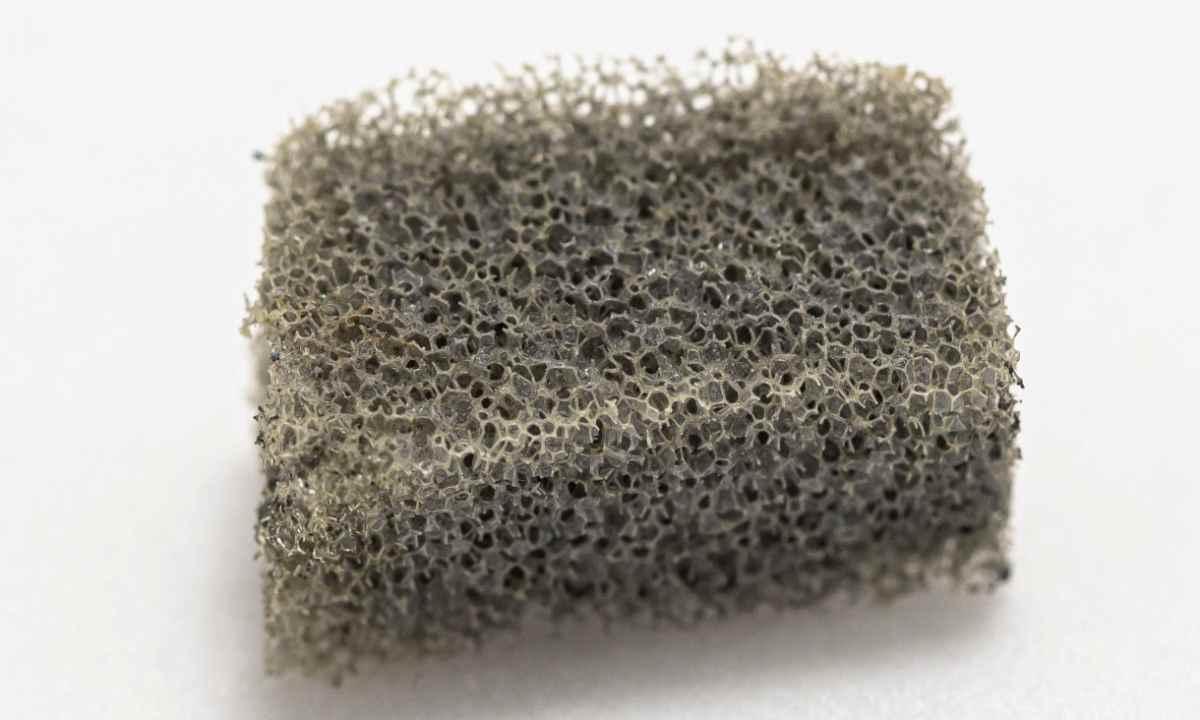
A macro view of the porous, sea‑urchin‑inspired filter material developed for the Electronic Dolphin minibot.
During testing, the pump was able to filter out about 2 milliliters (0.067 fluid ounces) of oil per minute with more than 95% purity. Just like the spikes in a sea urchin, the coated filter used in the minibot also has tiny spikes that are only visible under a microscope. These tiny bumps on the filter are filled with air, making water slide off with ease. Simultaneously, the oil present in the water is absorbed by the filter immediately. But the best part of this design is that it's lightweight, making it reusable and practical for oil cleanup work on the ground. PhD researcher Surya Kanta Ghadei, who led much of the materials development, was driven by a personal unpleasant experience and interest in technological innovation to create an efficient solution for oil spills.
“Growing up in India, I saw the impact oil spills can have on marine life, especially turtles,” he said. “That stayed with me. When I began my PhD, I wanted to create something that could help responders act faster and keep wildlife out of danger,” the researcher added. While the experiment was a success, there’s still a larger challenge at hand: scaling up the design and testing it in real-world environments.