
Scientists Use Discarded Phone Batteries to Create Next-Generation Power Solution
Published Feb. 20 2026, 9:44 a.m. ET

Discarded battery inside a broken mobile phone
Turning waste into a resource is the need of the hour, and a recent study has attained something groundbreaking. Electric batteries create a huge carbon footprint in the environment. They are used frequently and discarded easily, and what's left is a pile of non-degradable waste. Even in industrial waste, some materials are hard to degrade or disintegrate in the environment. The new study, published in Biochar X, has used discarded mobile batteries and industrial lignin to create next-generation sodium-ion batteries. This study brings hope to humanity at a time when pollution has become an increasing concern. Moreover, the study highlights how waste recycling can not only reduce environmental pollution but also facilitate the transition to sustainable energy storage technologies.
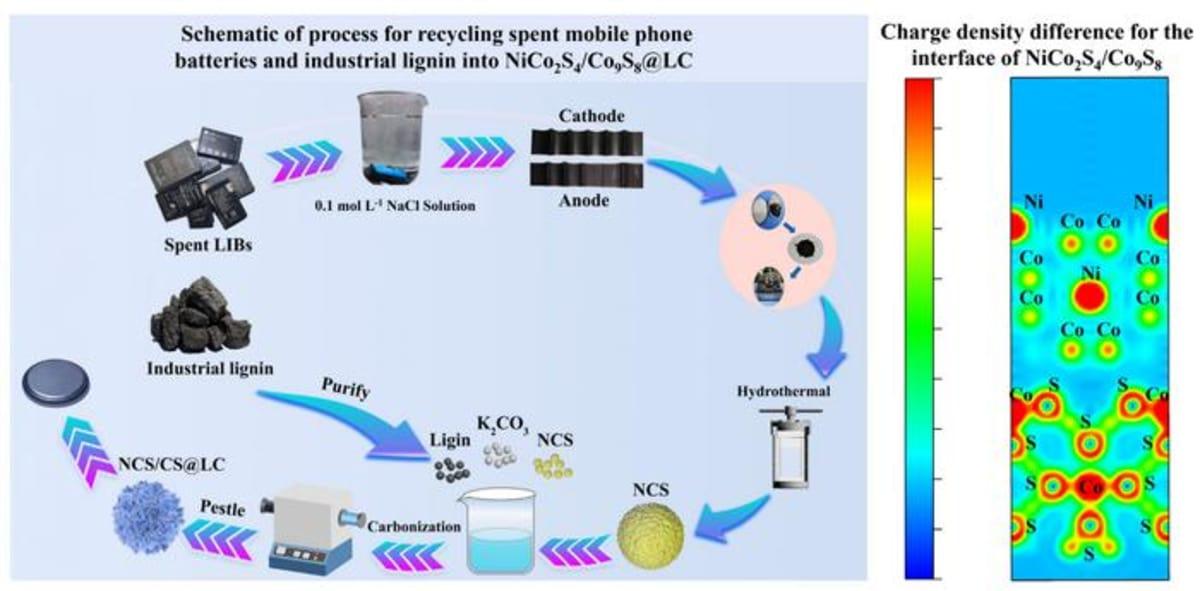
Synergistic conversion of spent mobile phone batteries and industrial lignin into the NiCo₂S₄/Co₉S₈@LC composite
Mobile battery use has become frequent due to the technological boom. Since they are easily replaceable, these have become an increasingly large contributor to harmful waste. While they contain crucial metals, if not degraded properly, they can pose a risk to the environment. Similarly, lignin, a natural polymer, is being produced in large quantities, but the way it is being discarded remains questionable. Created by the paper and biofuel industry, these materials are either burned or disposed of carelessly. Its chemical potential makes it lethal to the environment, but there's not much awareness around the harms of lignin materials. In almost the same amount, the disposal of both mobile batteries and polyester material is a serious matter where environmental protection is concerned.
The new study has potentially found a cumulative solution to both problems. The researchers have combined these harmful wastes to create a functional electrode material. They retrieved nickel and cobalt compounds from the discarded batteries through a hydrothermal synthesis process. The extracted compound was then combined with the carbon of the lignin material. The composite compound formed in the end contained nickel cobalt sulfides coated in lignin-derived carbon. Through further experiments, scientists found that the newly derived material showed strong electrochemical ability when tested as an anode in sodium-ion batteries. “Sodium-ion batteries are attractive because sodium is abundant, low-cost, and environmentally friendly,” they explained in a statement.
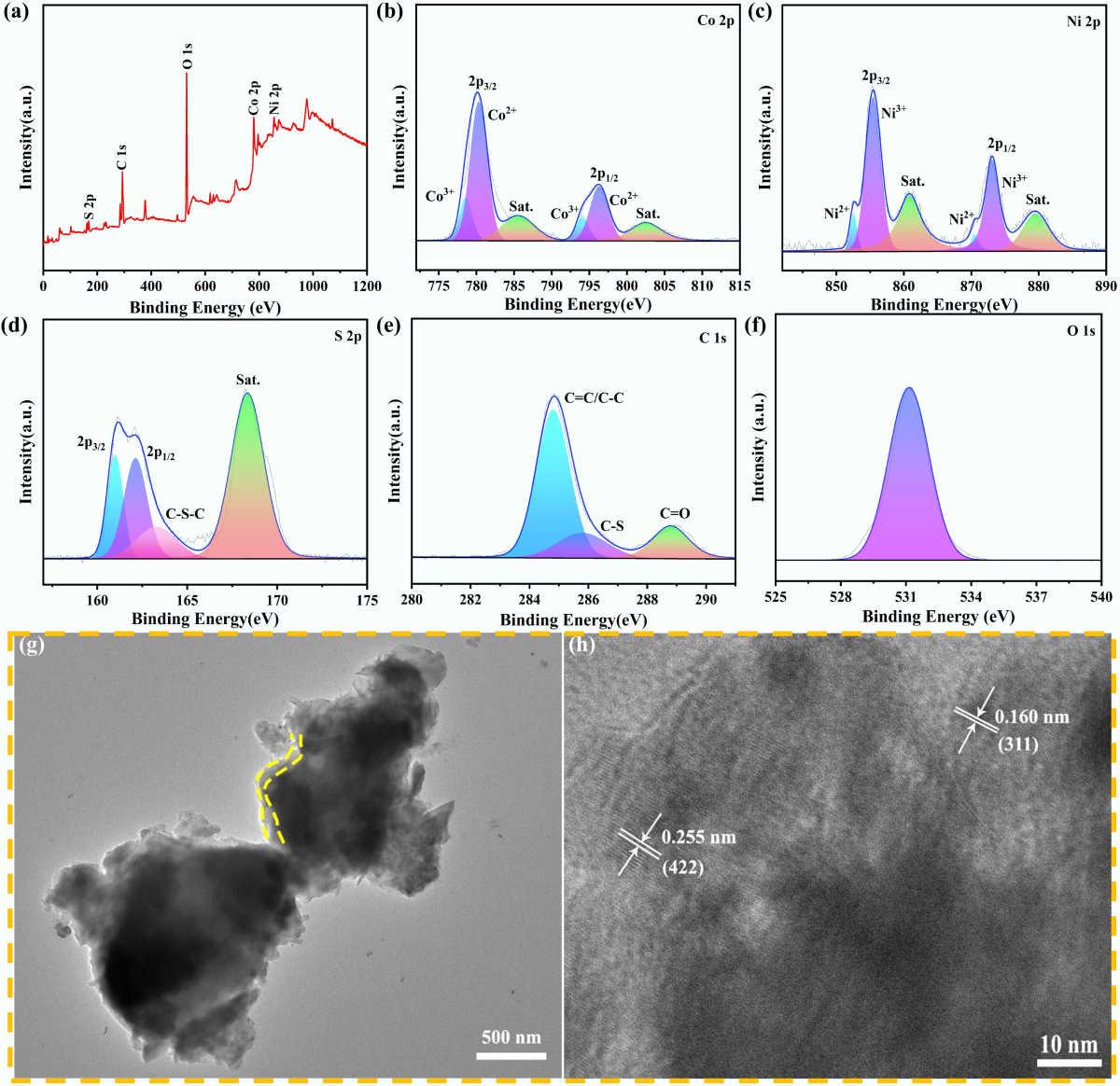
XPS full-spectrum and high-resolution spectra of composite compounds
“However, the development of efficient electrode materials remains a major challenge. Our work shows that waste resources can provide a solution," the researchers added. The initial discharge capacity of the composite compound was measured to be more than 1,000 milliampere hours per gram. Continued observation revealed that the material maintained strong performance during repeated charging cycles. When the researchers increased the electrical density, they were surprised by the material's endurance capacity. This observation helped them conclude that the material could support quick charge and discharge. Why did the composite compound show surprising capabilities? The researchers believe that its unique structure is the reason behind it.
The lignin-derived carbon layer improves electrical conductivity and keeps the electrodes stable. Meanwhile, the metal sulfide components create enough reaction sites for sodium storage. The researchers believe that the findings of this study have opened a new door in the field of sustainable material science. “We wanted to move beyond traditional recycling and demonstrate true high-value reuse of waste,” the authors wrote. “By converting discarded batteries and industrial lignin into advanced energy materials, we can reduce costs, conserve resources, and support cleaner technologies," they added. Researchers believe that in the long run, these compounds could help reduce the cost of sodium-ion batteries and make them more commercially available. “Integrating waste recycling with energy technology design could play an important role in building more sustainable power systems," they added.