
Endangered Ferrets Are Making a Comeback in the U.S. And It's Due to a Controversial Technology
Published Feb. 18 2026, 7:39 a.m. ET

Black-footed ferrets from the Phoenix Zoo's captive breeding program.
Black-footed ferrets, officially known as “Mustela nigripes,” have been extinct not once but twice. They were rediscovered again in 1981, and since then, scientists and conservationists have worked hard to bring them back. They brought back these animals through breeding programs, reintroduced them into the wild, and protected their habitat. These efforts have helped grow the population to more than 300 ferrets living in the wild today. However, there was one issue: almost every ferret in the recovery program came from just seven original animals. That meant very low genetic diversity, making the species more vulnerable in the long run.
However, experts created a solution for this. An organization involved with the cloning project named “Revive & Restore” and its partners turned to conservation cloning. They used frozen cells from a female ferret named Willa, who died in 1988. By cloning her, scientists added an eighth founder to the population and brought back lost genes. The project has produced three clones so far, namely, Elizabeth Ann, Antonia, and Noreen. Antonia raised two offspring in June 2024, and in summer 2025, four more litters were born.
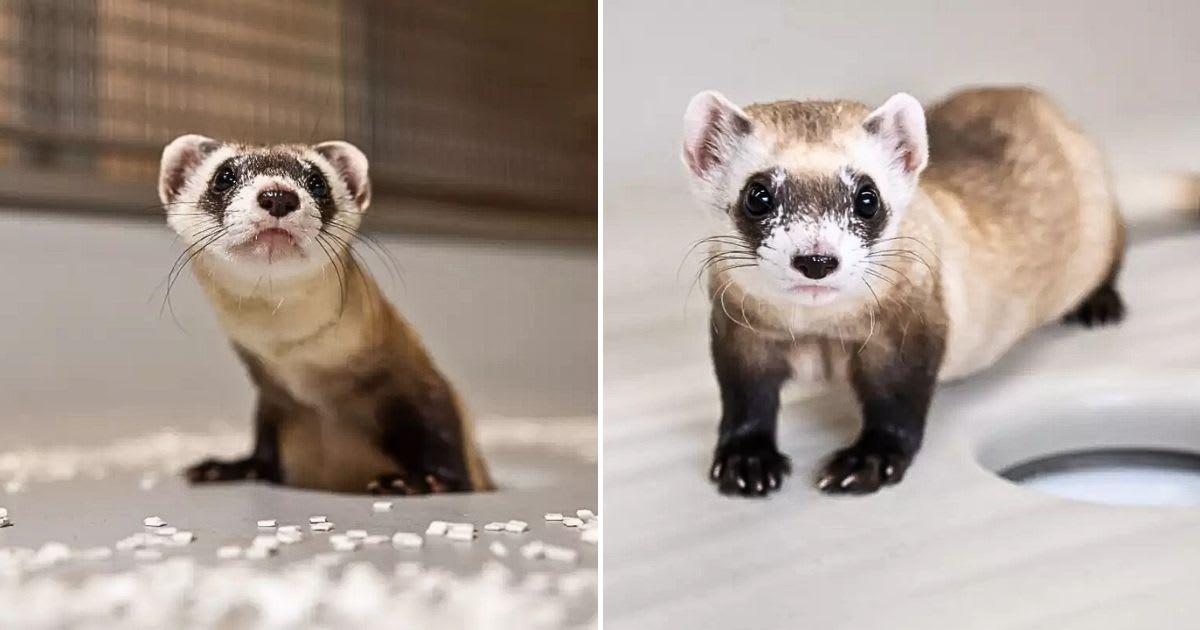
Black-footed ferret
“This project represents a historic milestone in conservation history. For the first time, we can definitively say that cloning contributed meaningful genetic variation back into a breeding population,” Ryan Phelan, Executive Director of Revive & Restore, said. He addressed the controversy surrounding cloning. He acknowledged that the process has often had a bad reputation. There were doubts about whether cloned animals are healthy or even able to reproduce. To address these challenges, the organization turned to cell lines that were carefully preserved back in the 1980s from some of the black-footed ferrets brought into captivity in 1981.
Out of the original 18 ferrets, only seven eventually bred. It meant later generations were all closely related. Experts warn that this kind of inbreeding can cause serious problems for a species, including weaker health and lower survival rates. To offer a solution for this, the conservation team used cells from a ferret named Willa. It was an individual ferret that carried much greater genetic diversity. Scientists cloned her and reintroduced those lost genes into the population. Those genes are now being passed on to future generations.
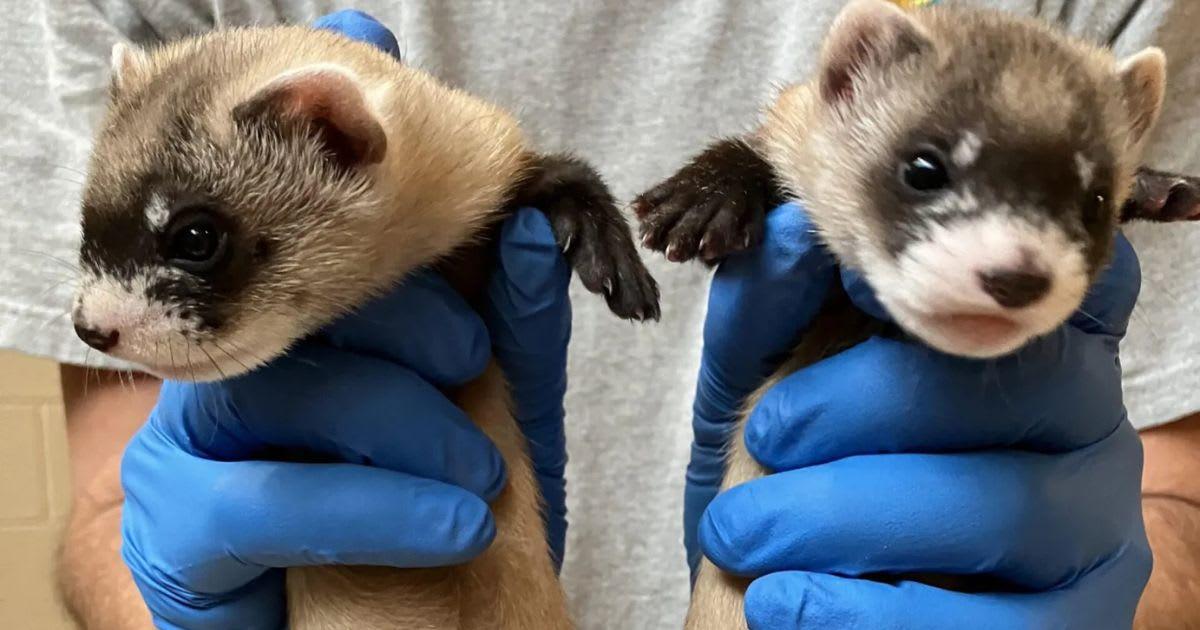
Two healthy black-footed ferret kits at 6 weeks old
When asked if the black-footed ferrets would be released into the wild, Phelan said that the plan is not to release these highly valuable cloned animals right away. They would rather focus on their offspring in the future. For now, the clones are considered extremely important and remain part of an ongoing research program involving the U.S. Fish and Wildlife Service, the Smithsonian, and the San Diego Zoo Wildlife Alliance.
Some concerns have also been raised regarding the future. If cloning can help save endangered species, people may become less motivated to fix the environmental problems that caused the decline in the first place. However, researchers involved in the project argue that cloning is not an easy shortcut. They stress that preserving habitats and protecting existing wildlife will always be more practical and effective than bringing back species via cloning after they are gone. “It will never be easy to bring species back from, literally, extinction. What we wanted to be able to do is preserve what we have and to keep as much genetic diversity as we can,” Phelan explained, per wbur.