
Scientists Just Successfully Reimagined Thomas Edison’s Century-Old EV Battery Design
Published Feb. 12 2026, 5:42 a.m. ET

An illustration symbolizes new battery technology: Proteins (red) hold tiny clusters of metal (silver). The yellow structure represent single atom of nickel or iron.
Electric vehicle batteries are all the rage in today's time, but little do people know that Thomas Edison was among the first to lay the groundwork. In the 1900s, American roads had more electric vehicles than gas-powered cars. Courtesy of Edison, the lead-acid auto battery, although slightly expensive, allowed people to travel approximately 30 miles on battery power alone. The pioneer knew that the distance wasn't long enough or practical and aimed to overcome the challenge with a vision already in his mind. That's how the idea of building a nickel-iron battery sparked. Edison promised that the battery would cover a 100-mile range with a recharge time of seven hours, which was quite impressive for that time. Now, a team of researchers brought Edison's vision to life.
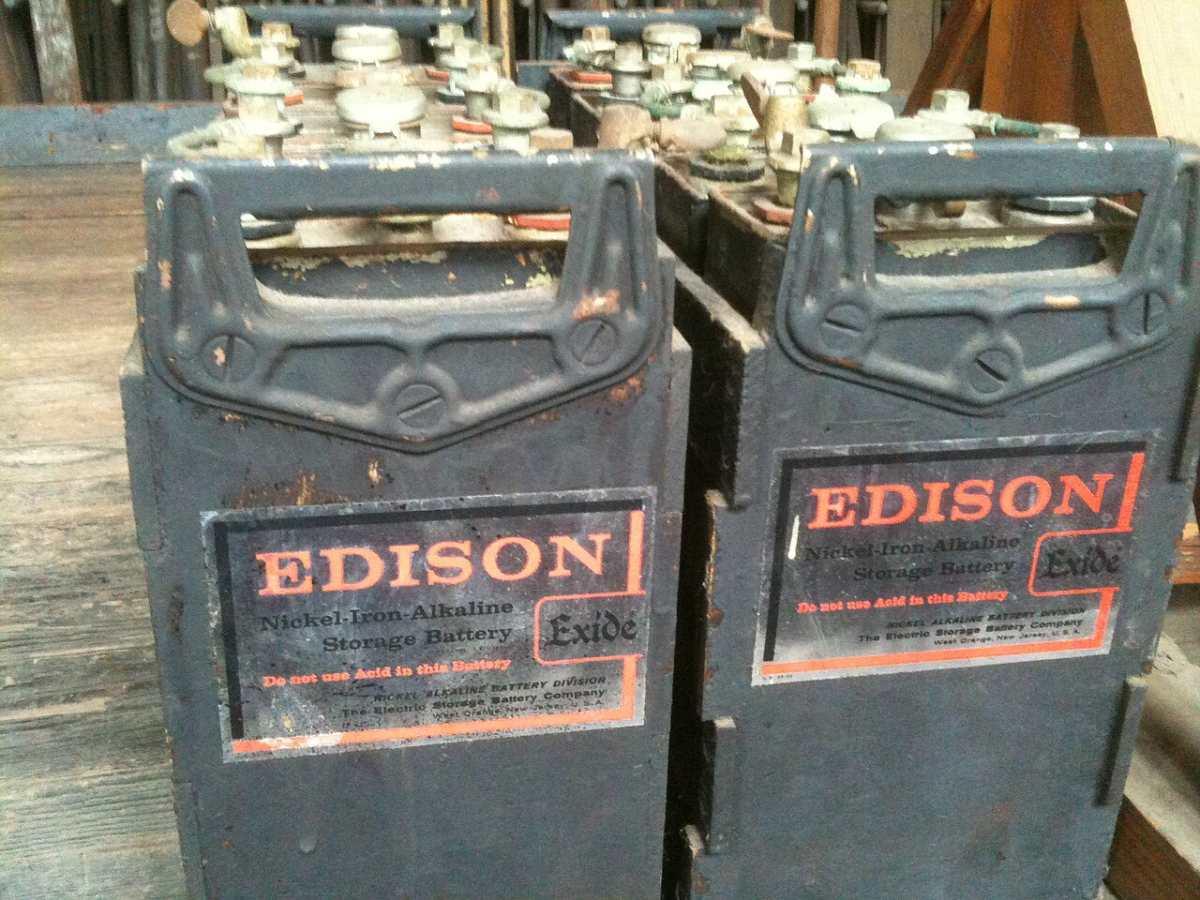
Thomas Edison's nickel-iron batteries.
The international research co-led by the University of California, Los Angeles (UCLA) is developing nickel-iron battery technology, inspired by Edison's idea, to store energy generated through solar farms. According to the study, published in the journal Small, the prototype could recharge in a few seconds and withstand more than 12,000 cycles of draining and recharging. Tiny clusters of metals blended into a pattern that was later attached to a 2-dimensional material built of one-atom-thick sheets.
The design might sound convoluted, but researchers claimed it to be surprisingly straightforward and inexpensive. “People often think of modern nanotechnology tools as complicated and high-tech, but our approach is surprisingly simple and straightforward,” study co-author Maher El-Kady, an assistant researcher in the UCLA College’s chemistry and biochemistry department, said in a statement. “We are just mixing common ingredients, applying gentle heating steps, and using raw materials that are widely available," he noted.
The researchers also sought inspiration from natural processes to bring their idea to fruition. They particularly turned to a fascinating process: the way living organisms build bones and shells. Whether it's the skeleton inside or the hard shells on the exterior, they are built with protein that acts as a scaffold, assembling calcium-based compounds around it layer by layer until a hardened structure is created. Scientifically known as biomineralization, the process acted as a base for the construction of nickel-iron batteries. Ric Kaner, a professor of chemistry and biochemistry in the UCLA College of Materials Science and Engineering and co-corresponding author of the study, revealed that the mechanism was mimicked to create tiny clusters of nickel or iron.
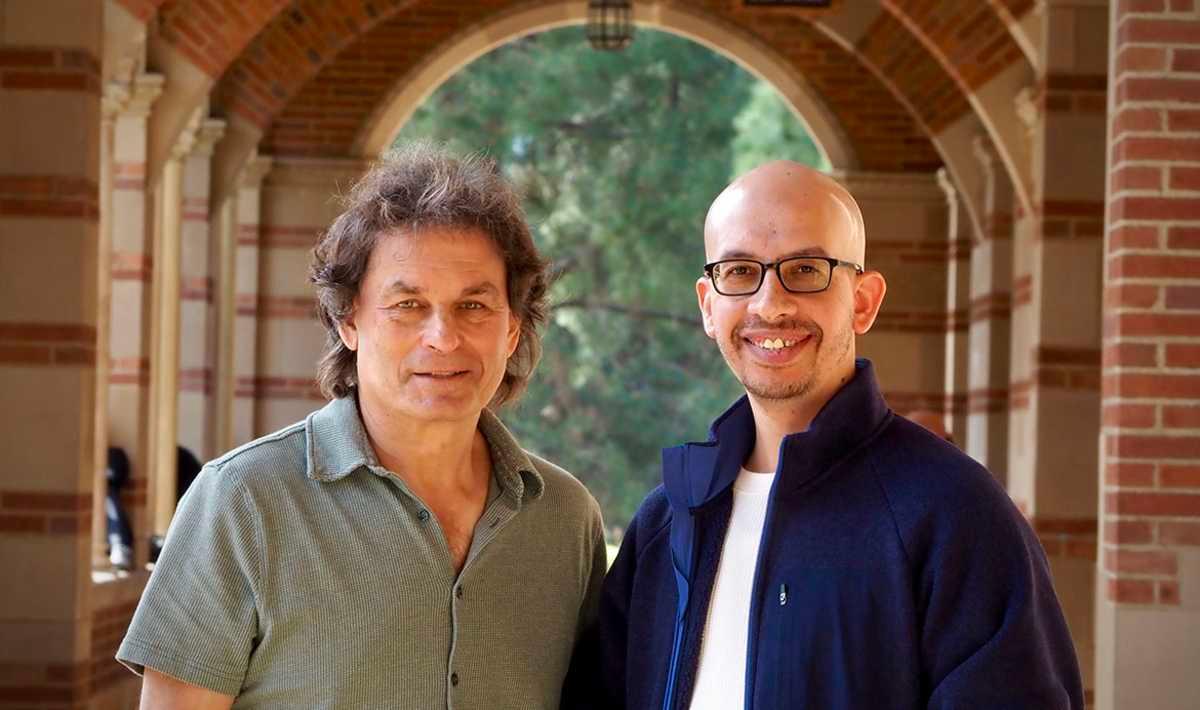
Researchers Ric Kaner and Maher El-Kady pioneered the study.
“We were inspired by the way nature deposits these types of materials,” Kaner said. “Laying down minerals in the correct fashion builds bones that are strong, yet flexible enough to not be brittle. How it’s done is almost as important as the material used, and proteins guide how they are placed," he added. The proteins were combined with graphene oxide, a single-atom-thick two-dimensional material containing carbon and oxygen. When heated to a high temperature, the proteins burned into carbon, pushing out oxygen from the 2D material. The empty spaces left by oxygen were filled by the metal clusters guided by the proteins. In the aftermath, an aerogel structure was formed with about 99% air by volume. The researchers also expanded the surface space to allow the tiniest of particles to partake in the reaction.
"When the particles are that tiny, almost every single atom can participate in the reaction. So, charging and discharging happen way faster, you can store more charge, and the whole battery just works more efficiently," El-Kady said. Although these batteries can't compete with modern-day lithium-ion batteries, experts believe they can be used in other fields, such as storing solar farm energy. “Because this technology could extend the lifetime of batteries to decades upon decades, it might be ideal for storing renewable energy or quickly taking over when power is lost,” El-Kady added.