
Multiple People Were Killed While Climbing Mount Everest in 1996 — Here’s What Has Changed
Eight people died on Everest during the disaster.

Published May 11 2026, 4:17 p.m. ET

May 11, 1996, is a day that will live in infamy for mountain climbers everywhere. That's because it was a deadly day for several of the mountaineers who had paid to climb to the mountain's summit.
Some say that this tragedy even changed the way that commercial climbing companies do business after it unfolded. In the years since the 1996 disaster on Mount Everest, multiple books have been written by the survivors of the trek.
However, those who made it out alive disagree on some of what happened.
This could be due to a number of complications, including hypoxia that could've been caused by the lack of oxygen, stress, cold weather, and so much more.
While it's hard to know whose account of the tragedy is correct, it does seem like the survivors can agree on some of the basics, which have become a bit of a blueprint of what happened that day. Keep reading to learn more about the disaster and what the survivors say caused so many people to lose their lives while making the amazing climb.
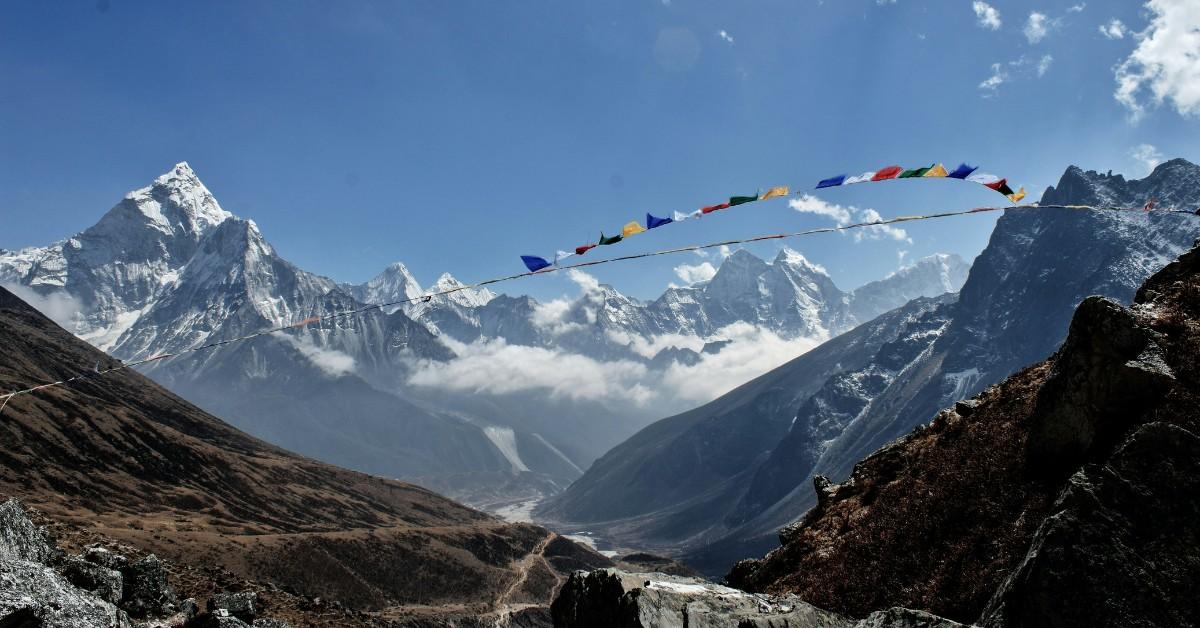
There was a disaster on Mount Everest in 1996.
Three different commercial climbing companies took people up Mount Everest during the May 1996 trip, including Adventure Consultants, Mountain Madness, and a Taiwanese national group.
Unfortunately, Explorers Web says the separate groups didn't coordinate much with one another on their trip up the mountain, which caused a few mistakes to be made along the way.
That included not fixing the ropes at the Balcony and Hilary Step, which caused delays that depleted oxygen supplies.
The outlet also blames Summit Fever for some of what happened, which is the nickname for when hikers get so close to the top of the mountain that they fail to follow safety instructions, like turning around by 2 p.m. so that they can make camp before it gets dark.
It was this last step that proved most deadly for the group, since they were still on the move when a massive snowstorm blew in around 5 p.m., causing whiteout conditions and freezing temperatures.
Multiple people were killed during the storm when they froze to death. Others succumbed to exhaustion, dying while trying to find their way back to the relative warmth and safety of the camps. Even sadder yet, one man died while stranded near the summit, where he called his pregnant wife, using the last of his strength to say goodbye.
On the other side of the mountain, an Indian Indo-Tibetan Border Police expedition also suffered large losses.
What happened to the 1996 Everest disaster bodies?
Many of the fallen remained where they were for years, with one of them earning the nickname of Green Boots, where his body was used by mountaineers as a landmark.
In all, eight people died on Everest during the disaster, and while some of their bodies remained in view, some of them have since been removed. According to All That's Interesting, the danger of hauling the bodies off the mountain, combined with the cost, prevents many of the dead from ever being recovered.
When is the Mount Everest 2026 climbing season?
According to Reuters, the Mount Everest climbing season typically runs from April to May, when conditions are safest.
However, the 2026 season got off to a late start due to a 100-foot chunk of ice that blocked the path from the base camp.