
Ocean Fossils Keep Turning Up on Top of Mount Everest. Scientists Say There’s a Good Reason for It
Published Feb. 10 2026, 6:20 a.m. ET

Himalayas in Manang, Eastern Annapurnas, Nepal. Peak bathed in golden light.
If Earth were a giant oven, sedimentary rocks would be among its finest cakes. Almost all sedimentary rocks tell the story of how they were baked over millions of years. Fragments of existing rock crumbled apart and, as erosion carried them through streams, rivers, glaciers, and lakes, they were deposited on seabeds. Over time, environmental pressure forced these rocks to expel water and bubbles, leaving behind a glue that bound the fragmented rocks, sculpting those rugged cliffs, rocky steppes, and towering mountains. On the summit of Mount Everest, some people discovered a sedimentary rock they named “Qomolangma Limestone,” as documented in Earth Sciences. Embedded within this rock were fossilized remains of dead fish and corpses of ancient marine creatures from about 500 million years ago.
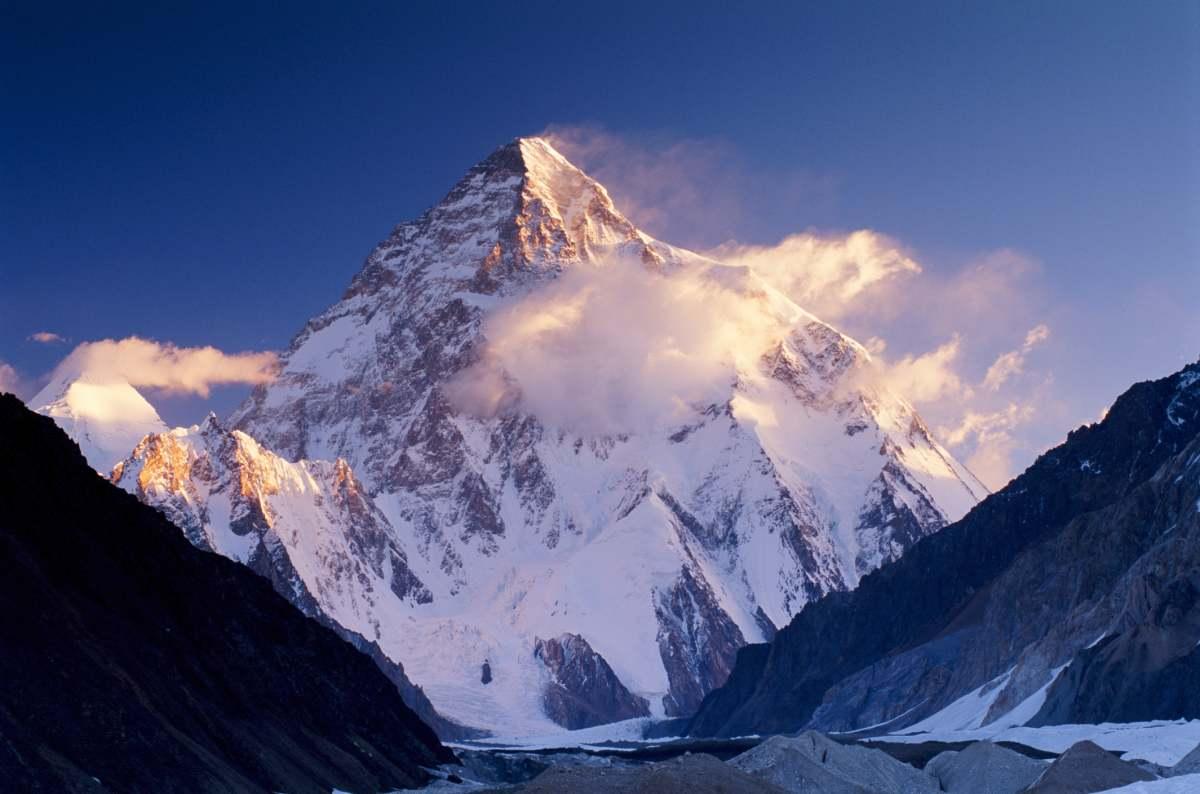
Himalayas range bathed in sunset hues
It is like opening a packet of potato chips and finding a whole, raw apple inside it. What is this doing here? A question like this might pop into your head. The same question popped up in the heads of those who came across the mysterious limestone rock on the Everest. Over the years, scientists have discovered additional evidence of marine fossils lurking on the world’s highest mountain. Several varieties of starfish, remains of extinct eels, and frozen dead bodies of tiny crustaceans, per the BBC Science Focus.
The presence of these fossils provides fascinating clues to how the Himalayas may have formed 50 million years ago. Bizarre and random theories have been circulating on the internet ever since the news about “fish in the Himalayas” came out to the public. A Facebook post even prompted the theory of the “great flood,” as mentioned in the bible. This idea made “waves of biblical proportions.”
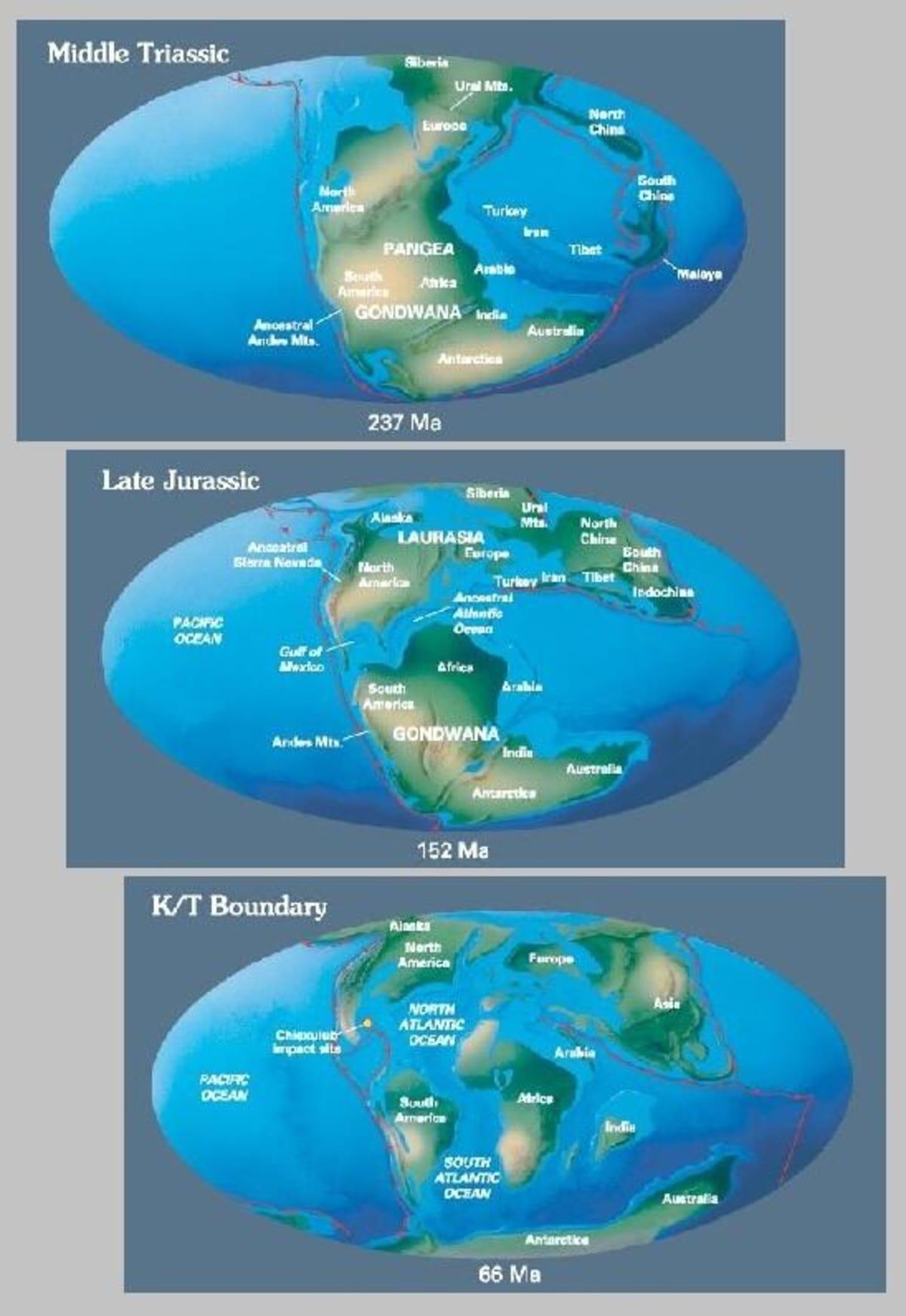
Illustration documenting the breakup of ancient supercontinent Pangea
People believed that billions of years ago, Earth experienced a grand flood that enveloped everything from mountains to cliffs and all of life. Over time, as the waters settled, the remnants of ocean life lingered like ghosts on the mountain slopes. But the mystery, it seems, is much simpler. Just a little bit of physics, or plate tectonics. Millions of years ago, the entire living zone of Earth was concentrated in a C-shape supercontinent called Pangea. It was the same continent where dinosaurs roamed. Around 200 million years ago, Pangea broke into pieces. Like crumbs of a biscuit, these pieces scattered across the planet and formed the different continents we see on maps.
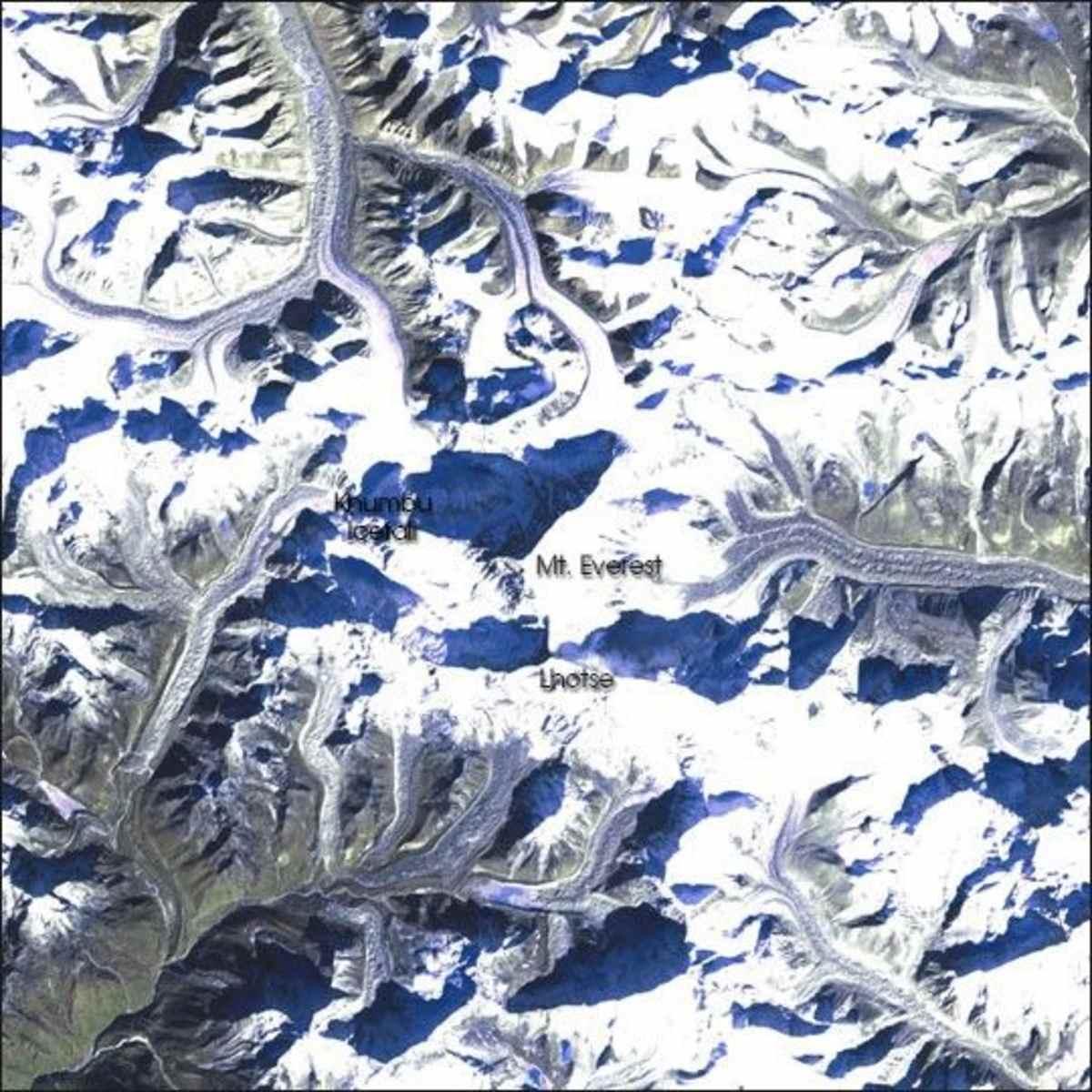
Photograph of Mount Everest acquired by Landsat 7’s Enhanced Thematic Mapper plus (ETM+) sensor on January 5, 2002
One of the pieces, which was to become India in the future, drifted northwards towards Asia. Cradled by the Indian plate, the piece moved apart from another piece, later named the Eurasian plate. After the breakup, the two pieces nestled in their respective locations, fostering conditions for life. The distance and space between them was filled by the Tethys Ocean. Between 40 and 55 million years ago, the two plates bumped into each other, once again, not in a handshake but in a full-blown collision. The two plates slammed into each other with such a force that they piled on top of each other, lifting the ground 26,000 feet above sea level. The Himalayas were created. And the slopes and valleys of these mountains were slathered with the corpses of creatures that once resided in the ancient Tethys Ocean.
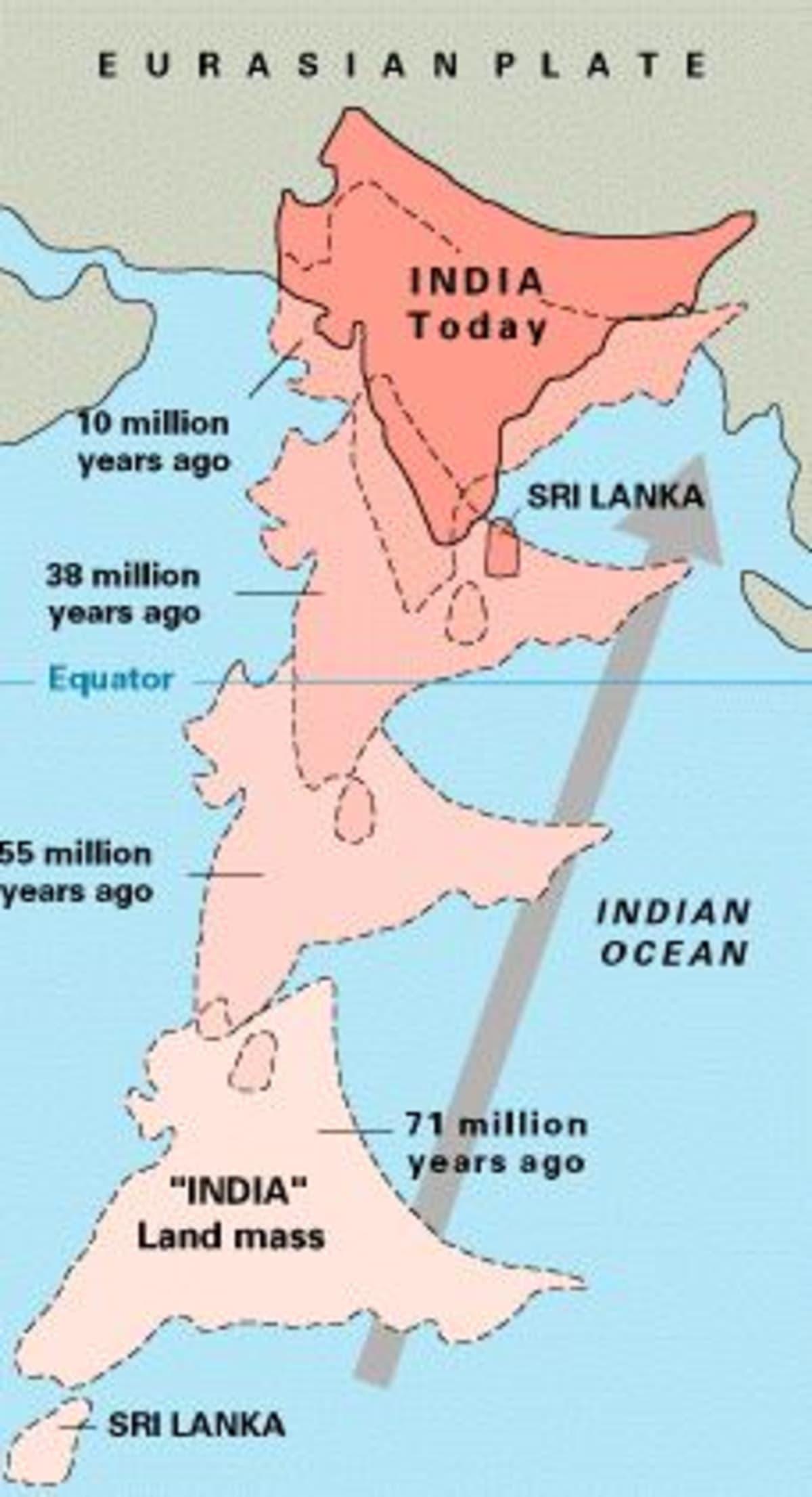
Illustration mapping the positions of the Indian plate as it drifted northward after the Pangea breakup
“The Eurasian plate was partly crumpled and buckled up above the Indian plate, but due to their low density/high buoyancy, neither continental plate could be subducted,” The Geological Society described. “This caused the continental crust to thicken due to folding and faulting by compressional forces pushing up the Himalayas and the Tibetan Plateau.” In fact, NASA believes that the presence of limestone and marine fossils on the mountain was key evidence behind the idea of plate tectonics proposed in 1915.