
Rocky Mountain National Park Falls Off Most-Visited List for First Time Since 2013. What Went Wrong?
Published March 16 2026, 6:50 a.m. ET

A visitor standing on a sunlit cliff of Rocky Mountains National Park.
Rocky Mountain National Park is not too different from a blockbuster cinema that offers many an enchanting, sometimes emotional, experience. As one stands in front of the towering schists of Longs Peak and clusters of granite cliffs, one feels small. Sheltered too. Like a roll of film unspooling itself on the silver screen, the meandering roads of the park take drivers over 12,000 feet in altitude, shifting scenes from alpine tundra to montane forest meadows to grasslands dotted with mountain goats, elusive bighorn sheep, and bugling elk.
At night, it splays out scintillating exhibits of the Milky Way for stargazers to enjoy. Those who become exhausted can be seen clambering towards the historic Stanley Hotel that sits in a cute town. Up above, the melting snow dribbles down looming peaks, spilling icy-cold waters in the valleys below, bringing life wherever they flow. With so much mystery and drama rolling in for the visitors, it seems impossible to think that Rocky could fall from the ranking it succeeded in maintaining for more than 13 years. According to a report published by the National Park Service (NPS), Rocky Mountain National Park has dropped off the top five ranking of America’s national parks. For Denverites and regular visitors, the crash has come as a surprise.
The entrance sign at the Rocky Mountain National Park, Colorado, United States.
Rocky's rugged stones, cliffs, and valleys hold millions of years of stories: of erosion, of floods, and of how Earth’s tectonic plates bumped into violent clashes, plunging underground and then emerging as giants, per Rocky Mountains PBS. It is a library of Earth’s ancient geology hardened into rocks dusted in charcoal greys, pinky tints, and bright oranges. For decades, Rocky has remained Colorado’s most beloved national park, consistently landing among the top five for almost every consecutive year. Last year, however, something changed. For the first time since 2013, Rocky’s name can no longer be seen in the top five, despite an uptick in visitor attendance.
According to the NPS report, Rocky Mountain National Park received 4,171,431 visitors in 2025, an increase of 17,082 over 2024. It seems, however, the number wasn’t big enough to compete with Rocky’s fellow national parks, which beat it. The top five ranks were snagged by Great Smoky Mountains (11,527,939 visitors), Zion (4,984,525), Yellowstone (4,762,988), Grand Canyon (4,430,653), and Yosemite (4,278,413).
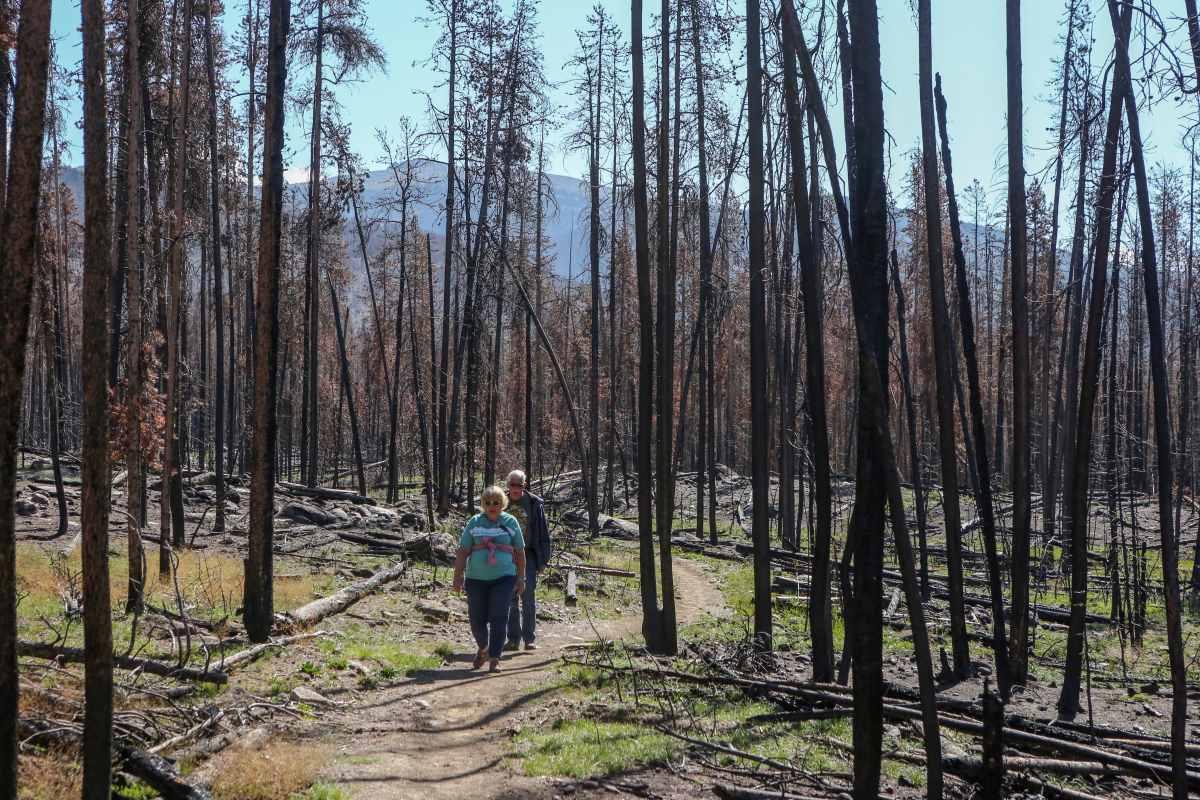
Two Rocky Mountain National Park visitors are hiking on a trail in a burn area.
The 415-square-mile (roughly 265,800 acres) landscape of Rocky that makes over $306 million annually from visitors might not be too happy with this new ranking, but there are others who have taken home exciting report cards. Mesa Verde, for instance, turned out to be Colorado’s second most-visited park, ranked 43 out of 63 nationally, with more than 463,000 visitors.
The Great Sand Dunes ranked just one place behind, at 44th, with more than 432,000 visitors. Gunnison’s Black Canyon came in 50th position, with slightly more than 250,000 visitors. While these candidates are happy with their report card, Rocky has suddenly come into the spotlight. Everyone is speculating on the possible reasons that could have caused a slump in its record-holding ranking status. One reason could be its very air. The National Parks Conservation Association (NPCA) reported that Rocky’s air is adversely affected by pollution propelled by a boom in oil and gas production in the neighboring Weld County.
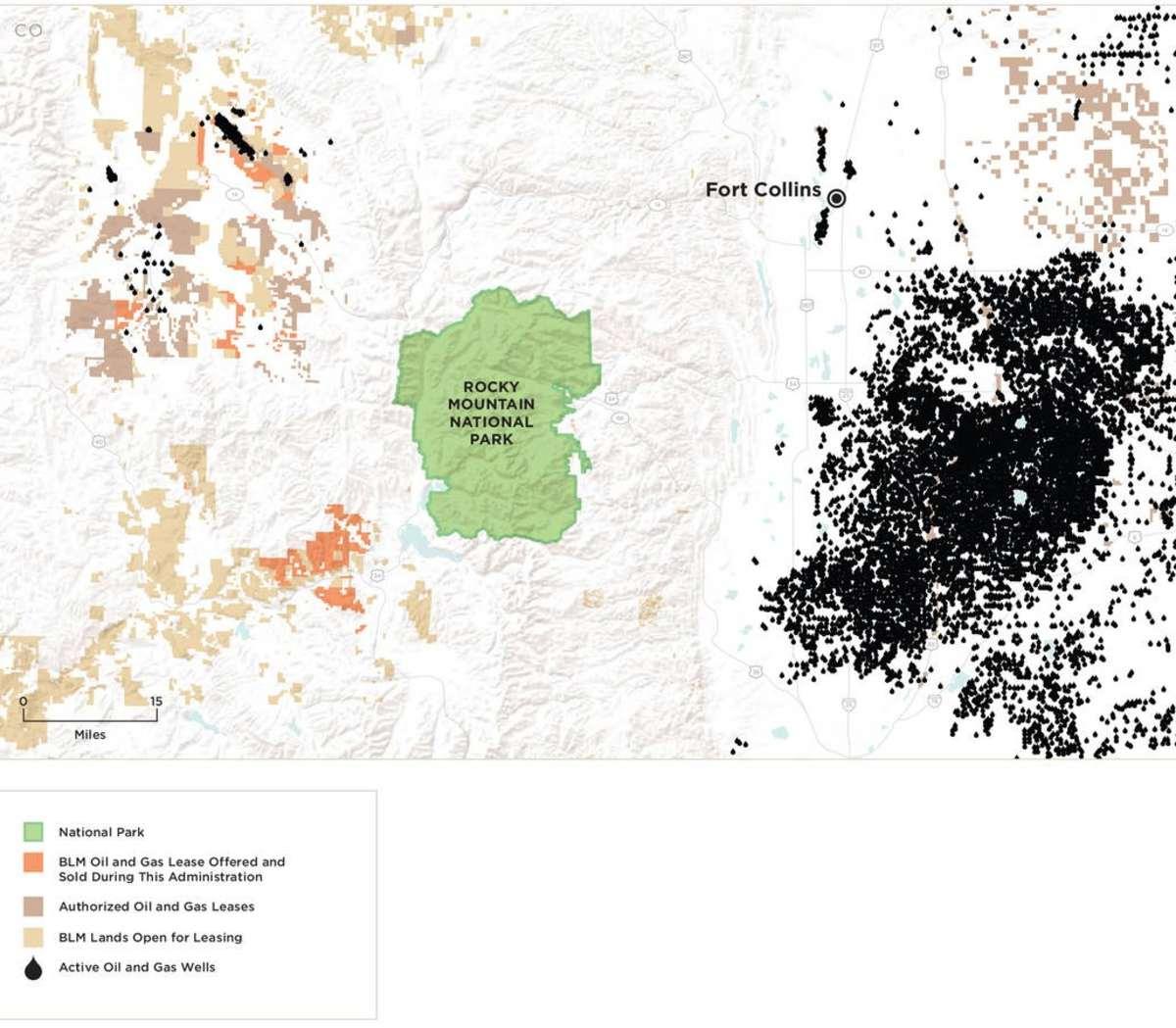
Development around Rocky Mountain National Park.
Not to forget the climate change that has triggered hot, dry conditions in Rocky, driving the growth of invasive grasses and the reproduction of pine bark beetles that are slowly killing away the trees. With trees dying and weeds overspreading, wildfires have become frequent. These, ultimately, could not be the direct causes behind Rocky’s dropping rank, but these could have contributed to it in some way or another. On a positive note, the increase in visitor numbers is a sign that Rocky continues to remain as beloved as it has always been for Colorado and the rest of America.