
China Creates World’s Biggest Electric ‘Flying Taxi’ — It Just Successfully Completed Its Test Run
Published March 13 2026, 8:36 a.m. ET

AutoFlight conducts a flight test of Matrix
China has fulfilled its dream of a “flying taxi.” A Chinese company named AutoFlight claims that its “Sky Dragon” and “Matrix” are capable of flying up to ten passengers and carrying around a ton of cargo, respectively, according to Live Science. Matrix recently exhibited full transition flight capability during a test flight on February 5, 2026, at Kunshan Civil Unmanned Aerial Vehicle Test Flight Operation Base in Jiangsu Province. Engineers claim that the largest electric vertical takeoff and landing aircraft (eVTOL) used in the test flight is the largest of its kind to complete this pursuit. The electrical aircraft reportedly weighs around five tons.
The flying taxi tested that day is labeled Matrix by officials, according to Associated Press. It looks like a giant drone, measuring 56 feet long and 11 feet tall. AutoFlight claimed that the aircraft can carry up to ten passengers and travel for an hour without charging. Their objective is to eventually make it available to the public as a flying taxi. AutoFlight conducted the flight test at a low-altitude test facility exclusively for the Associated Press. After the aircraft was moved from the hangar to the helipad, the propellers were turned on, followed by a full-body check to ensure everything was good for takeoff.
The take-off was a bit noisy, but nothing compared to what a helicopter makes. Matrix flew two laps around the heliport, after which it made a smooth landing. The V5000 aircraft reportedly lifted in VTOL mode, flew in fixed-wing mode, and returned to VTOL mode during landing, according to Live Science. The test flight revealed that the aircraft can lift and land on helipads and smaller places, without using any special infrastructure.
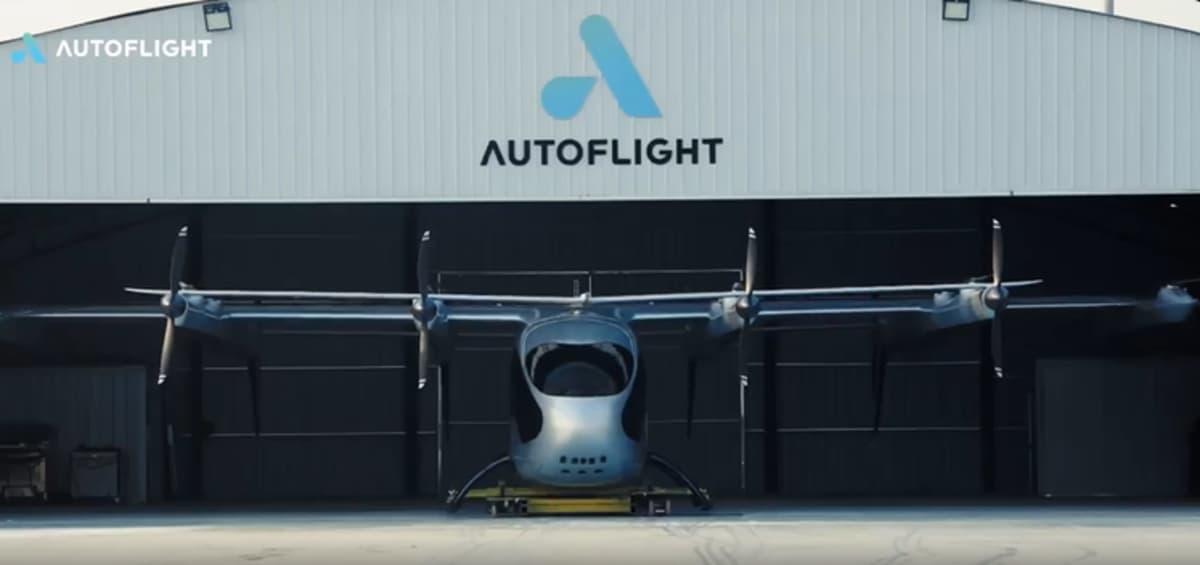
Matrix getting ready for launch
Despite such positive demonstrations, AutoFlight is not yet sure when exactly the flying taxi will become a reality for the public, according to Associate Press."This is a good question, but this is a very tough question for me to answer," said Steven Yang, Senior Vice President of AutoFlight, when asked regarding its launch. Matrix remains a prototype. The passenger version of Matrix has been named “Sky Dragon.” It can apparently carry ten passengers at once. No certification trajectory for V5000 Sky Dragon/Matrix has been announced, but the company's smaller V2000CG holds some key certifications, which allow it to become available to the public earlier.
AutoFlight has developed two non-passenger versions of eVTOL. These versions also need certifications for operation. At present, the company’s objective is to get an authorization from regulators by 2027, which confirms that the aircraft design aligns with safety standards. Then, the organization will work towards an operator certificate. Other companies in China are also investing in eVTOLs, with one of them, named EHANG, having already gathered the required certification to provide commercial passenger services. EHANG, though, is unable to send its ‘flying taxi’ into the sky because of a lack of facilities to support it.
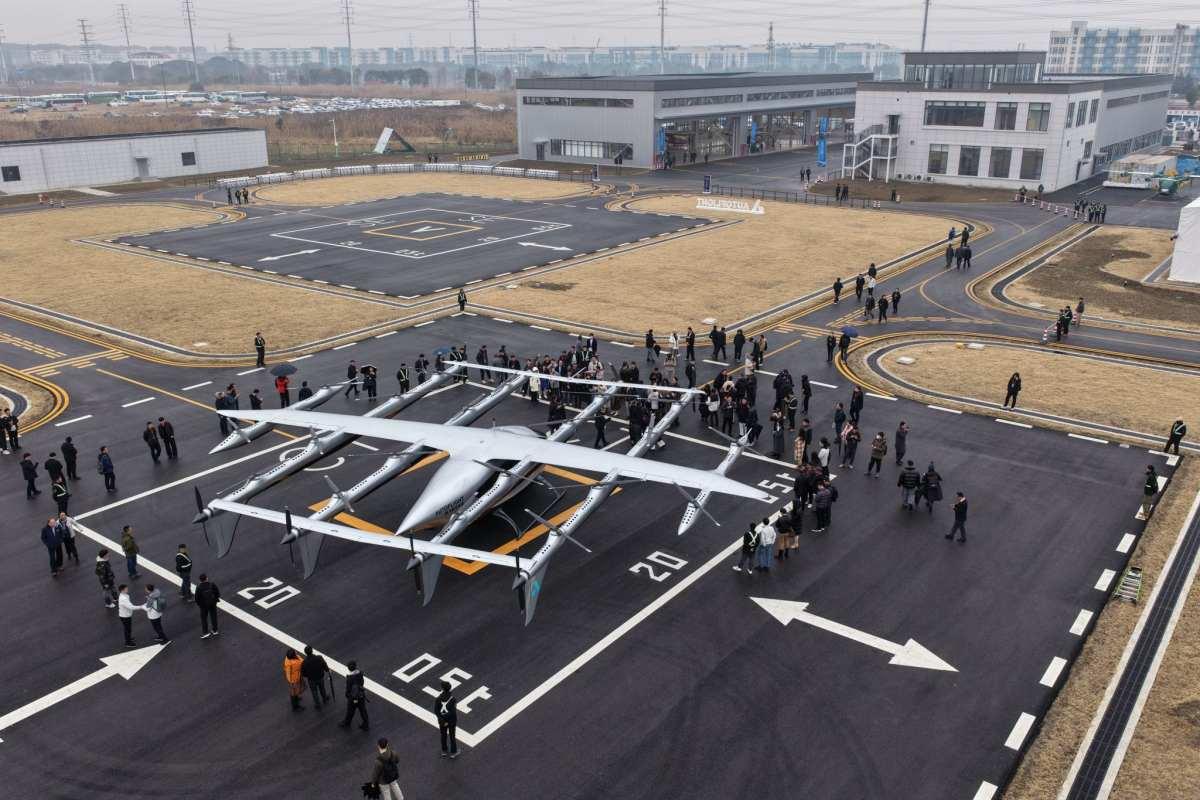
AutoFlight unveils Matrix
The facilities needed to support equipment like a flying taxi are part of the low-altitude economy. Gary Ng, a senior economist at Natixis Corporate and Investment Banking, believes that much improvement is needed in this sector before it can support a robust network of flying vehicles. “The technology itself is also still underdeveloped at this point,” he said. “I would say it would take at least another three years to see something more viable.” Some of the facilities authorities need to work on are infrastructure, logistics, and safety. Despite this hard-hitting reality, supporters believe that one day flying taxis will dominate the skies. “We really believe it will happen,” Yang said. “But this is not (only) AutoFlight’s job, it’s the whole ecosystem,” he added.