
Time Runs Faster on The Moon, And China Just Built the First Clock to Keep Up
Published Jan. 14 2026, 7:23 a.m. ET

Faint glow of the Moon obscured by shadows and cloud cover
Just four days ago, NASA announced a test flight and wet dress rehearsal for its upcoming Artemis II mission. Engineers are fueling up the rocket's boosters. Supercomputers and wind tunnels are being tested for the tiniest of glitches. Astronauts are undergoing spacesuit checks. It's been 50 years since NASA stamped its foot on the Moon. With Artemis II, they will now step onto the silver-grey soil once more; this time, traversing the mysterious nooks of its shadowy south pole—a sight never witnessed by human eyes. And the lonely pearly satellite of Earth will host humans for the first time since Apollo 17 visited the moon in 1972. However, time on the Moon is different from time on Earth, and they'd need clocks to stay in sync.
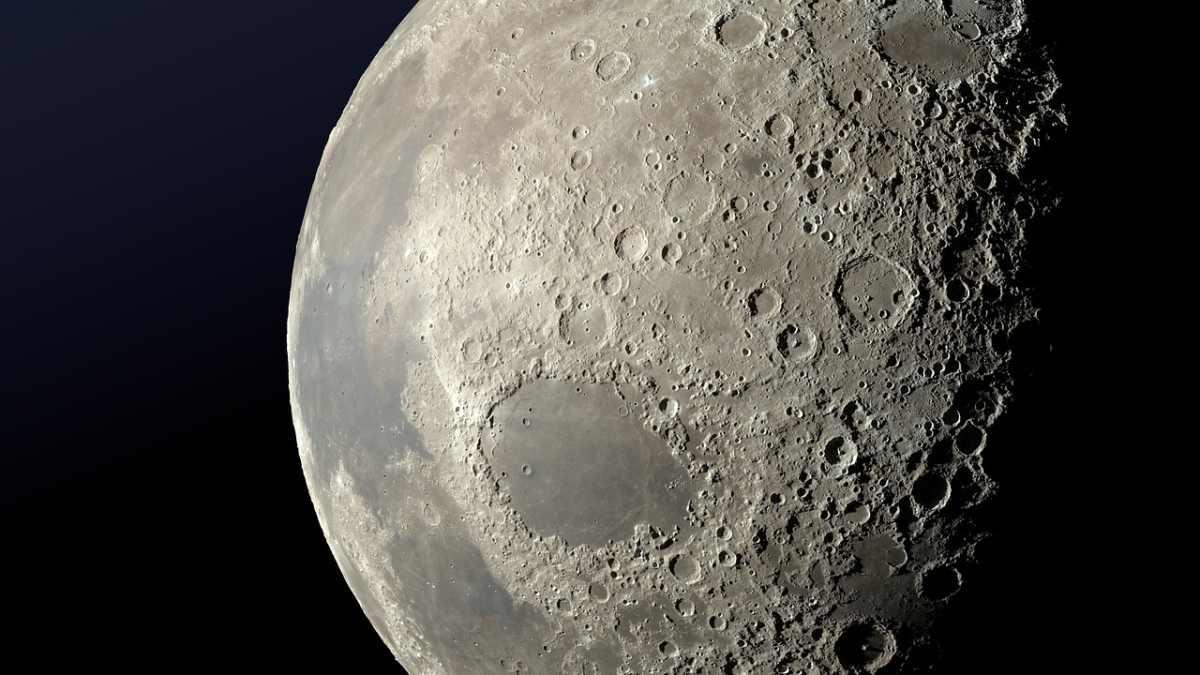
A close-up view of the far side of the moon.
Time runs faster on the moon, a concept Albert Einstein termed "gravitational time dilation." If space were a huge trampoline and the Moon and Earth were balls, then the weight and movement of the balls on the trampoline would determine the warp in space-time. Now, if Earth is a bowling ball, the Moon is a tiny tennis ball, which means it doesn't exert as much gravity as Earth, thereby speeding up time. Clocks tick faster on the moon by about 56 millionths of a second every day.
This may not sound like too much of a difference, but for astronauts, the slight gap could lead to a catastrophic crash. In the past, lunar missions were rare. But now, as NASA and other space agencies are making vigorous plans for setting up lunar colonies, lunar timekeeping comes more as a necessity than a technological breakthrough.
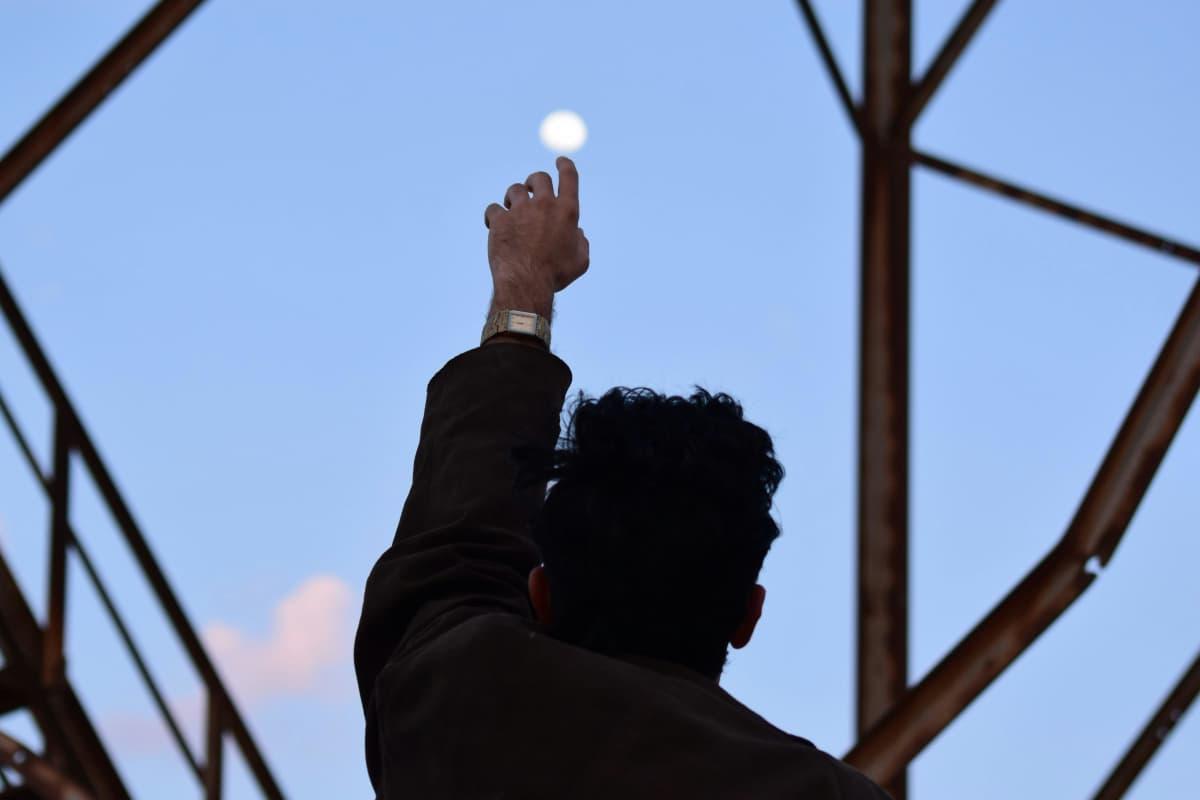
Man pointing towards the moon
In a new study published in "Astronomy & Astrophysics", Chinese scientists documented a groundbreaking timekeeping system they've created that can tell lunar time. "Lunar timekeeping was becoming a real engineering need rather than something that could be handled on a case-by-case basis using Earth time, as in the past,” Jonathan McDowell, a Harvard astronomer and space historian, told South China Morning Post (SCMP).
Building on this idea, the team of Chinese researchers from the Purple Mountain Observatory in Nanjing created the "world’s first ready-to-use software package for lunar timekeeping." The software would enable anyone on Earth to synchronize their clocks with someone staying on the Moon. To achieve this, researchers used movements of the Moon as well as its gravitational measurements and wrapped them up in a software package.
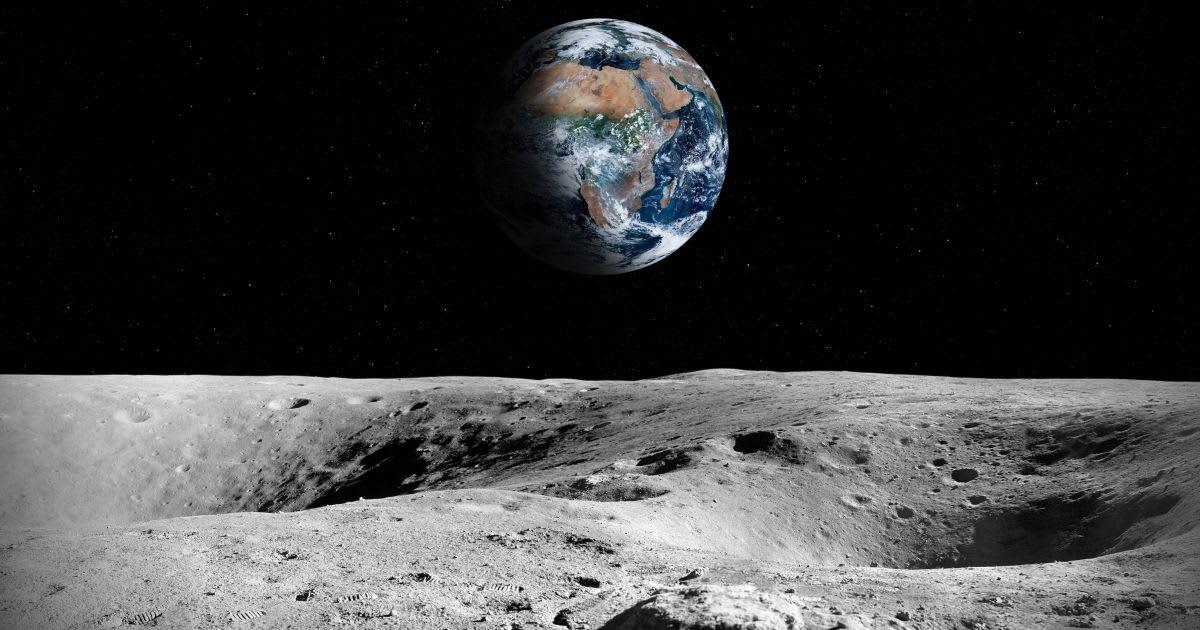
Earth rising from behind the shadows of the Moon
The automated process removes the hassle of complex calculations that earlier astronauts had to do as they embarked on a lunar mission. Called 'LTE440' or 'Lunar Time Ephemeris', the software was created to bridge the timescales between Earth and Moon. Engineers involved in the project used the time ephemeris of the Moon with the "relativistic time-dilation integral" to program the software.
Time ephemeris, a term also coined by Einstein, refers to a table or a data file that chronicles the calculated positions of a celestial object at regular intervals throughout a period. The time-dilation integral is an indispensable ingredient that defines the difference in the timescales. Contributions were also taken from the details of Sun's gravity, planets, asteroids in the main belt, and the Kuiper belt objects. Researchers say that this software will work with utmost accuracy for over 1,000 years, with a drift rate up to the year 2025.