
China Just Tested a Flying Wind Turbine, and It Generated Enough Power to Run a U.S. Home for 13 Days
Published Feb. 27 2026, 8:12 a.m. ET

S2000 Stratosphere Airborne Wind Energy System (SAWES)
The future is here, and China is taking the lead. A Chinese energy company has successfully tested a wind turbine that actually flies in the sky. Appearing like a giant blimp, it is designed to generate electricity high above cities and regions where building large wind farms is not practical. The project was developed by Beijing Linyi Yunchuan Energy Technology and is known as the S2000 Stratosphere Airborne Wind Energy System (SAWES). The way the system works is by using a helium-filled airship instead of massive spinning blades. It is equipped with 12 smaller wind turbines built directly into its structure.
The structure flies thousands of feet in the air and reaches an altitude where the winds are stronger. Then the wind spins the turbines, allowing the system to continuously generate electricity. The power produced is then transmitted back down through a long tether cable connecting the airship to a ground station. By flying this system above buildings, mountains, and terrain obstacles, airborne turbines like this could potentially produce more energy. Weng Hanke, co-founder and chief technology officer of Beijing Linyi Yunchuan Energy Technology, explained its potential uses, saying, “One is for off-grid settings like border outposts, where it can serve as a relatively stable conventional energy source. The other is to complement traditional ground-based wind power systems, creating a three-dimensional approach to energy supply," per Tide News, via Global Times.
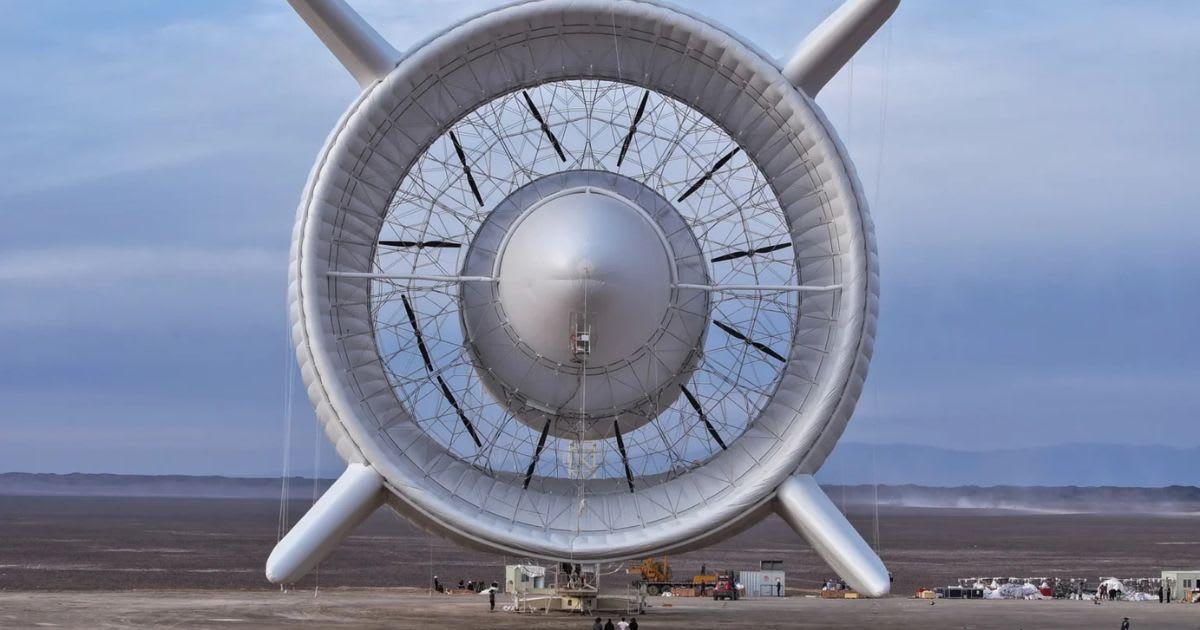
World’s first megawatt-class urban-used high-altitude wind power system
The S2000 was flown about 6,560 feet during its test flight above Sichuan Province. It generated around 385 kilowatt-hours of electricity, which is roughly enough energy to power an average U.S. household for about 13.3 days (based on estimates from the U.S. Energy Information Administration). The airborne system is massive, and it measures about 197 feet in length and 131 feet in both height and width. The system is built for producing massive output.
If this technology can be rolled out on a large scale, it could be a gamechanger for countries that do not have much room for traditional wind farms. Many parts of mainland Europe face land constraints that limit onshore wind expansion. Moreover, countries like Japan also struggle with offshore wind development due to a lack of shallow seabeds. A high-altitude, airborne system could be the best alternative since it will be able to tap stronger winds. And it will also not take up valuable land or rely on specific seabed conditions.
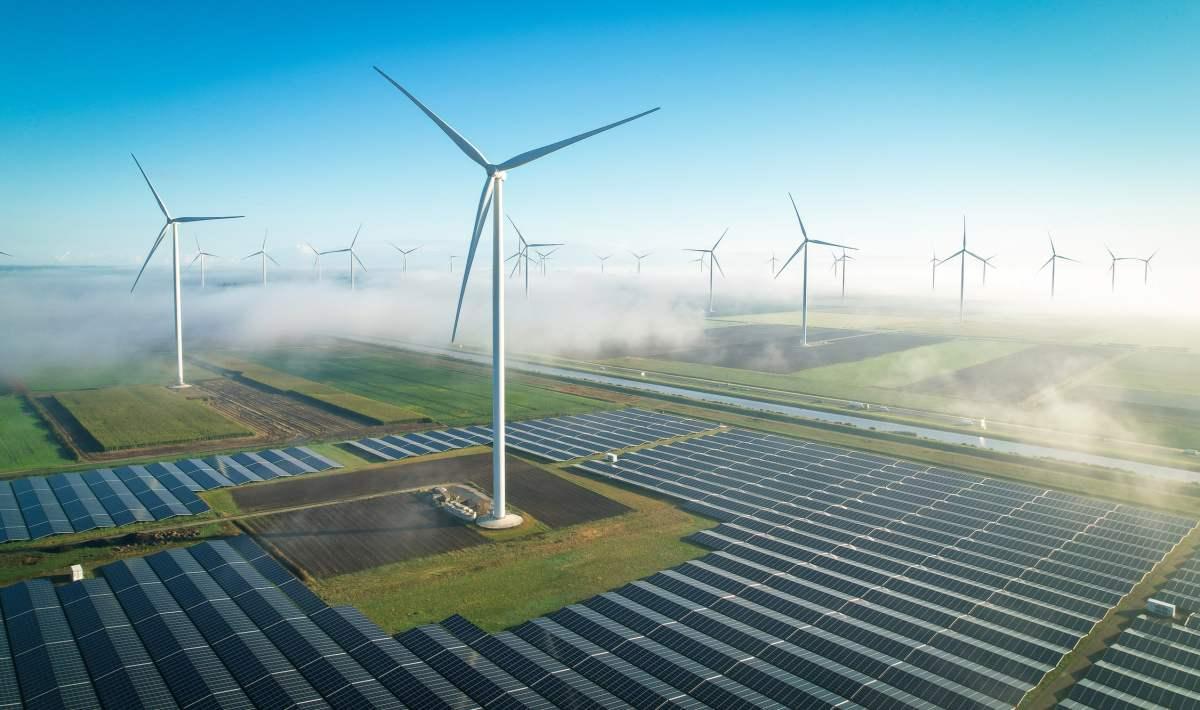
Traditional wind turbines.
That said, there are still hurdles to clear. One major question is how reliable the long tether cable will be when it comes to delivering steady, uninterrupted power to the grid. Engineers will need to put the system through more rigorous testing to ensure it can handle changing weather conditions and long-term operation safely and consistently. Furthermore, there are also some obvious safety concerns related to keeping a massive turbine suspended in the air. The system’s 1.25-mile cable could potentially be a risk for aircraft flying through shared airspace.
It is also important for the S2000 to prove that it can work reliably. Traditional wind turbines already require frequent inspections and maintenance, and servicing a flying system could be far more complicated. If there are any mechanical issues, the entire ship has to be brought down. Nevertheless, it is a major step towards clean and sustainable energy that can turn out to be beneficial for the planet.