
A Dangerous African Reptile Has Invaded Florida, And State Officials Are Raising Alarm
Published Feb. 20 2026, 10:20 a.m. ET

Nile monitor lizard (Varanus niloticus), searching for food by burrowing in Samburu, Kenya.
The growing number of Nile monitors has now concerned Florida officials. Experts have long defined the Nile monitor (Varanus niloticus) as an invasive species in the US, according to PEOPLE. It is apparently the largest and most dangerous of the lot. It is native to sub-Saharan Africa and enjoys breeding populations in many counties across Florida. Officials have urged residents to report sightings and not to capture them on their own. These creatures can cause infection and physically injure their captors. In 2024, 25 official sightings were reported in Florida. This species established itself in Florida due to illegal trade, escaped reptiles, or intentional release of pets.
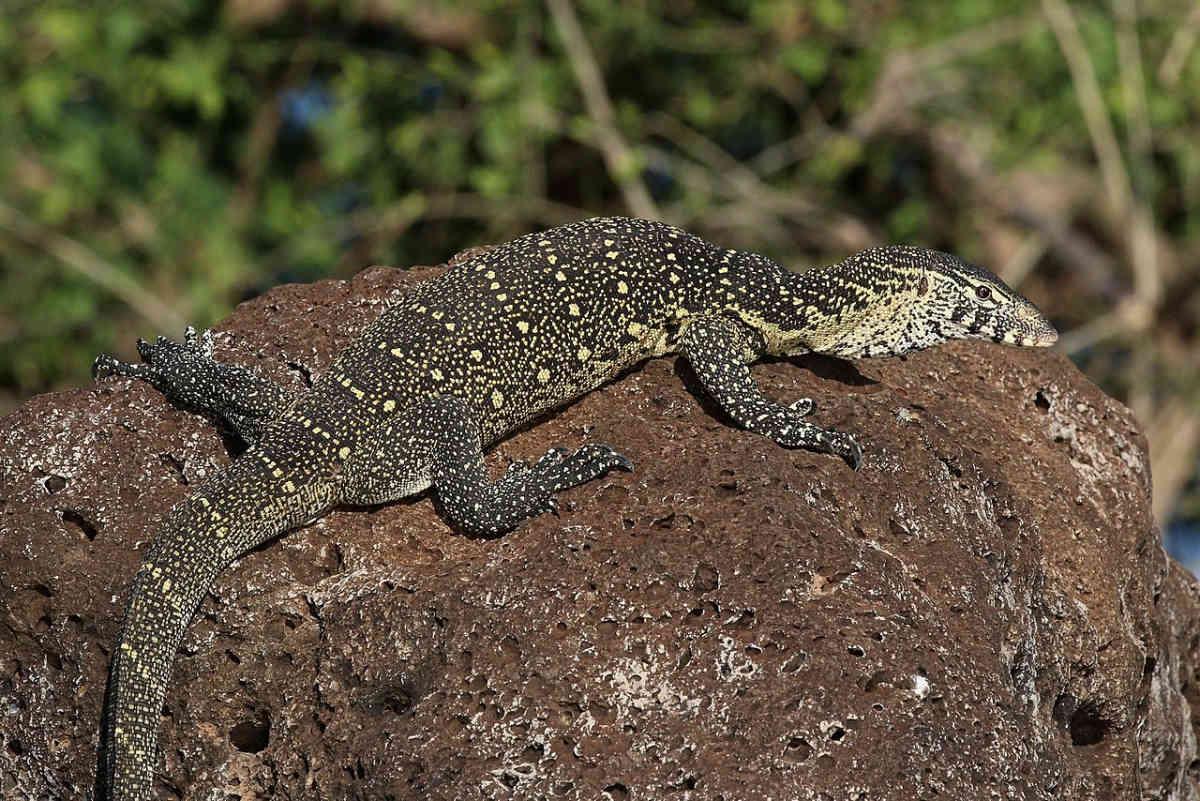
Nile monitor lizard (Varanus niloticus) in its native region in Lake Baringo, Kenya
Nile monitors are found in a variety of colors from olive green to black. They sport yellow or cream stripes alongside the jaw, head, and back. Also known to be exceptional climbers and swimmers. An adult can reach a height of 6.5 feet and weigh around 22 pounds. Their lightly banded tails often serve as rudders, helping the creatures navigate canals and waterways, abundant across South Florida. Essentially, it is their size, power, and defensive tactics that make them dangerous. The lizard can cause injuries to opponents by biting with sharp teeth, whipping its muscular tail, or slashing with its claw. Even their saliva contains bacteria that can cause serious infection. For all these reasons, Florida officials have requested civilians to be wary of them.
Despite this request, there are no provisions that prevent individuals from killing Nile monitors without any permit or hunting license, according to Outdoor Life. Mike Kimmel is one such individual who targets Nile monitors along with other invasive species. “A Nile monitor is essentially like a smaller Komodo dragon,” Kimmel shares in a video. “It’s a predatory lizard, and they don’t mess around. They’re not dumb. They’re more like a python mixed with an iguana. That’s a good way to think of them.” His efforts are concentrated on the west side of the state, especially Cape Coral, which hosts the largest population of these lizards in the state.
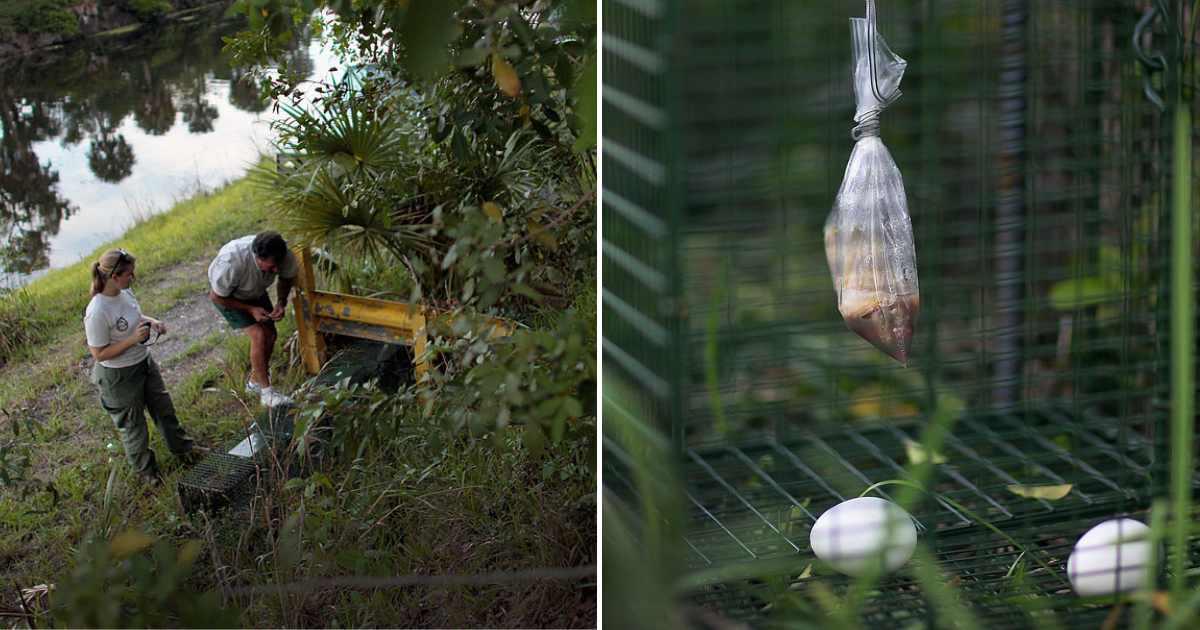
Florida Fisheries and Wildlife officials setting up a trap for a Nile monitor lizard in West Palm Beach, Florida.
Experts claim that it is essential to limit their population. They are dangerous to multiple vulnerable native species. “Nile monitors have a strict carnivorous appetite,” City of Cape Coral environmental biologist Harry Phillips shared. “Having a predator such as the Nile monitor in Florida is a detriment to native species, and a further threat to listed species such as gopher tortoises and burrowing owls.”
In south-west Florida, the lizards are not a major threat yet, but they soon receive that distinction, according to BroBible. In each clutch, these lizards lay 12 to 60 eggs. The incubation time is pretty long, from six to nine months. To prevent the worst-case scenario, its eggs must be swiftly terminated; otherwise, the lizard's population will increase in the coming days.
Since 2021, Nile monitors have been present in Florida’s Prohibited Species List. This implies that the creatures cannot be kept for research, educational, or eradication purposes. They can still be kept as pets. If someone does not wish to care for these lizards, Nile monitors can be surrendered through Florida’s Exotic Pet Amnesty Program. Any sightings must be reported through IveGot1.org, the IveGot1 hotline (888-483-4681), or the IveGot1 smartphone app.