
Officials Find a Massive Bulge in Yellowstone, Suggesting Volcanic Activity
A bulge that originally appeared along the Norris Geyser Basin back in 1996.

Published Feb. 13 2026, 9:00 a.m. ET

Visitors to Yellowstone National Park may get to experience something unusual in February 2026 thanks to a massive bulge that has formed along the Yellowstone caldera's north rim.
The bulge has been described as being as large as a city, to give you some perspective of how big it is. That will likely sound alarming to casual observers, who may take it as a sign that volcanic activity is increasing within Yellowstone's supervolcano. However, geologists say that there's a reasonable explanation.
While an eruption from Yellowstone's volcano would be life changing for almost everyone who lives on Earth (and deadly for those who live within the blast radius of the volcano), there may not be anything to worry about... yet.
That's because the bulge appears to be from Yellowstone's magma chamber, and the thing that is causing it typically signals that there is increased movement in the lava and gases that can be found within the chambers under the volcano.
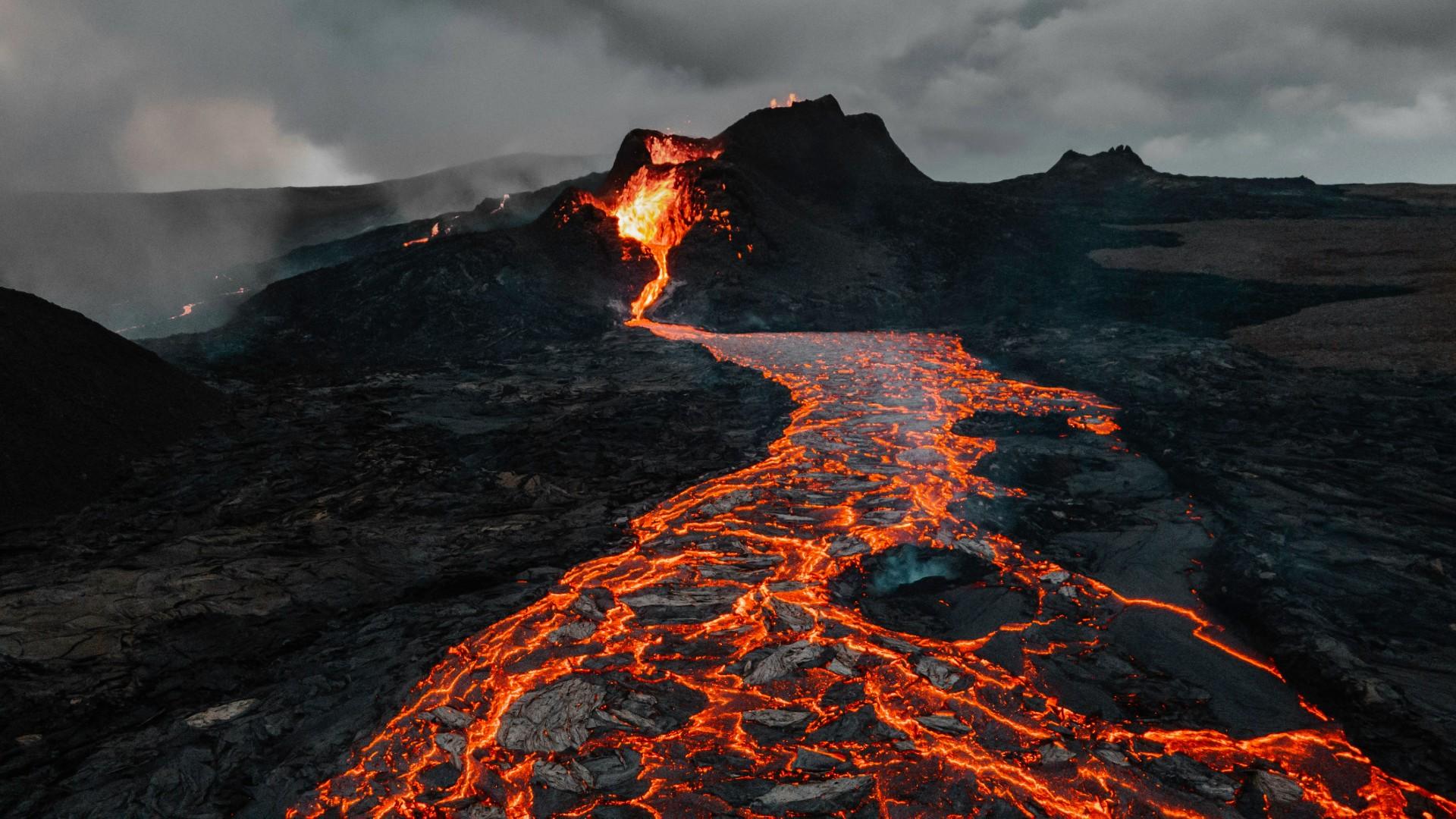
What is going on with Yellowstone's magma chamber?
The Oregonian reports that a bulge that originally appeared along the Norris Geyser Basin back in 1996, and then disappeared in 2004, returned in July 2025. Called the Norris Uplift, after the name for the phenomenon that causes the bulge to appear, made its grand reappearance in July 2025.
This time, the bulge was much larger, and it spans roughly 19 miles across. Not only that, but the bulge has raised the ground nearly two centimeters, according to the Yellowstone Caldera Chronical.
While The Oregonian notes that two centimeters isn't really big enough to notice with an untrained eye, the GPS monitoring site responsible for tracking changes was able to pick it up.
Geologists will continue to monitor the volcanic uplift to see if they can determine how and why the bulge is occurring, and what it means for Yellowstone's massive magma chambers that lie just beneath the massive national park.
Will Yellowstone ever erupt?
With words like "increased movement" may sound like the volcano is gearing up for action, the U.S. Geological Survey (USGS) says that it's not a sign that the supervolcano is about to erupt.
In fact, the government agency says that it's impossible to even say that the volcano is overdue for a massive eruption, even knowing that the last big one occurred more than 70,000 years ago. That's because volcanoes aren't as predictable as one may hope.
Even when you take the three largest eruptions, which USGS says occurred 2.08, 1.3, and 0.631 million years ago, the average time between them is still something like 725,000 years.
Since the last big eruption happened 70,000 years ago, we would reasonably still have 655,000 years to go before we came close to what would be considered the right time for an eruption.
And when you consider all of the other more pressing dangers facing humankind, including climate change, Yellowstone's next eruption feels very far away indeed.
As such, it's unlikely anyone alive today needs to worry about it. That being said, it's still important for scientists to study what happens at Yellowstone so they can learn more about how the volcano works and what to expect in the future.