
With Climate Change Heating Up Yellowstone’s Rivers, Park Makes Major Shift to Its Fishing Rules
Published Feb. 11 2026, 5:50 a.m. ET

Silhouettes of visitors engaged in fishing in Yellowstone with waters shining golden in sunlight
At a 40-foot drop from Firehole Falls, the Firehole River is a place where “hairy, horned, clawed, and toothy beasts from the last ice age stalk the banks in search of food or places to give birth or both,” award-winning journalist Nate Schweber described in his 2012 book. On a typical day between winter and spring, newly hatched silver-sided fish appear rising and dipping in the boiling waters of the river. Elsewhere in Yellowstone, the rocky-boulder-strewn beds of riverbanks are flanked by golden-yellow cottonwoods where bald eagles sit and wait for the fish to emerge, to catch and eat.
Ospreys pick through the corpses of whitefish while bears and bison can often be observed rummaging through the aquatic grasses. Bubbling hot springs and pools are often glinting with the flashes of fishing hooks bent into the waters, eager to seize hold of a silver-sided fish, rainbow trout, for instance. But as global heating disrupts the shifts in temperature, Yellowstone officials are forced to announce an early closure of the fishing season, according to a NPS report. The good news is anglers can now enjoy an extended fishing period, just before the summer heat turns the water too hot for the fish.
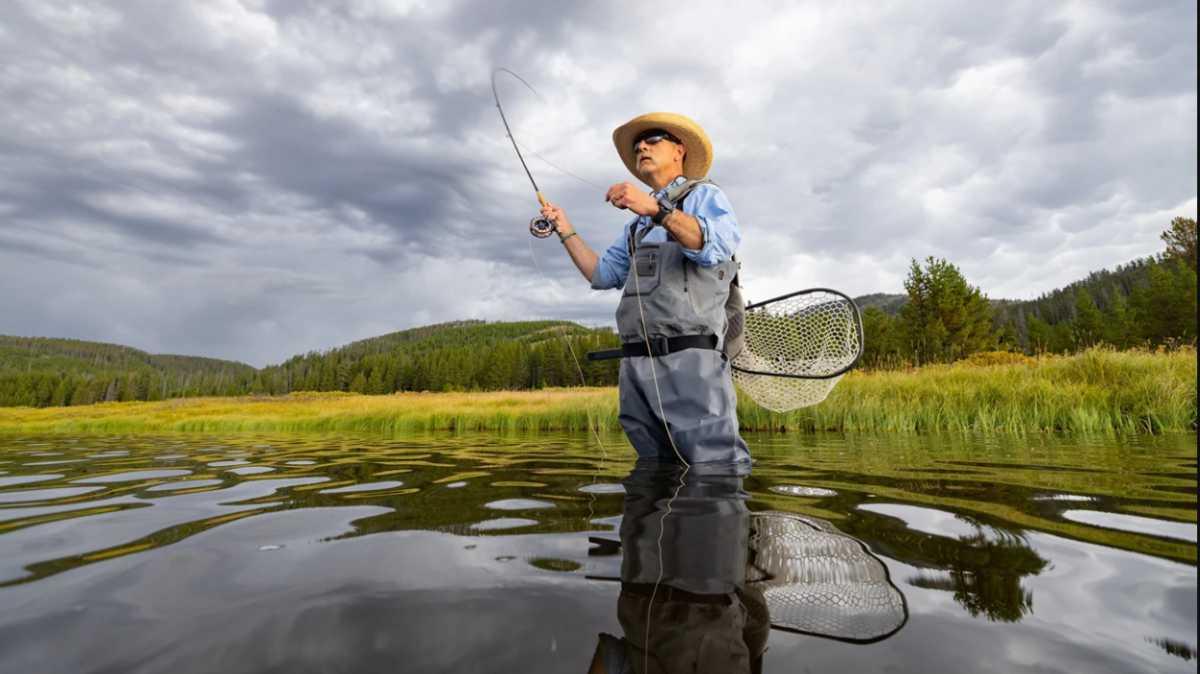
Man with a hat engaged in fishing in Yellowstone
Temperature is the first thing fisherfolk look to when planning to cast their fishing net. If the mercury is too high, the waters become inhospitable for the fish. The fish are not able to reproduce satisfactorily, as a result of which, the season becomes unfavorable for those interested in catching fish. In 2016, Yellowstone experienced a mass fish die-off. More than 4,000 fish crossed the rainbow bridge, and officials attributed the cause to climate change, per The Guardian.
Yellowstone’s officials keep a continuous watch on the water temperatures and close the waters when the temperatures get too high. In Ecology of Freshwater Fish, researchers explained that early in May, when the air is still cooler, with a faint smell of sulfur wafting from the springs and waters still cold, they are not concerned with overstressing fish. Later in the summer, however, the temperatures rise, and they have no choice except announcing closure of the fishing season.
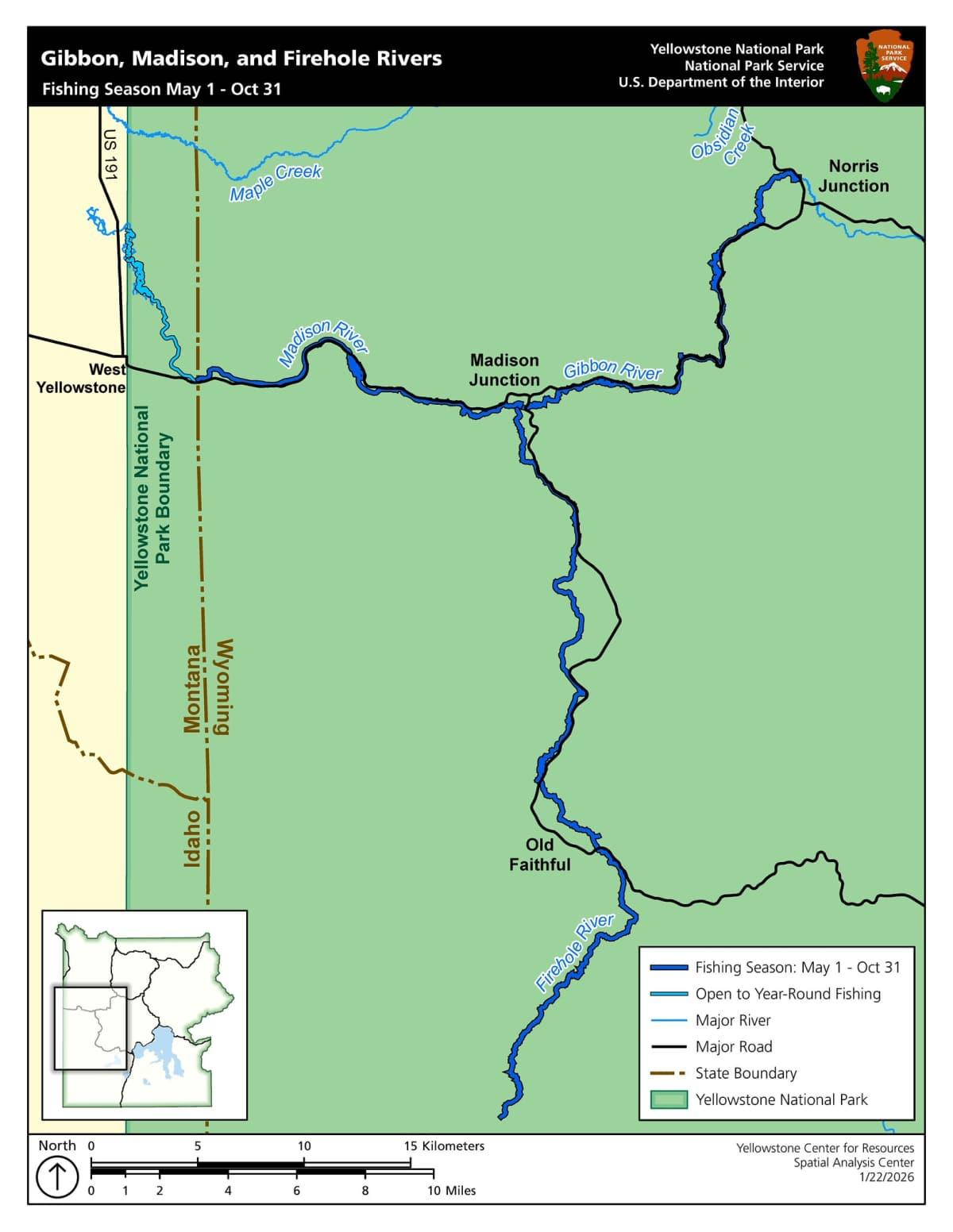
2026 Yellowstone fishing season map for Firehole, Madison, and Gibbon rivers
This year, however, park officials will open the fishing season almost a month early this spring, especially in three of the park’s rivers. NPS states that every year, about 50,000 anglers fish in Yellowstone, which makes Nick Williams, a fly-fishing blogger, think that “it’s a pretty big change.” In conversation with Mountain Journal, he said, “We’ll have access to three legendary Yellowstone fisheries a little earlier. Lately, water temperatures have been getting so warm by middle- or late June, they get too warm to really fish.”
He added that the announcement changes things “for the older guys,” especially the fact that he will now be able to fish these rivers for an extra month in prime hatch season, compared to previous years when he had to wait until the Memorial Day weekend, on May 28. The latest announcement is applicable for Gibbon and Madison rivers in addition to the Firehole. This year, the fishing season in these rivers will open on May 1.
Since most of the Yellowstone rivers are fed by underground thermal sources that stem from the volcanic system, their waters remain ice-free even during winters and maintain a cozy temperature, which enables certain species of fish to spawn out of season. Yellowstone biologists observing rainbow trout discovered that the silvery fish reproduces even during the winter season. Park officials emphasized that the extension won’t have any adverse impacts on the fisheries. Meanwhile, the date of the season closure will remain the same, likely the end of October. Rest depends on what the climate’s mysterious pockets reveal and also how the waters will respond to these shifts.