
Scientists Examined a 300-Foot Hole in Yellowstone and Found Hidden Life Growing
Published Feb. 10 2026, 5:44 a.m. ET

Billowing plume of steam rising from the Norris hot spring in Yellowstone
Life has a simple rule. As Newton famously stated, every action has an equal and opposite reaction. If someone perturbs a system, the system responds. If someone wishes to control or manage a system, they need to understand these responses and the mechanisms that govern them. While the life that lives above Earth’s surface has been studied extensively, much of the life that resides underneath remains a mystery.
In 1992, astrophysicist Thomas Gold predicted that deep underneath the hard rocks of Earth’s crust lingers a “hot biosphere of microbes.” At that time, this prophecy seemed like science fiction, but today, it is a reality. In a study published in PNAS Nexus, scientists documented the discovery of a mysterious world that lurks deep beneath the ground, which is bustling with a thriving population of tiny microbes.
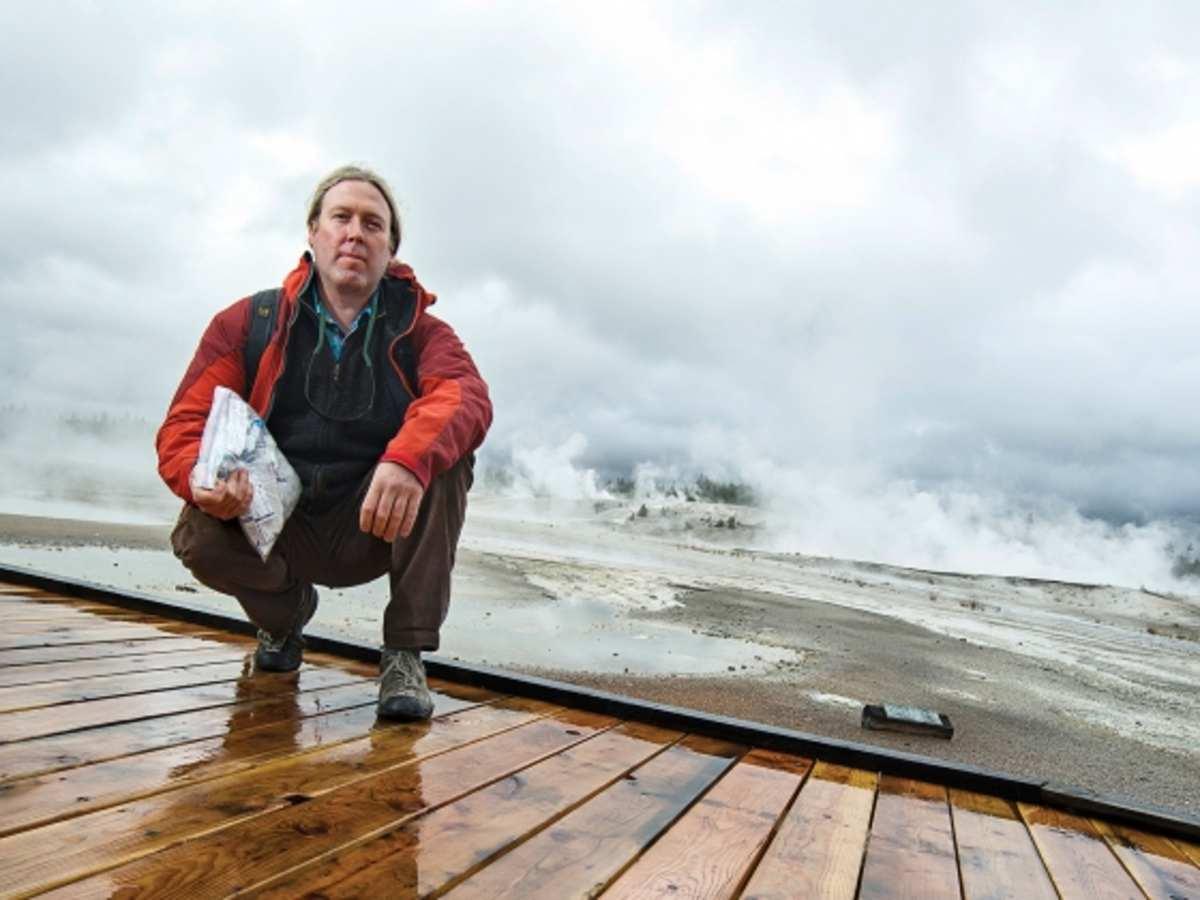
Montana State University professor Eric Boyd pictured in the Norris Geyser Basin at Yellowstone National Park.
Earth is overflowing with microbes. Billions of years ago, when there was no atmosphere to protect life from radiation, these organisms emerged from the chemical conditions and started building their colonies underground. Today, trillions of microbes are crawling across the planet. Moreover, Yellowstone is the perfect place to study its enigmatic routines and survival strategies. For years, scientists knew that Yellowstone sits atop volcanoes. Add to the volcanic system the high rate of seismicity. Yellowstone encounters thousands of earthquakes per year. The hydrothermal fluids churning in the underbelly are pushed under extreme pressures, and the upper crust magma reservoir bursts. Cracks materialize, sometimes causing the ground to uplift.
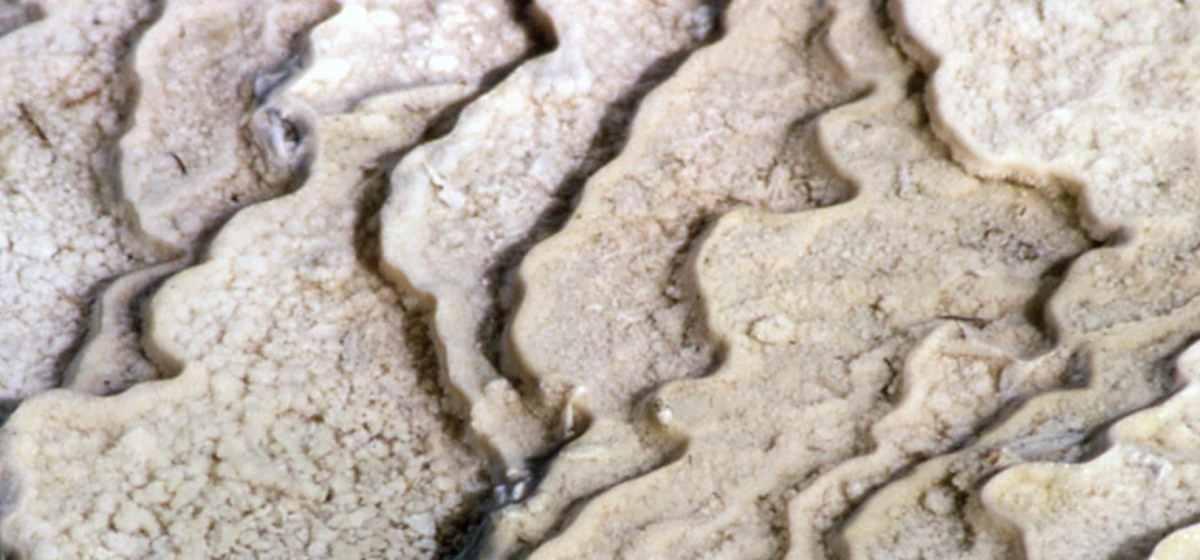
Microbes in Yellowstone. The travertine terraces in Mammoth Hot Springs host thermophilic Cyanobacteria.
Microbiologist Eric Boyd from Montana State University discovered this microbial world while investigating these earthquake swarms. Oftentimes, visitors walking along the rainbow pools or acidic springs have reported a rotten-egg-like smell wafting around. This smell is actually the stink of hydrogen sulfide released by the farts of these tiny microbes as they digest their food. The question, however, was, where do these microbes get their food?
To understand this, we need to zoom into underground and observe the chemical factory operating there. Up to 30% of Earth’s total biomass is buried underground. Instead of relying on light, they cook their meals using the chemicals oozing from the rocks. Boyd and his team discovered that this chemical production is further facilitated by earthquakes. Like nature’s versions of “DoorDash,” these seismic pulses constantly unlock packages of delicious chemical meals for the tiny guys. And since Yellowstone has an earthquake every other day, the microbes are happy with a generous buffet.
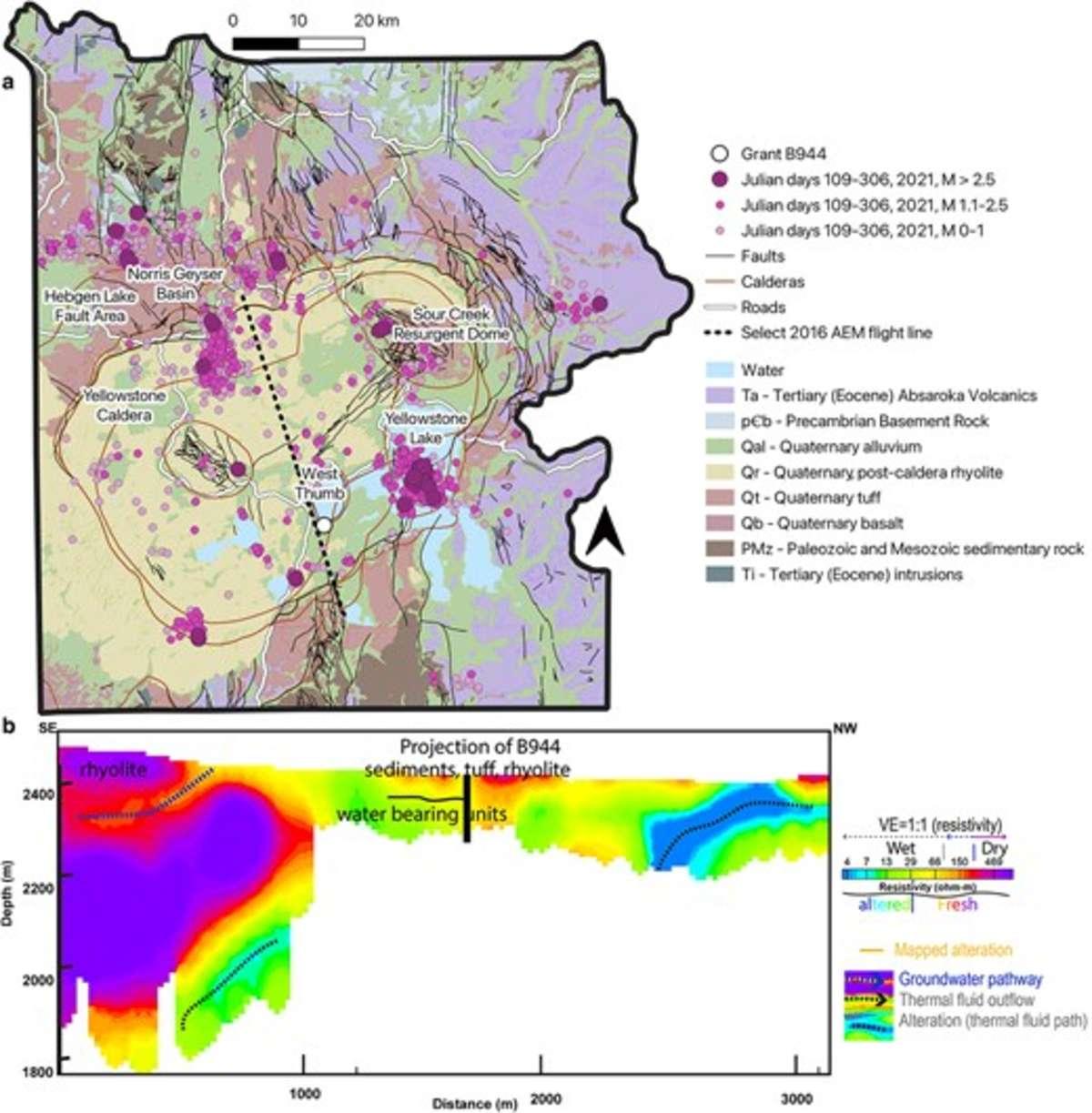
Location of the Grant (B944) borehole in Yellowstone National Park (YNP) that scientists drilled to monitor the microbial life underground
In July 2008, Boyd drilled over 300-feet-deep borehole in the south of the West Thumb of Yellowstone Lake to study this phenomenon. Named Grant B944, it was drilled using bladder pumps equipped with stopcocks and stainless-steel cables, controlled by electronic control units and dataloggers. The team extracted fluid samples from the hole using syringes, collected them in bottles, froze them in dry ice, and applied three filters for molecular and DNA analysis. The experiment revealed that earthquakes dramatically boost the microbial colonies living underground. Boyd has been examining these colonies in Yellowstone for decades. In 2020, he even received a $1 million grant from the W.M. Keck Foundation to pursue the research, the university shared on Facebook.
The investigation revealed that the microbial population increased about 6.5 times during an earthquake, and when the earthquake ceased, the population returned to normal. This suggested that the quakes supplied new chemical energy to replenish these communities. “All the pieces fit together nicely,” Boyd said to Scientific American. Another exciting thing that has unfurled from this research is the possibility of a potentially similar mechanism occurring in a subterranean world or on the worlds of other rocky planets, like Mars. The challenge is knowing where to look and then being there when something happens.