
Why Are There Little Tress Placed Along the Bottom of the Ski Jump Hill?
A blanket of snow can lead to loss of depth perception for skiers.

Published Feb. 11 2026, 3:56 p.m. ET

Fans have been enjoying the 2026 Winter Olympics in Italy, and the fast-paced skiing events have captivated viewers around the globe. For those who have been to ski jump hills before, or are now seeing courses like these for the first time, you may be wondering why there are little green plants and trees visible throughout the course, especially at the bottom of the ski jump hill.
As it turns out, you are not alone, as social media has been inundated with viewers asking the same question.
If you have been wondering why little trees are so visible on the 2026 Winter Olympics ski jump hills, this story is for you. Below, we report on what experts have shared about this very question, including why prominent Winter Olympics leaders have been climbing trees while the Olympic athletes are in action.
Continue reading to learn more about this fascinating topic so that you can impress your family and friends as they watch the 2026 Winter Olympic Games.
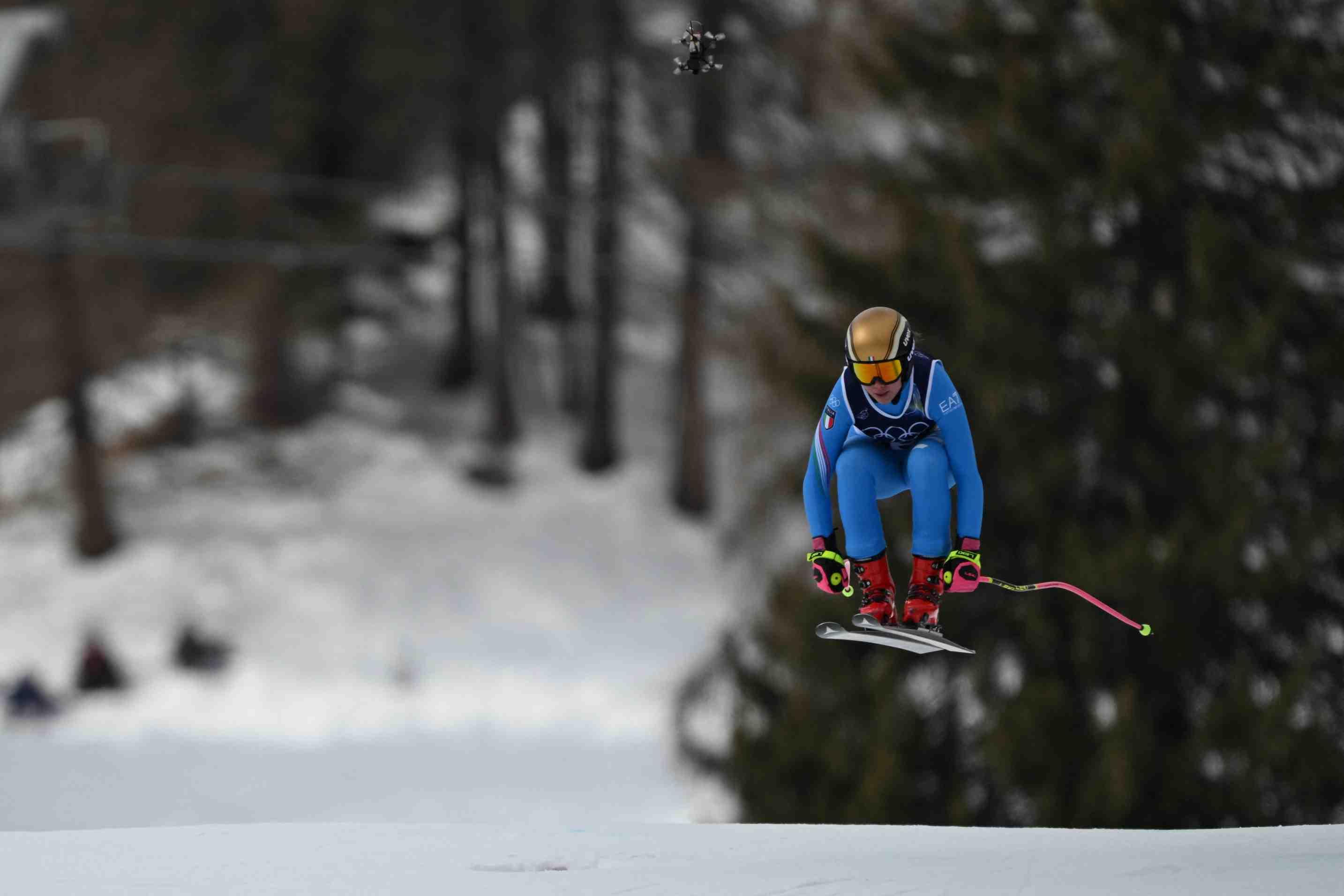
Why are there little tress along the bottom of the ski jump hill?
If you suspected that the greenery placed along the bottom of the ski jump hill is for safety reasons, you are correct.
As Scott Davis reports in Business Insider, green plants are intentionally placed at the bottom of ski jump hills to support the Olympic ski jumpers' depth perception. "When ski jumpers are flying through the air at high speeds, with all snowy white beneath them, the plants serve as markers for the jumpers to know where the ground is and where they are in relation to it."
Fans have been asking this question for ages, it turns out. During the 2014 Winter Olympics in Sochi, Russia, USA TODAY Sports published a story answering why there is so much greenery and colored markings along the ski jump course.
"The plants are there to let ski jumpers know where the ground is," per the USA TODAY Sports report. "Imagine flying through the air and only seeing a vast expanse of white snow as you fall toward uneven ground. (The red lines also serve as distance markers too.) Without a reference point, it'd be like being underwater in the dark or floating around space."
The question has permeated various social media platforms. For example, in response to a Threads post inquiring "Can someone who understands ski jumping explain to me why there are little pine trees planted on the bottom of the ski hill?" one user shared this response.
"Helps provide contrast against the snow, to provide better perception for the athlete’s landing. It also can provide a softer landing versus plastic markers should the athlete misgauge their jump and landing and strike them."
Fans of the 2026 Winter Olympics may have also noticed people climbing to the tops of tall trees to get a different, if not unconventional, view of the action. According to the TikTok above from NBC New York, coaches appreciate the unobstructed vantage point to view their respective athletes' performances, as well as to film their team's runs for later analysis.
In fact, per the TikTok video, this was discouraged during the 2014 Olympics when a fallen branch almost hit an athlete on the course.