
A Blood Moon Is Expected To Rise the Night of the Lunar Eclipse
This will be the last total lunar eclipse for a while.

Published Feb. 26 2026, 7:24 p.m. ET

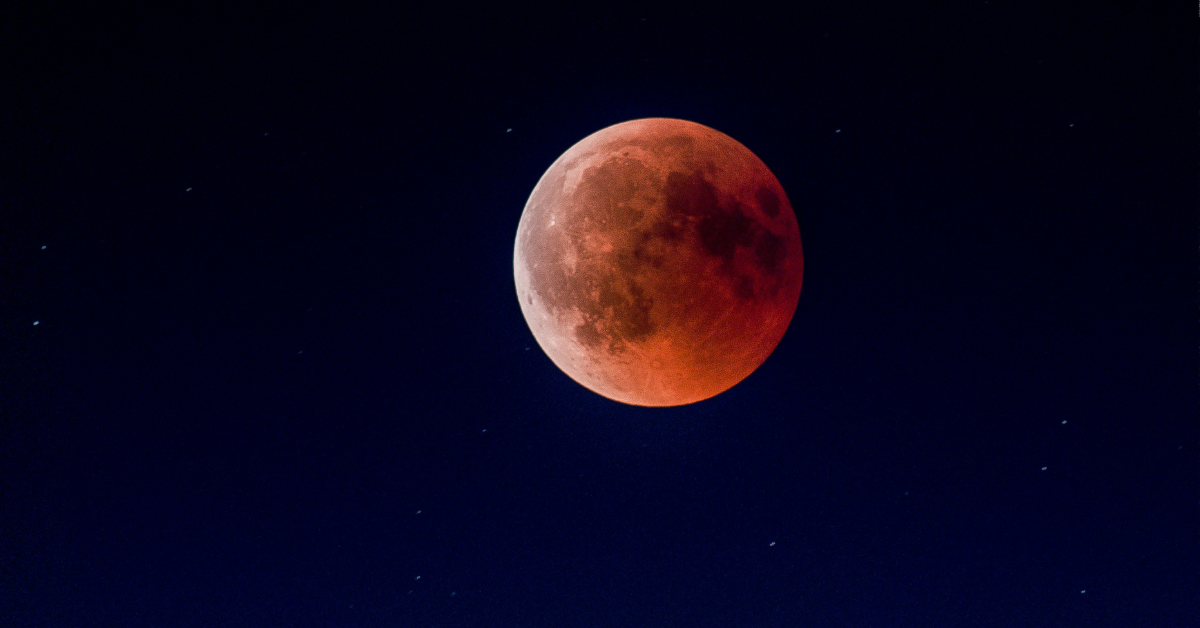
Casual astronomers and stargazing enthusiasts alike will both be in for a treat in 2026 when a total lunar eclipse will combine with a blood moon, causing the moon to take on a blood red glow. The celestial show will be visible to much of the world, including those who live in places like North America and Asia.
However, the eclipse will be short lived, so it's important for anyone who wants to see it to set a reminder so that they don't miss out on the late night performance.
Curious how you can get a chance to view the total lunar eclipse? Good news, unlike a solar eclipse, you won't need any extra tools or protection to catch the moment it happens.
Instead, you'll just need clear skies and a cup of coffee to help you stay up long enough to see the eclipse in action. Keep reading as we explain everything you need to do to prepare for the eclipse, including where you'll need to be if you want to see the red moon rising across the dark night sky in March 2026.
When is the 2026 total lunar eclipse and blood moon?
According to Space.com, the total lunar eclipse will happen during the early morning on Mar. 3, 2026. This is the first lunar eclipse of the year, and the moon is kicking things off with a pretty big show that will be visible to an estimated 2.5 billion people.
However, the best views will be found in Australia, those located along the Pacific Ocean, and the western half of North America. The publication says you can see the exact time the eclipse will be viewable at timeanddate.com.
But, more generally, the eclipse will start a little after 6:00 a.m. EST on Mar. 3, 2026, which means that each time zone will be able to view it an hour earlier local time, including:
- Central time at 5:04 a.m.
- Mountain time 4:04 a.m.
- Pacific time 3:04 a.m.
- Alaska time 2:04 a.m.
- Hawaii time 1:04 a.m.
The total lunar eclipse is expected to last a little under an hour, which means you'll need to make sure you get out there as close to the start time as you can to catch the full show.
What is a blood moon?
The blood moon is another name for the lunar eclipse. That's because of the way that the moon turns red when the moon's orbit is what gives the Earth's satellite it's sanguine hue.
This is caused by the way the moon's orbit crosses between the Earth and the sun. The crossover forces the sunlight to pass through the Earth's atmosphere before hitting the moon, which removes certain wavelengths of light, making the moon appear rusty or red. The unique experience is definitely one to remember.
How many blood moons are there each year?
The March blood moon will be the first of 2026. However, Space.com says that around 29 percent of lunar eclipses end up being total lunar eclipses. However, because of the Earth's rotation most places will only see these every 2.5 years.
That means, those who miss the March 2026 one may have to wait until 2028 to get another chance.