
Moon Will Turn Blood Red Soon — Best Viewing Times & Locations for 2026 Total Lunar Eclipse
Published Jan. 21 2026, 8:44 a.m. ET

A family enjoying a total lunar eclipse.
A bloody red moon is on the horizon. The celestial event is likely to occur on March 3, 2026, and will be the last one until December 2028. The red moon will allegedly appear in the skies of the U.S., Australia, and Asia. As per experts, the phenomenon will be best visible from the U.S. West Coast in the early hours of the day. People from Seattle, San Francisco, and Los Angeles would witness the moon enter into the Earth's shadow at 3:33 a.m. P.T. In places located further east, only a partial eclipse will be visible.
The blood moon happens during a total lunar eclipse. During the total lunar eclipse, the Earth's shadow manages to entirely cover the full moon. A dramatic red glow overtakes the moon when sunlight filters through the atmosphere and scatters the blue light amidst the phenomenon. This filtering transforms the lunar surface into a deep red or coppery brown color. For the red hue to be facilitated, it is essential that the full moon, Earth's shadow, and the Sun all align perfectly. It is only when the Moon is completely inside the Earth's shadow that the blue light can be pushed out of the equation.
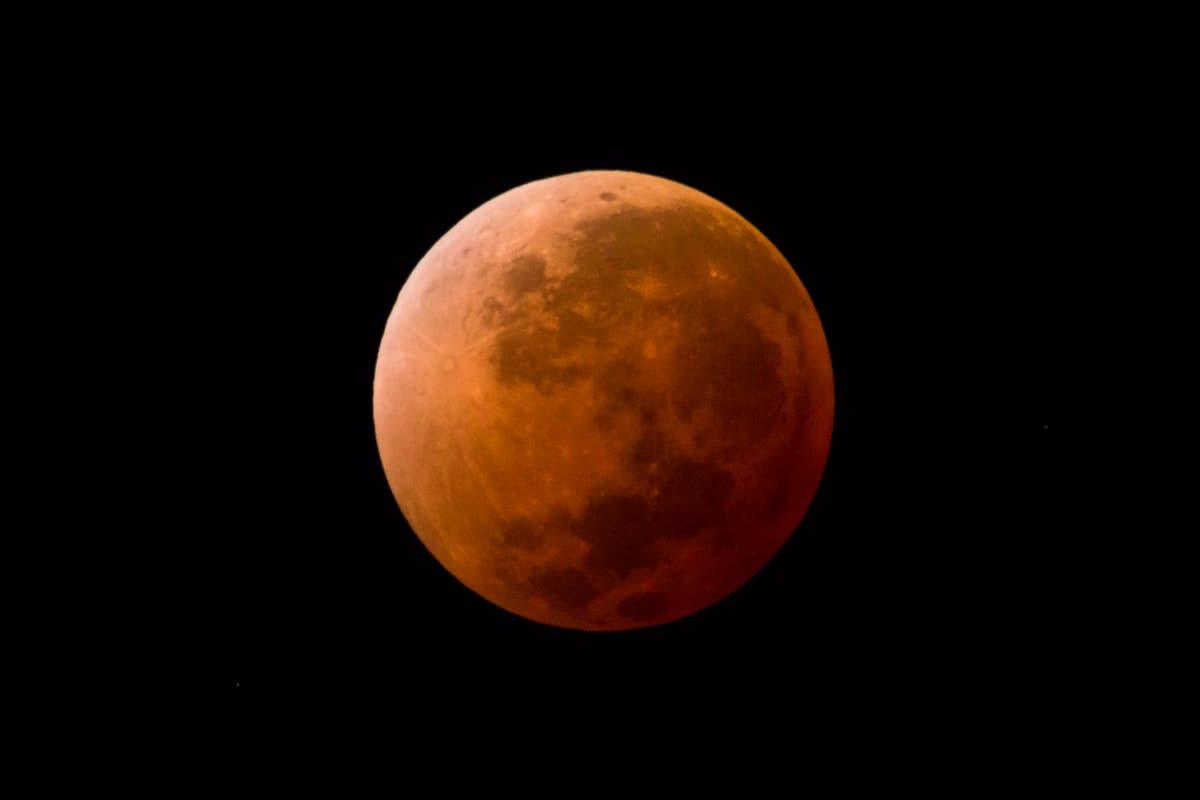
A blood moon, or full lunar eclipse.
After the blue light gets scattered, only red and orange wavelengths remain to reach the moon. The same state of affairs makes sunrises and sunsets appear red. The exact color of the blood moon changes with respect to atmospheric conditions. The intensity of the blood moon's red hue is directly proportional to the quantity of wildfire smoke, dust, pollution, and volcanic ash. This phenomenon has long fascinated skywatchers because of its stunning visuals
On March 3, the totality will last just under an hour, while the partial phases will last for several hours until around 5:17 a.m. P.T. People interested in witnessing this blood moon don't need any special equipment. Experts don't think that skywatchers will suffer any danger from watching the total lunar eclipse. Tools like a telescope or binoculars may improve the view. For the best experience, interested folks can look for a dark environment, where the view wouldn't be disturbed by bright lights. The next total lunar eclipse will unfold on December 21, 2028. A partial lunar eclipse is set to take place on August 28, 2026. During a partial eclipse, the Sun, the Moon, and Earth are not aligned perfectly. Only a portion of the Moon enters Earth's umbra and hence is not fully blocked.
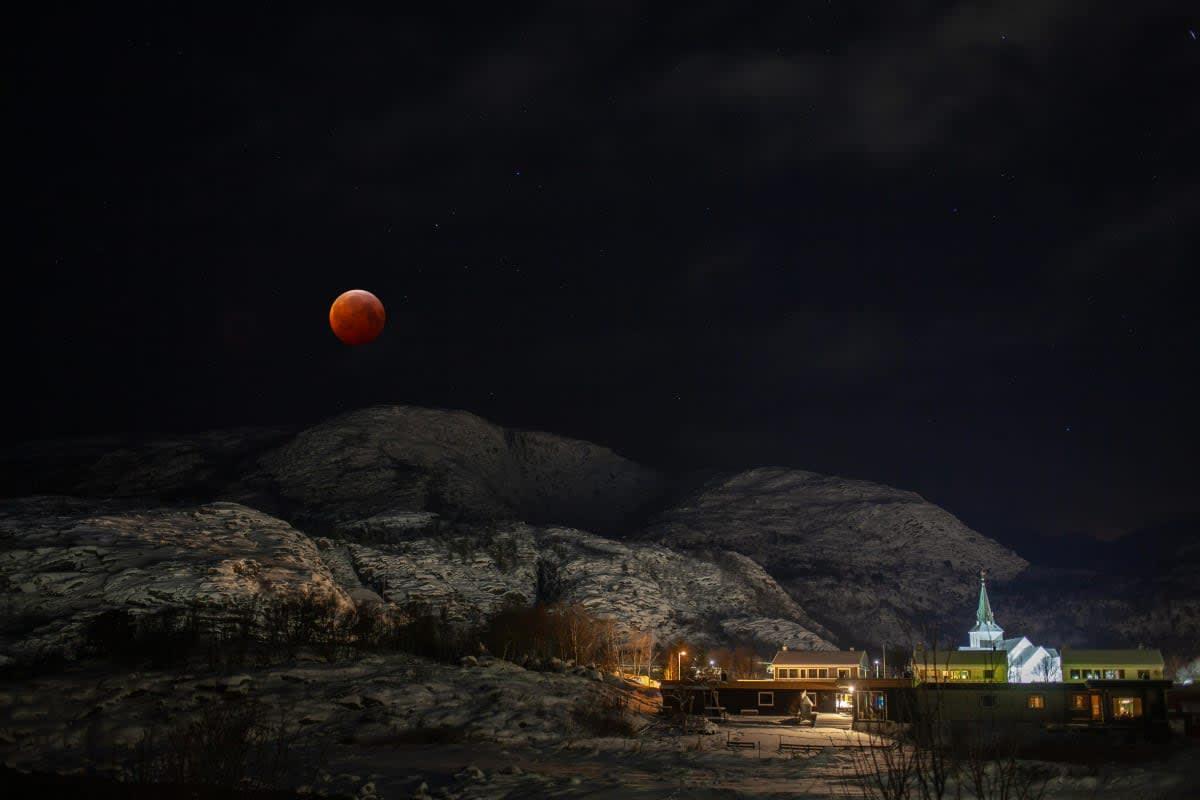
A red moon over a mountain town with a church in the background
The blood moon phenomenon is an intriguing subject in popular culture. Several ancient societies were fearful of the concept, and apparently, individuals like Christopher Columbus took advantage of it. In 1504, when Columbus and his crew got stranded in Jamaica, the explorer scared the indigenous population with his knowledge of the almanac. Columbus warned them that if they didn't provide him and his crew with supplies, the gods would make the moon red with their anger. The night it truly happened, it scared the native population, and they gave in to Columbus's demands.