
The U.S. May Need to Brace for the Strongest El Niño To Hit Our Country in a Century
It will bring wide-reaching weather impacts that last into 2027.

Published April 8 2026, 4:49 p.m. ET

Weather experts are starting to put predictions together for the fall 2026 forecast. And while there are only so many pieces of the puzzle that can be put together with any sort of accuracy before the season arrives, there seems to be a growing consensus about one thing: Fall 2026 will be a wet one.
Forecasters believe that the U.S is seeing an end to the La Niña system that has been keeping weather temperatures cool for parts of the country. However, the tradeoff isn't going to be pretty.
That's because they predict that El Niño will be hot on the weather system's trail, bringing warmer temps and wet weather to certain parts of the country.
Not only that, but the U.S. National Oceanic and Atmospheric Administration (NOAA) says that the 2026 system is shaping up to be a record breaker, saying that we could be looking at the strongest El Niño to hit the country in more than a century.
Want to learn more about what to expect? Keep reading as we break it down for you.
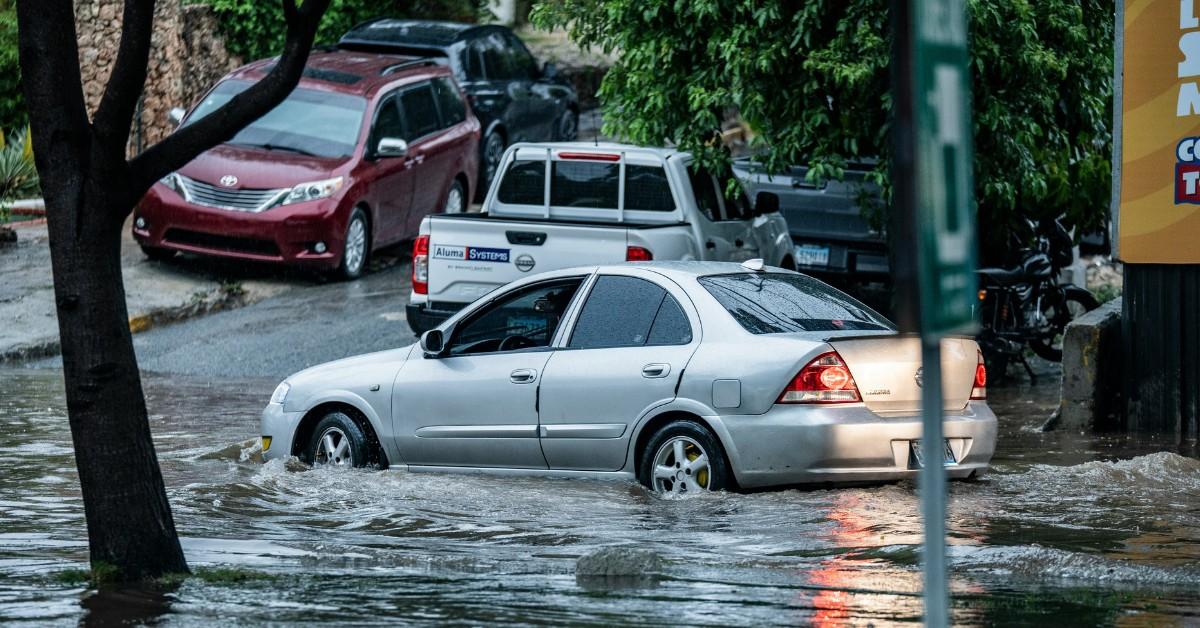
NOAA predicts the U.S. will see the strongest El Niño in a century.
On April 6, 2026, NOAA released its ENSO report, which includes Recent Evolution, Current Status, and Predictions. In the report, the agency declared that La Niña was beginning to come to an end as temperatures in the Pacific Ocean remained lower than average.
However, that cool period isn't expected to last long, as an El Niño is poised to move in and take its place, with the transition expected to begin in May 2026.
However, all models seem to point to an intense increase in temperature by October, with an average ocean surface temperature that could be as much as 36.5 degrees higher than the seasonal average, qualifying the system as a Super El Niño, which could produce some of the strongest storm systems we've seen in over a century.
A Super El Niño has been forecasted to change global weather patterns in 2026.
Experts are using NOAA's climate models to predict the weather patterns for the year, saying that it's likely to produce stronger-than-normal weather patterns that could have widespread effects, not just on the U.S., but around the world.
According to USA Today, if the forecasters are correct, we could be looking at weather patterns that would rival those in 1997 and 2015, which prompted flooding and heavy rains in some areas of the world, while leaving others facing heatwaves and droughts.
More locally, that could look like a cooler and wetter fall for areas of the South, while the northern parts of the country could see warmer temperatures with less snow and fewer cold snaps.
Out west, that could also prompt more intense rainstorms that could bring flooding and landslides to the region.
What is a Super El Niño?
If you haven't previously heard of a Super El Niño before, it could be because it has also goes by other names, including Jurassic El Niño, a nickname given to the supped up version of the classic El Niño by Phil Klotzbach, a hurricane researcher who gave it the moniker to highlight just how strong they can be, according to The Palm Beach Post.
And, while a classic El Niño can be a force to be reckoned with in its own right, it's clear many agree that a Super El Niño is in a class of its own.