
SeaWorld Reveals What Took the Live of Its Beloved Killer Whale, Katina
Katina was the oldest killer whale at the park.

Published Dec. 26 2025, 12:12 p.m. ET

Many people flock to SeaWorld's four main park locations each year — which are located in Florida, San Diego, San Antonio, and Abu Dhabi — to ride the rides, tour the park's massive aquariums, and catch a show. And while there are plenty of creatures, both big and small, for parkgoers to observe, the dolphins and killer whales that call the park home have always been the biggest attractions... for both good and bad reasons.
The park has come under fire for keeping large mammals in tanks.
And every time one of them dies, the park draws new criticism for keeping such large creatures in captivity when they should be swimming free in the ocean.
The death of Katina is no exception to this rule, and her December 2025 is gaining a lot of attention, especially since she was the oldest orca living in the Orlando park. You can find out exactly what happened to Katina at the end of her life below, including the killer whale's official cause of death.
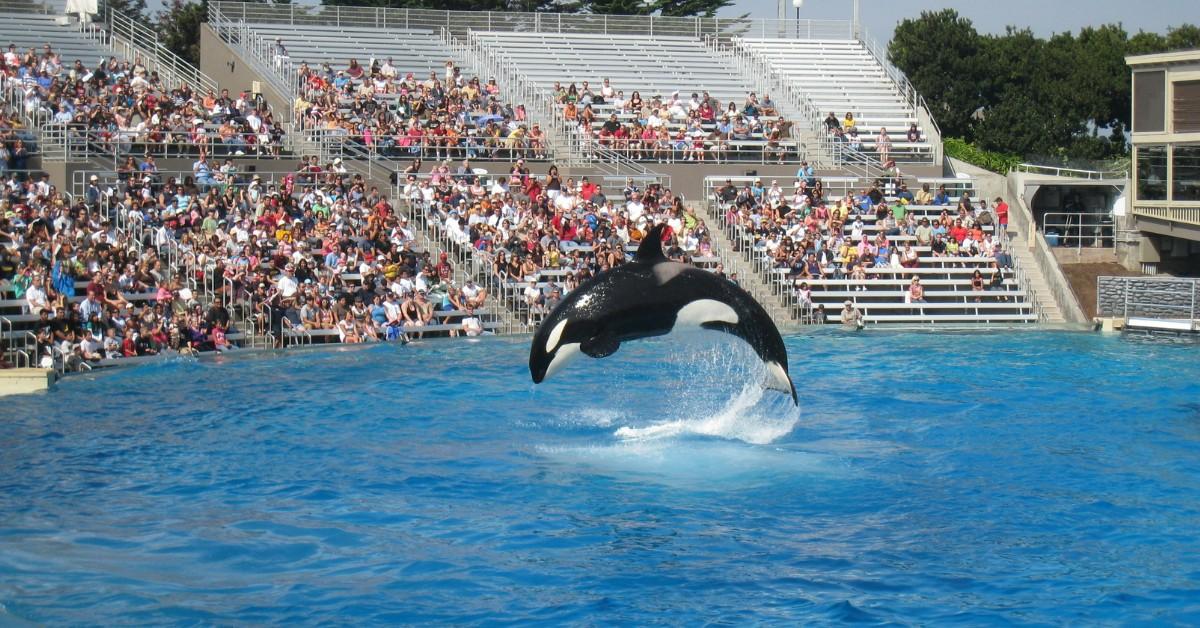
What was Katina's official cause of death?
The park released a statement on Dec. 21, 2025, announcing that Katina had sadly died at 50. In the statement, park officials revealed that Katina's health had been declining in the weeks leading up to her death, and that she had been surrounded by the people closest to her when she was euthanized after suffering from chronic respiratory issues.
"Despite everyone’s extraordinary efforts, she passed away while surrounded by animal care and medical teams who have worked closely with her for nearly 40 years," the statement read.
Katina was well known around the parks, according to the statement, which noted that the orca had a lot of personality and sass, and loved to stick her tongue out at the guests who visited the Orlando location.
"This is an incredibly difficult time for those who knew and loved Katina," the Facebook statement continued. "We appreciate the support of the community as we grieve her loss together with her loyal fans everywhere."
Katina's death takes SeaWorld closer to the end of an era.
According to the park's website, SeaWorld will no longer be breeding killer whales as of 2016. This means that the whales that have currently spent their entire lives in captivity in the parks will be the last generation to do so. Prior to Katina's death, the list of whales was a short one and contained only five names. Now, the list shrinks further, as only Nalani, Malia, Trua, and Makaio remain.
Moving forward, it looks like the park plans to help conservation efforts in another way.
Instead of breeding and keeping whales captive, the park has pledged $1.5 million to The National Fish and Wildlife Foundation (NFWF), which the park says is part of a larger pledge to help protect killer whales in their natural environment, which includes plans to improve ocean conditions, research, and helping to keep the sea full of the fish these magnificent creatures need to survive.
While many critics think it's too little, too late (especially for the four whales left in captivity), it could be a small step in the right direction for the park, which has drawn so much criticism for its practices over the years.