
Upcoming Asteroid Flyby Expected To Get Closer to Earth Than Some of Our Own Satellites
The asteroid is an Apollo-class near-Earth object.

Published May 14 2026, 4:40 p.m. ET

Outer space can be scary in its vastness. Much like the ocean, it's hard to fathom just how much is out there that we can't see. And, again, just like the ocean, when we get a glimpse of something from the depths, it can either be awe-inspiring or truly terrifying.
Asteroid 2026 JH2 is a mix of both as it makes its approach towards Earth. That has a lot to do with both how quickly the asteroid snuck up on experts, and how close it is expected to get to our planet as it zooms past us.
However, that doesn't mean that anyone should be alarmed (or start gathering a team of oil rig workers to blow the rock up from space). Experts have offered their assurances that this asteroid poses no immediate threat to our planet. That is, unless people crash their internet servers trying to catch the live broadcast that one space enthusiast plans to stream of the space rock as it nears our planet.
You can find out more about asteroid 2026 JH2's approach to Earth below.
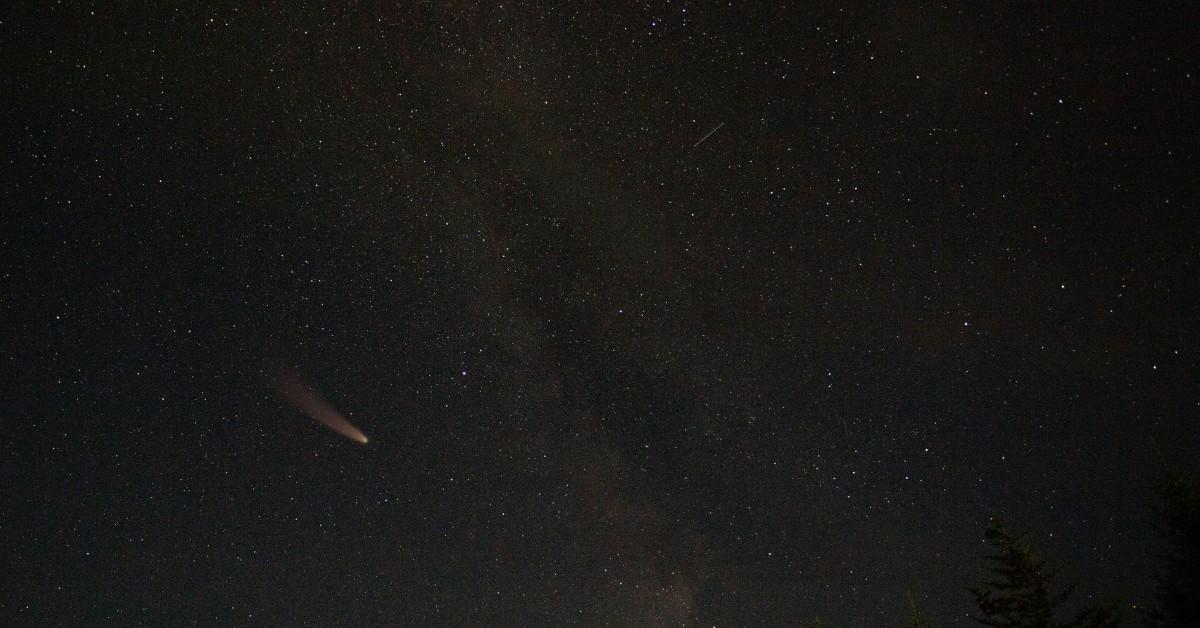
Asteroid 2026 JH2 is going to come very close to Earth.
Stargazers will want to look up on Monday, May 18, 2026 as asteroid 2026 JH2 comes within 56,000 miles of our planet. For those who can't imagine what 56,000 miles looks like, it's much closer than the distance between Earth and the Moon, and it will even come closer to our planet than some of our satellites do.
ABC News says that NASA's Jet Propulsion Laboratory estimates that the asteroid is between 50 and 100 feet across. The asteroid has been deemed an Apollo-class near Earth-object.
That means that the asteroid's orbit is larger than the one the Earth makes around the Sun.
However, astronomers don't know much more than that about the asteroid, since it was discovered just days before it is expected to make its flyby. ABC News notes that several different experts worked together to identify and name the space rock, including people from Mount Lemmon Observatory in Arizona and Farpoint Observatory in Kansas. Experts have only seen it 24 times since discovering it.
Where can you see asteroid 2026 JH2?
Want a chance to witness this near-Earth flyby for yourself? Your best bet may be by logging onto a livestream hosted by Gianluca Masi, who works with The Virtual Telescope Project. According to Forbes magazine, he plans to livestream the asteroid when it is nearing its closest point, which is when it is expected to shine brightest.
The broadcast will begin at 3:45 p.m. ETD on Monday, May 18, 2026. Those with clear skies and telescopes may also want to try and see it in person.
To do that, you'll need to find a sky map app or website, like The Sky Live, which will help you determine the asteroid's coordinates as it makes its approach. The best time for viewing the asteroid will likely vary by location, since you'll likely have your best shot at viewing the asteroid during a clear night with little cloud cover.