
Artificial Intelligence Has Just Been Used To Develop the World’s First AI Vaccine
The vaccine should help protect from zoonotic diseases.

Published June 5 2026, 4:00 p.m. ET

What if the next time you went to your doctor's office to get a vaccine, you were given one that was completely developed by artificial intelligence (AI)?
Researchers at the University of Cambridge claim they have created the world's first AI-designed vaccine, which was made using key components created by AI. And, if the experts are right, it could completely change the way the world inoculates itself against those preventable illnesses that we already vaccinate against.
Of course, the AI-designed vaccine still has a long way to go before your neighborhood doctor gets a hold of it, if it ever gets rolled out to the general public, that is.
That's because the vaccine development is still in its early stages, and it still has a lot of steps to go through before it can receive approval from the U.S. Food and Drug Administration (FDA), which is what would need to happen before it could be used by doctors in the U.S. Here's everything we know.
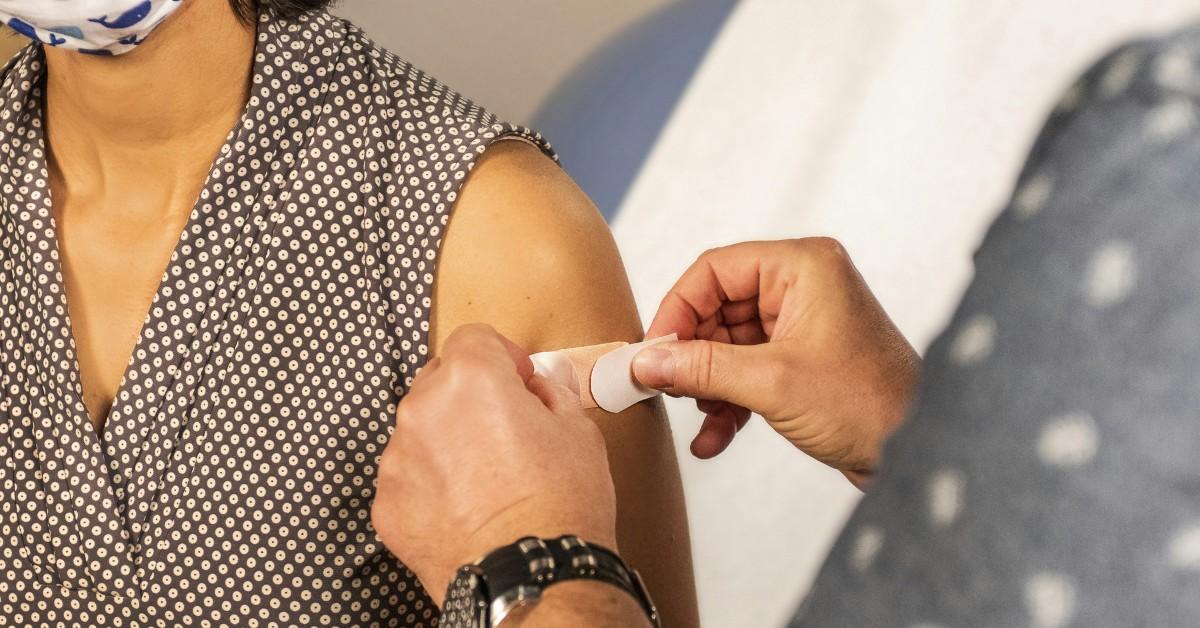
Researchers say they have created the first AI-designed vaccine.
The team that worked on the vaccine at the University of Cambridge says that this is the very first time that AI has been used to design a vaccine, according to the BBC.
The vaccine, which was initially crafted to target coronaviruses (which include all Covid variants) as well as zoonotic diseases, since these are the ones that have the most potential to start another pandemic. The team asked the AI system to analyze genetic codes from these diseases to create the vaccine.
From there, they asked it to engineer a "super-antigen" that would be able to train the human immune system to protect us against viruses, no matter how they mutate over time. That second part would be huge, since mutated viruses can sometimes elude vaccines, since the makeup of the virus has changed.
"We're always behind," The University of Cambridge's Jonathan Heeney said of the development. "What we're trying to do is get ahead of the curve."
How do vaccines work?
According to the U.S. Centers for Disease Control and Prevention (CDC), vaccines work by teaching the body how to defend itself from a severe infection when it comes into contact with a disease.
It does this by imitating the illness, which helps get the body's natural defenses working. This teaches them to start producing the antibodies needed to fight a specific infection, which typically results in a milder illness when people are exposed to the disease they have been vaccinated against.
The CDC says that staying up to date on your vaccines and getting the required boosters and shots is the most effective way to protect yourself and your loved ones from severe illnesses and preventable diseases.
If you have questions about vaccines, you should contact your healthcare provider directly to discuss the risks and benefits of getting a dose, as medical professionals will have the most accurate and up-to-date information available.