
Florida’s Weather Now Includes Falling Iguanas, but What Makes the Reptiles Freeze?
The Florida Wildlife Conservation Commission is asking residents to bring the stunned iguanas to local drop-off sites.

Published Feb. 4 2026, 8:59 a.m. ET

In the north, when there's going to be a cold snap, many meteorologists will remind people to stock up on winter weather essentials, like rock salt, ice melt, and fuel for snowblowers. However, in Florida, when the mercury starts to drop, the weather personalities in the southern end of the state have to tell residents to prepare for something else entirely: Falling iguanas.
That's because cold weather can cause these reptiles to freeze in place, sometimes prompting them to fall from trees.
In especially cold situations, these iguanas can lay frozen for prolonged periods of time, remaining motionless (and defenseless) as their bodies react to the changing temperatures.
This isn't a long-standing problem in the state, since iguanas are an invasive species that was introduced in recent years. However, it's a problem none the less, and something that Florida residents need to be on the lookout for in cold weather. Why do iguanas freeze? Keep reading to find out.
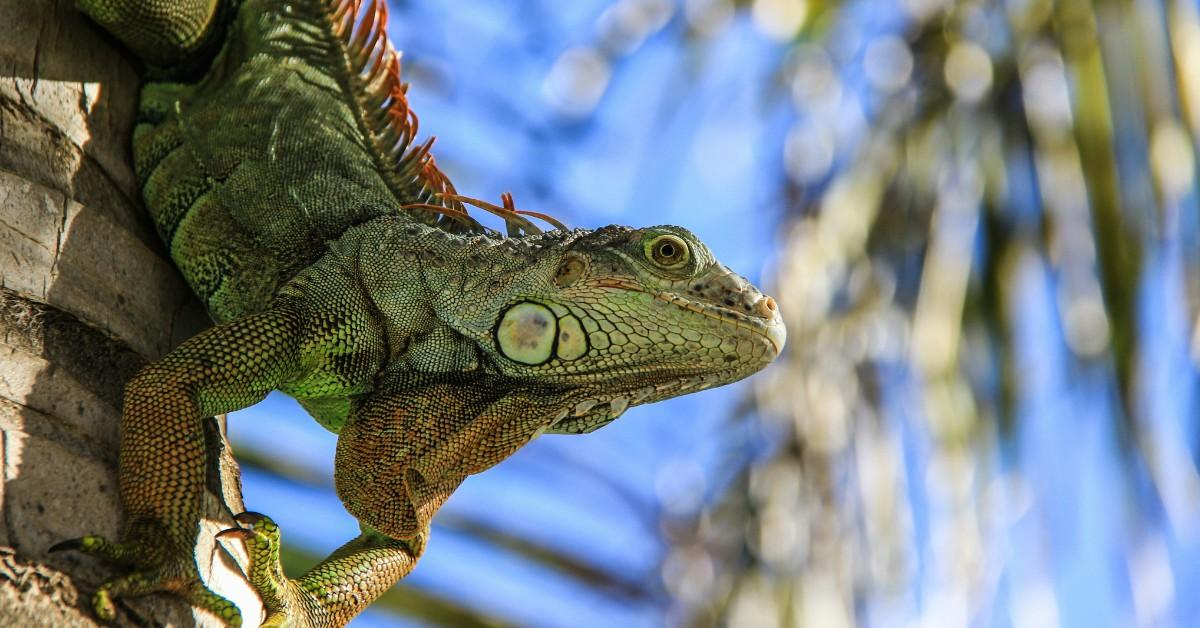
How long can an iguana stay frozen?
Like most reptiles, iguanas are cold-blooded creatures. They cannot regulate their internal temperature, so they rely on the temperatures of their habitat to stay warm. This is why you'll often see lizards and snakes basking in the sun when the weather is nice.
So, when external temperatures drop, iguanas cannot adapt, and their body temperature lowers right along with the weather. The Palm Beach Post says his causes them to become stunned and freeze up, and they cannot move.
The condition, which is also known as torpor, will last until temperatures rise. Treasure Coast News says that means that iguanas can remain frozen for hours, and sometimes days, while waiting for their blood to thaw out. However, once they begin to recover, their instincts will kick in remarkably fast, which is why it's never recommended to bring them into your home or car.
Previously stunned iguanas can act defensively, and they can cause grave injury when they feel threatened.
Do people eat iguanas in Florida?
Are all of those frozen iguanas eventually going to end up in someone's freezer to be served up in a hot dish later on? According to the Jacksonville arm of The Florida Times-Union... maybe. Sometimes called the chicken of the trees, South Florida iguanas have been known to end up on the menu from time to time.
That's because these animals are a staple in the Caribbean, and the native species of the reptiles are called pollo de los árboles. They are frequently served roasted with the skin on.
FWC iguana drop-off sites:
The Florida Wildlife Conservation Commission (FWC) would rather you didn't eat the iguanas, though. Instead, the agency is asking residents to bring the stunned iguanas to local drop-off sites. According to CBS News, there are several drop-off points in Miami and the surrounding area.
Those iguanas that are turned over to FWC will either be humanely euthanized (the iguanas are an invasive species in Florida), or they will be rehomed somewhere else, as they cannot be released back into the wild.