
Conservationists Used This Unconventional Method to Revive Endangered Iguanas— And It Worked
Published Dec. 19 2025, 7:43 a.m. ET

A Lesser Antillean Green Iguana resting on a tree
Iguanas now have an entire island to themselves, exclusively for mating. The "love island" isn't some strange experiment but a crucial step by conservationists to increase the population of the endangered species. The small and uninhabitable islet of Prickly Pear East has now become a safe haven for a group of Iguanas. Re:wild, a conservation nonprofit organization, released a statement explaining what the mission entails while highlighting its necessity. Through the program of cross-Caribbean matchmaking, conservationists established a population of the critically endangered Lesser Antillean iguana species on the island. The mission seems to have served its purpose, as indicated by the rapid increase in their population. But what necessitated this initiative by the wildlife NGO?
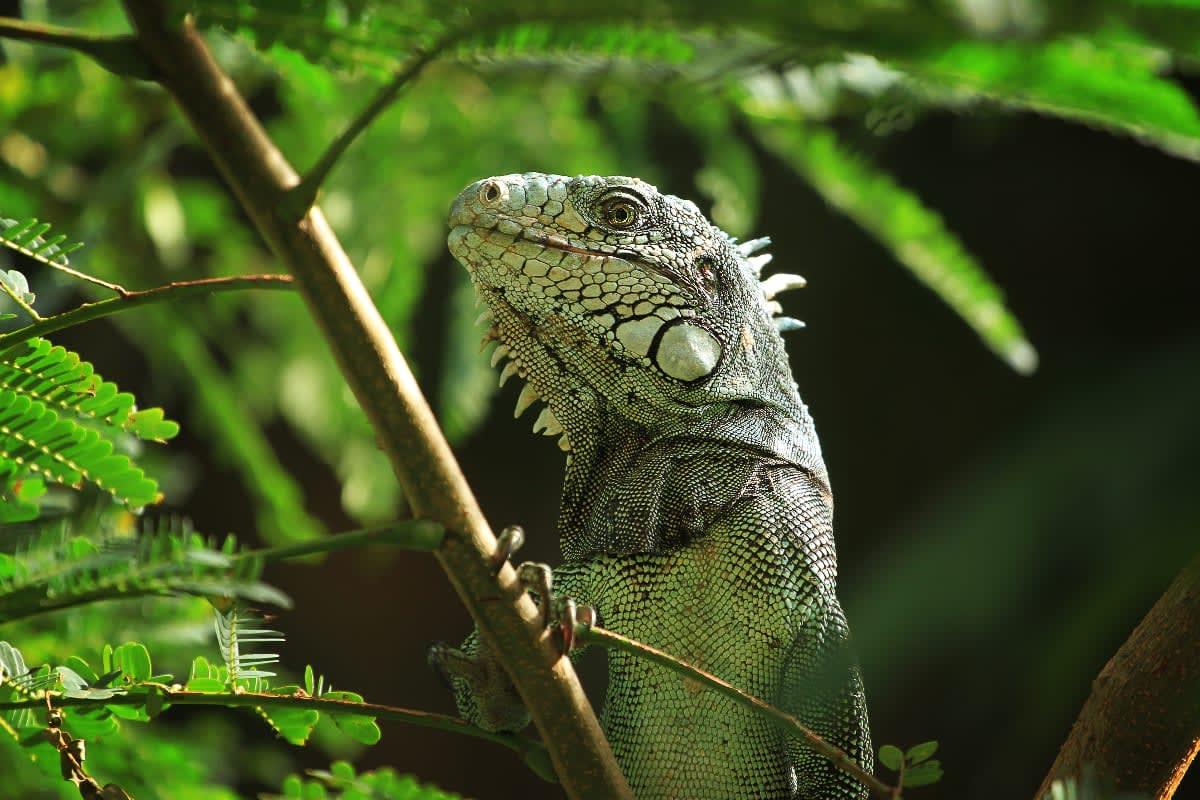
A close-up image of Lesser Antillean Iguana
The concern first emerged when the rare species that once thrived in the Eastern Caribbean had suddenly vanished. One of the main reasons behind this rapid decline was the invasion of the green or striped-tailed iguana, aka the "alien" species. These imposing lizards breed rapidly hybridized with native iguana, and pushed endangered species like the Lesser Antillean iguana towards decline. The "alien" iguanas often outcompete the rare species for food and habitat, making their lives insufferable. Researchers have found that the alien species is responsible for spreading diseases to the native species, leading to their death or debilitation. Overall, the imposing lizards are uninvited guests on a foreign land who create a nuisance at the cost of the natives.
In 2016, the main island of Anguilla witnessed a surge in the population of the invasive iguanas, raising concern among the conservationists of the Anguilla National Trust. In the aftermath, they began to relocate the Lesser Antillean iguanas that were remaining on the island, 23 to be precise, to the small islet that was thought to be uninhabitable. However, the experts feared the consequences of excessive inbreeding if only the 23 lizards of the endangered iguana species were left on the island. The conservationists didn't simply want the population to grow, but also sought to have genetic diversity. Therefore, they reached out to the Forestry, Wildlife & Parks Division in Dominica, requesting new and younger Lesser Antillean iguanas to be introduced on the island.
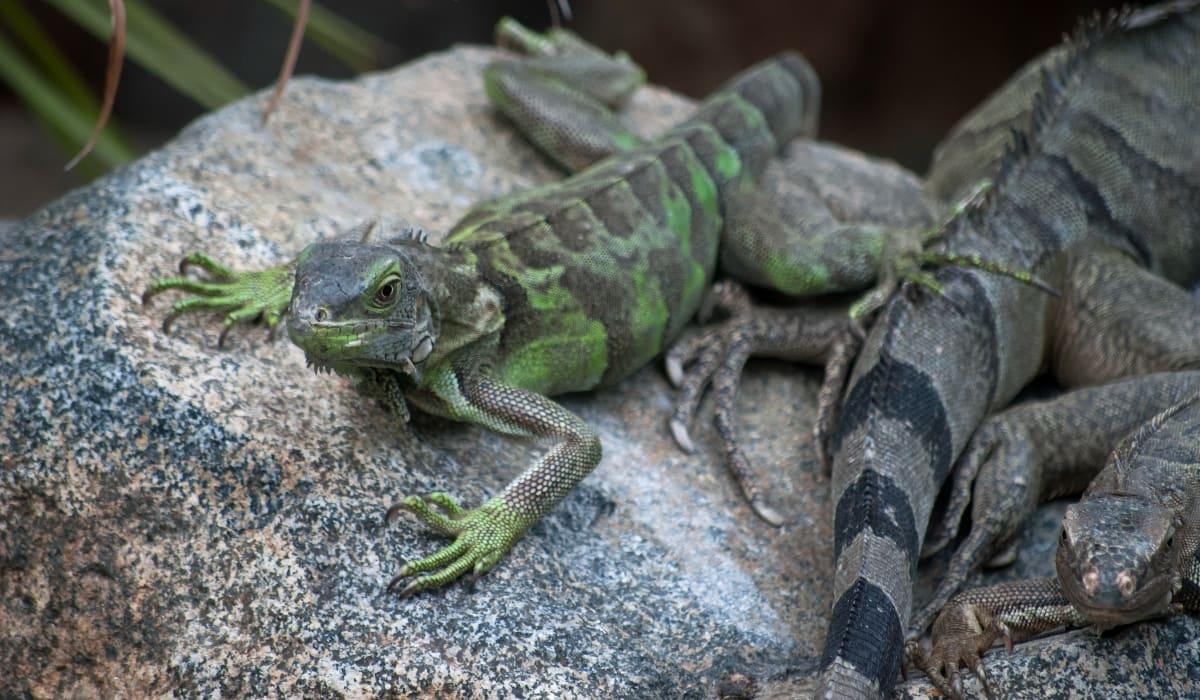
The Lesser Antillean Iguana in Aruba Island
The efforts were recognized, and the team's requests were met. Dominica's wildlife department sent 10 healthy young iguanas chaperoned by a team of conservationists. In 2021, the team and the young iguanas hopped on a plane to Anguilla, and the tiny creatures were released on the islet of Prickly Pear East to potentially find a mate and start a new life. The idea worked wonders, and Jenny Daltry, Caribbean alliance director, Fauna & Flora, and Re:wild confirmed that the endangered species population has made a comeback. “Prickly Pear East has become a beacon of hope for these gorgeous lizards—and proves that when we give native wildlife the chance, they know what to do!” he added.
As of today, more than 300 adults and adolescents of the Lesser Antillean iguana have been spotted on the island. “This is a love story not just of iguanas trying to re-establish their population, but of Anguilla’s people working to restore a part of our natural heritage,” said Farah Mukhida, executive director at the Anguilla National Trust.