
What New PFAS Standards Mean for Households Trying to Reduce “Forever Chemicals” at the Tap
The way Americans think about water quality is changing.

Published April 8 2026, 2:55 p.m. ET

When the U.S. Environmental Protection Agency finalized enforceable limits of 4 parts per trillion (ppt) for PFOA and PFOS in public drinking water, it marked a shift in how Americans approach PFAS. Per- and polyfluoroalkyl substances, often called “forever chemicals,” have moved from a niche environmental issue into a defined public health standard.
PFAS are a large class of synthetic chemicals used since the mid-20th century in products ranging from nonstick cookware and water-resistant fabrics to firefighting foams and industrial coatings. Their durability comes from strong carbon-fluorine bonds, which also make them highly persistent, allowing them to remain in soil and groundwater for decades.
That is one reason PFAS have appeared in water systems across the United States. In North Carolina, chemicals discharged into the Cape Fear River from manufacturing sites led to widespread testing and community concern. Michigan has dealt with contamination linked to firefighting foam used near military bases and airports. Similar cases in New Jersey and California show how past industrial activity still affects groundwater today.
These examples show why water quality in the U.S. is highly localized. Many municipal systems meet federal standards, but conditions vary based on geology, land use, and treatment infrastructure. The EPA’s 4 ppt limit for PFOA and PFOS sets a national benchmark, giving utilities a clear compliance target while helping households understand what regulators consider protective of public health.
That number can be difficult to visualize. A concentration of 4 parts per trillion is extremely small, often compared to a few drops of water spread across several Olympic-sized swimming pools. The EPA set the standard based on evidence that even very low levels of long-term exposure to certain PFAS compounds may be associated with health risks. Because PFAS can accumulate in the body, the threshold reflects repeated, low-level exposure over time.
As communities adapt to the new rules, attention is shifting toward how individuals can manage exposure within their homes. For many households, that begins with information. Annual municipal water reports, state environmental agency data, and independent tools such as the Environmental Working Group’s PFAS map allow residents to see where testing has occurred and how local results compare to federal limits.
At the same time, interest in point-of-use filtration has grown as a complement to municipal treatment. Experts point to several technologies that reduce PFAS, including activated carbon, ion exchange resins, and reverse osmosis. Activated carbon captures contaminants on its surface and is widely used for longer-chain PFAS like PFOA and PFOS, while ion exchange resins bind PFAS through charged materials but are often more complex to implement.
Reverse osmosis takes a different approach. Rather than attracting contaminants, it physically separates them by forcing water through a semipermeable membrane with microscopic pores. Because the membrane operates at such a fine scale, it can block a broader range of dissolved substances, including both long- and short-chain PFAS. That capability has drawn attention to reverse osmosis as a practical point-of-use option for households.
Reverse osmosis systems push water through this membrane to trap a range of impurities. While no consumer system can eliminate all PFAS variants (there are thousands identified globally), well-designed RO systems can effectively reduce specific compounds such as PFOA and PFOS by up to 98% or more. That performance has made the technology one of the most widely discussed options for household PFAS reduction.
Several manufacturers now offer reverse osmosis systems designed to bring that filtration capability directly to the kitchen sink. Waterdrop Filter is one example, producing a range of RO systems aimed at different living situations rather than a single universal solution.
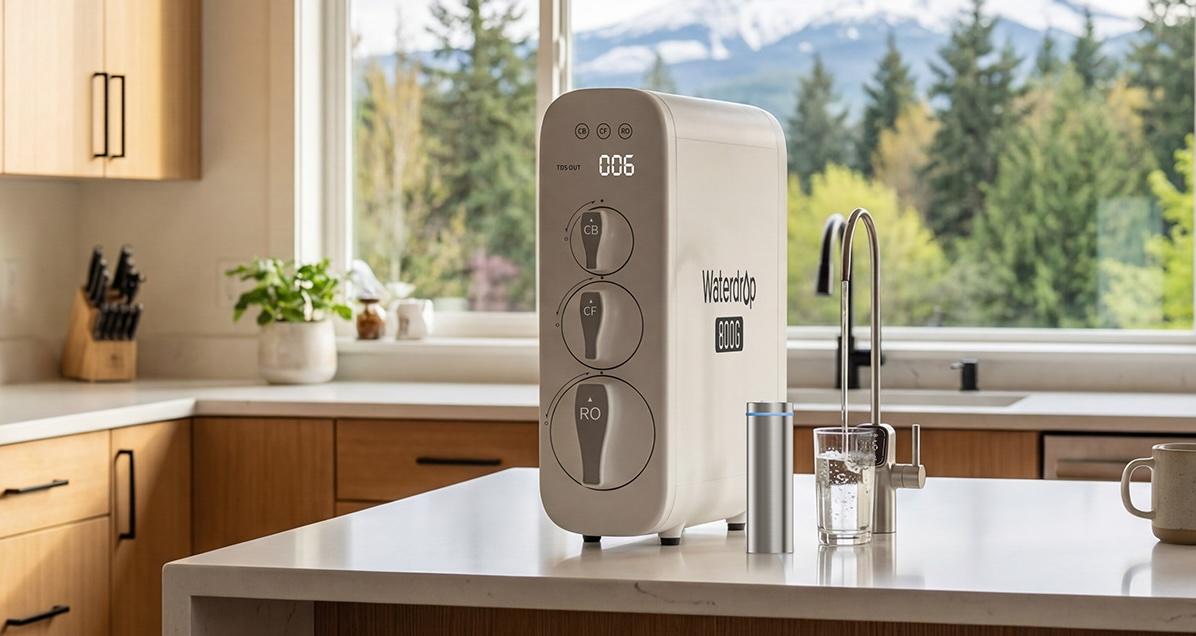
The company’s G3P800 reverse osmosis system is designed to reduce PFOA by up to 98% and PFOS by up to 99%. It filters up to 800 gallons per day with a fast flow rate that fills a cup in seconds. The tankless design saves space and improves efficiency, producing three cups of filtered water for every one cup of wastewater. It meets multiple NSF/ANSI standards and is often positioned for households seeking consistent filtration, including those with infants or older adults.
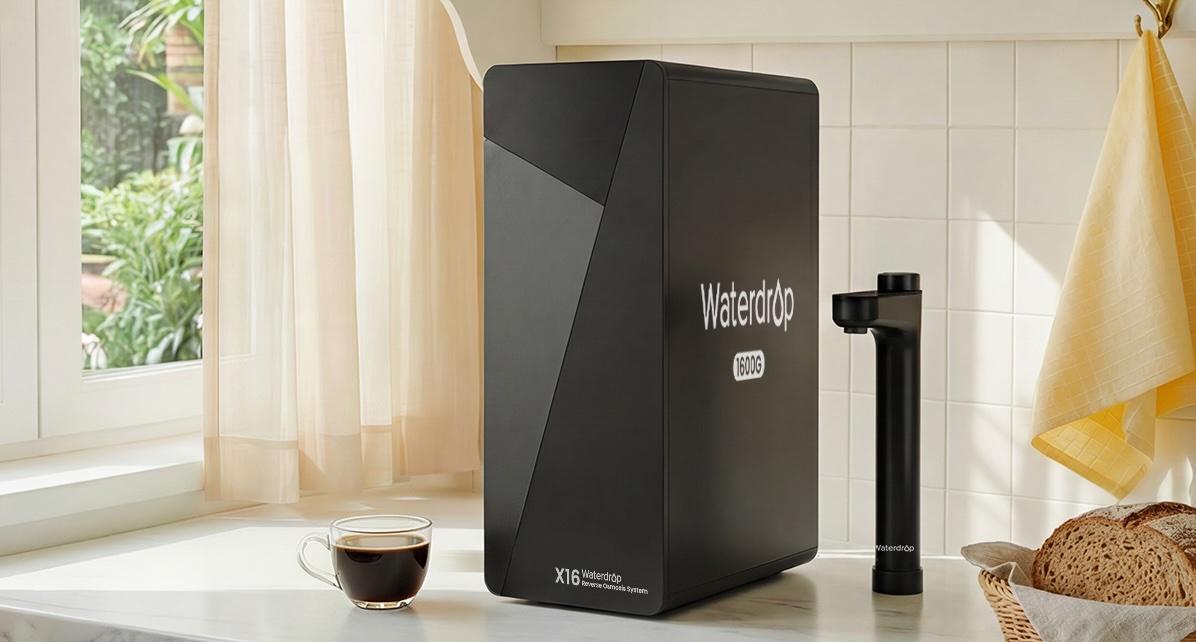
Anyone with higher water demand can consider larger-capacity systems like the X16. It is built for stronger flow performance, filtering up to 1,600 gallons per day while reducing PFOA by up to 98.88% and PFOS by up to 98.97%. The system also incorporates a 3:1 pure-to-drain ratio for improved water efficiency and includes a remineralization stage that adds calcium and magnesium to help balance pH, supporting consistent use across multiple kitchen needs without long wait times.
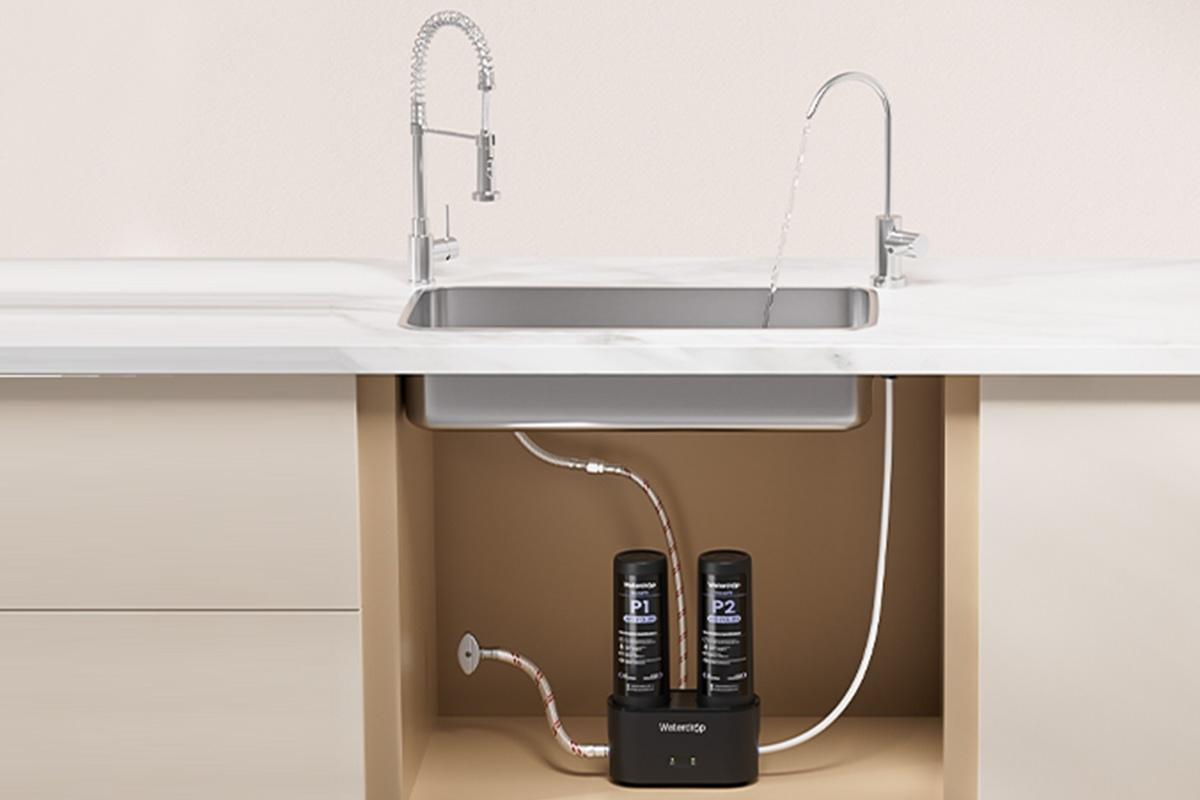
There are also options for those who don’t own their plumbing. Waterdrop Filter offers a compact undersink system (the DLG-P) designed for simpler installation. The system reduces PFOA by up to 99.7% and PFOS by up to 99.6%, and is suited for smaller apartments, renters, or households looking for a more accessible entry point to PFAS filtration.
The way Americans think about water quality is changing. Municipal treatment and home filtration are no longer viewed as competing solutions, often seen as complementary layers in a larger water safety system. Utilities establish baseline protection through regulation and infrastructure, while point-of-use technologies can offer additional reduction.
Environmental policy around PFAS will likely continue evolving as scientific research advances and remediation efforts expand. For now, the EPA’s 4 ppt limit provides a national reference point, helping both utilities and consumers navigate a complex issue with clearer guidance.
For households trying to understand their local water conditions, the most practical first step is often simply gathering information. Verified resources allow residents to enter their zip code and review available testing data. Understanding what has been detected in a community’s water supply can help guide informed decisions about whether additional point-of-use filtration may be appropriate for a particular home.