
Sustainability Isn’t a Trend — It’s an Optimization Mindset
“Sustainability isn’t about sacrifice. It’s about choosing systems that last.”

Published Jan. 30 2026, 2:57 p.m. ET

When most people think about sustainability, they picture physical choices like food, packaging, or transportation. Rarely do websites, digital advertising, or the infrastructure behind the internet enter the conversation. For Vishwas, Founder and Sustainable Growth Strategist at Everything Green Limited (EGL), that overlooked space is where meaningful impact begins.
With a background in software engineering and more than a decade working across SEO, conversion rate optimisation (CRO) and large-scale digital platforms, Vishwas saw firsthand how “invisible” digital products consume real energy. Every page load, data transfer, and redesign carries a cost. Individually small, these demands compound at scale.
That realization reshaped how he thought about growth. Instead of focusing only on speed or volume, he began prioritizing efficiency—designing digital systems that perform better while using fewer resources. For Vishwas, sustainability isn’t about limiting growth; it’s about building smarter, leaner systems from the start.
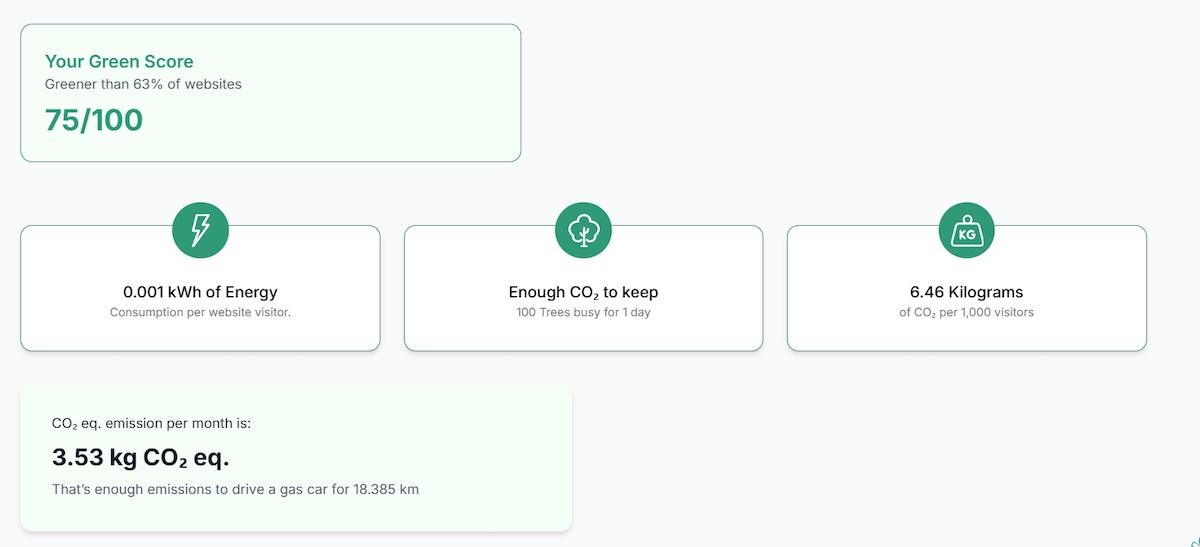
Carbon emission calculation for a website
When Personal Habits Shape Professional Thinking
Long before EGL existed, sustainability was already part of Vishwas’s personal life. He and his wife have been vegetarians all their lives, and over time, they became more intentional consumers. They bought fewer items, kept things longer, and questioned whether convenience always justified waste.
One small habit became symbolic. Vishwas has used the same everyday bag for over a decade. Not because it was trendy or expensive, but because it worked. The same thinking applied to clothing, household items, and routines.
“That’s when it clicked,” he says. “Sustainability isn’t about sacrifice. It’s about choosing systems that last.”
That mindset translated naturally into digital work. Why rebuild websites constantly instead of designing cleaner frameworks from the start? Why push more data when better optimization could achieve the same results? Why treat sustainability as a marketing message instead of an engineering problem?
The Hidden Carbon Cost of Digital Growth
As businesses race to optimize for speed, conversion rates, and engagement, the environmental impact of digital products often goes unmeasured. Websites grow heavier over time. Marketing stacks become layered with redundant tools. Advertising creatives multiply without regard for efficiency.
This is where digital sustainability becomes a business issue, not just an environmental one.
Lean code loads faster. Optimized images improve user experience. Reduced data transfer lowers hosting and infrastructure costs. In practice, sustainable websites are often better-performing websites.
Yet one of the biggest obstacles Vishwas faced when founding Everything Green Ltd (EGL) in 2021 was skepticism. Many businesses assumed sustainability meant higher costs or slower growth.
“People thought green choices were the opposite of performance,” he says. “So we had to prove that efficiency and sustainability are aligned.”
Data became the bridge. EGL focuses on carbon calculation for websites, green SEO & conversion rate optimisation (CRO) that helps businesses reduce digital carbon footprints without compromising results. The work is grounded in measurement, not idealism.
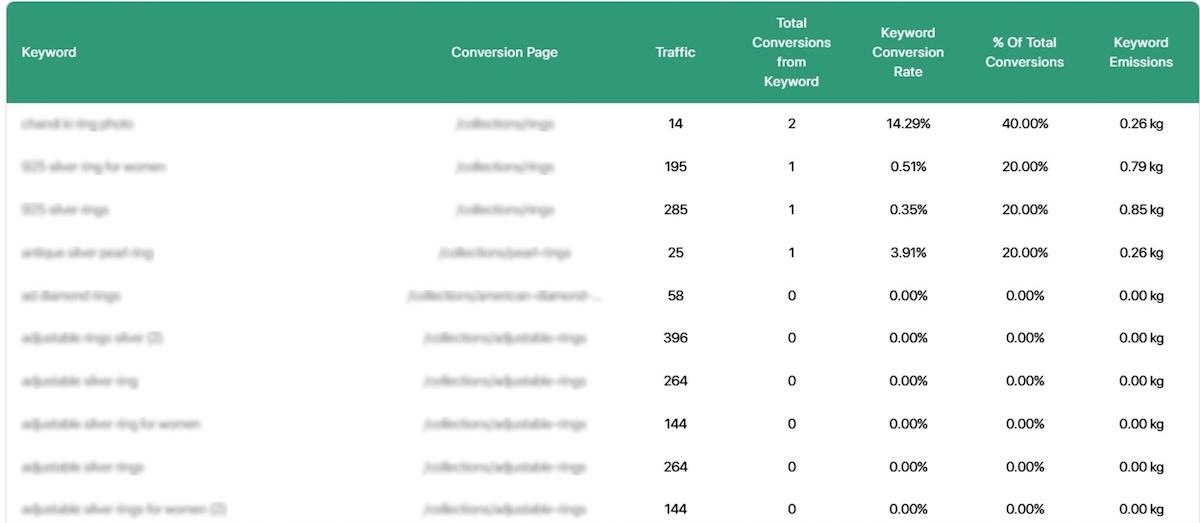
Keywords to Conversions mapping
Designing Sustainability Into Digital Systems
What sets EGL apart is its practical approach. Rather than asking businesses to be perfect, it helps them make measurable improvements. Sustainability becomes something that can be tracked, optimized, and communicated clearly.
EGL works with businesses to analyze how their websites, marketing efforts, and digital infrastructure contribute to emissions, then identifies ways to reduce waste through smarter design. That might mean simplifying page structures, optimizing assets, or rethinking how content is delivered.
Green SEO, one of EGL’s focus areas, aligns search performance with sustainability by encouraging efficient site architecture and meaningful content rather than bloated tactics. Sustainable websites are not about stripping creativity, but about intentional design.
Beyond SEO, EGL applies the same efficiency-first thinking to conversions. Its ‘Carbon CRO’ tool includes a conversion rate optimisation layer that connects keywords directly to real business outcomes, revealing which search terms drive meaningful action and which consume resources without delivering value. This level of keyword-to-conversion insight is not available through standard analytics platforms such as Google Analytics, nor through other tools currently available in the market.
By using AI to surface higher-conversion opportunities, the approach shifts focus away from traffic volume and toward intent-driven performance. The result is stronger ROI for businesses and a more sustainable web overall, where energy spent on data transfer and clicks generates measurable impact instead of digital waste.
EGL’s work in this space has received industry recognition for research and innovation in Digital Sustainability, including awards from HKQAA, ESG Xchange, and JCI Hong Kong. The recognition reflects EGL’s contribution to advancing digital sustainability as a measurable, engineering-led discipline—where environmental responsibility and business performance reinforce one another.
Why Digital Sustainability Is a Business Advantage
For founders, CTOs, marketing leaders, and product managers, sustainability is increasingly tied to brand trust and operational resilience. Customers are more aware. Regulations are evolving. Infrastructure costs are rising.
Digital sustainability offers a way forward that benefits both businesses and the planet. It encourages teams to build systems that scale responsibly, perform better, and last longer.
“Sustainability works best when it’s boring and repeatable,” Vishwas says. “Not flashy promises. Just better decisions, made consistently.”
Looking Ahead
Vishwas envisions EGL becoming a global reference point for digital sustainability, helping businesses measure, reduce, and communicate their digital carbon impact with clarity. Beyond client work, he is committed to education, speaking to companies, students, and professionals about embedding sustainability into technology from the start.
The message is simple but powerful: sustainability starts with mindset. When applied thoughtfully, it leads to smarter systems, better performance, and meaningful impact.
In a world increasingly driven by digital experiences, the greenest innovations may not be the ones we see, but the ones designed to work quietly, efficiently, and responsibly behind the scenes.
Follow some of Vishwas’s work on LinkedIn.