
Research Says the U.S. Is in Danger of Being Hit by a "Mega Tsunami”
It will likely involve around 14,000 fatalities and upwards of 100,000 injuries.

Published Dec. 22 2025, 5:47 p.m. ET

Depending on where they hit, the most destructive force of an earthquake may not lie in the destructive shaking on land. Instead, it's often found in the way that it causes the depths of the ocean to rumble and rock, creating massive tidal waves known as a tsunami.
These waves can produce some of the most destructive forces imaginable, with prior mega tsunamis sending waves on shore that reached nearly 2,000 feet in height. And that's something that experts think could be on the horizon for us.
A 2025 study indicates that there's a massive fault line near California that is way overdue for some action. When it wakes up, experts say that the U.S. could be looking at a disaster of epic proportions, and it could be made even worse if climate change continues to cause sea levels to rise.
So, what fault line is causing all this angst? And where do the experts think the U.S. will see the most destruction? Keep reading to find out what the study says about the U.S. mega tsunami.
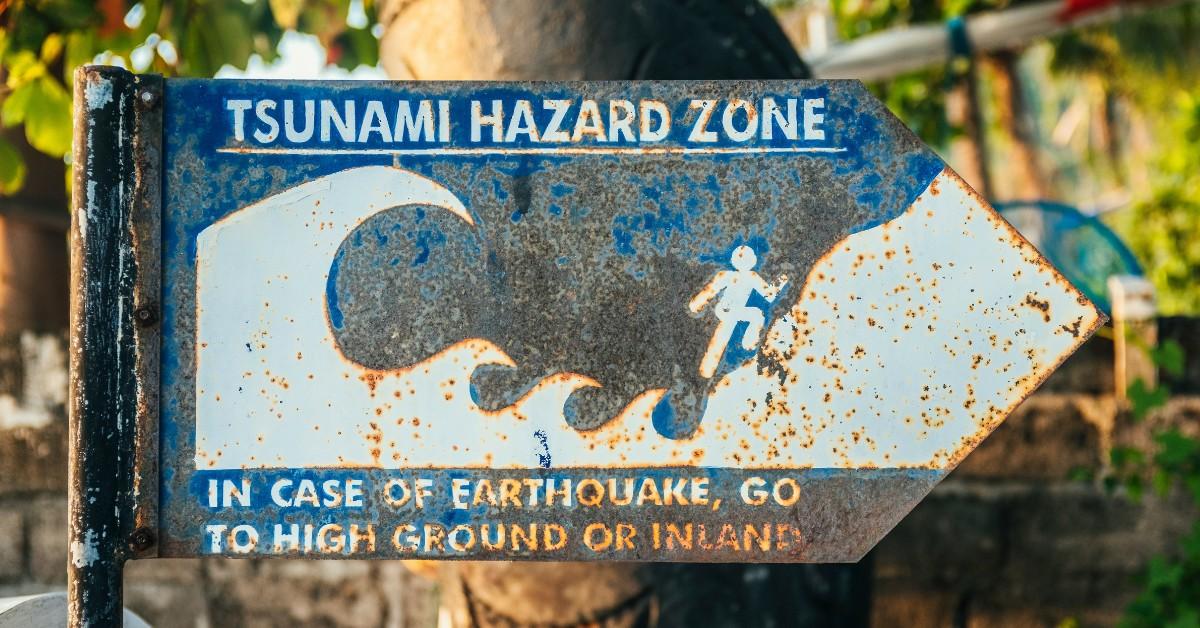
A study says that a 100-foot mega tsunami could hit the U.S.
An April 2025 study published in the Proceedings of the National Academy of Sciences says that the Cascadia Subduction Zone has been lying dormant for 300 years. The zone spans from northern California to British Columbia, which amounts to between 600 and 800 miles long, according to the state of California.
The study estimates that the wave could be as large as the one that hit on Boxing Day in 2004, which killed an estimated 275,000 people across two separate continents.
When it comes time for the Cascadia zone to wake back up, the study's authors seem to believe it will be with a roar, which could come along with earthquakes that measure 9.0 or more.
And the study's authors aren't the only ones saying that the next quake out of Cascadia could be a big one. That's because the U.S. National Seismic Hazard Model says there's a 15 percent chance that the region produces an 8.0 quake (or higher) within the next 50 years, according to NBC News.
What would happen to the U.S. if a mega tsunami hit?
It's hard to imagine what is possible with a wave of water that tall and that powerful, but the experts have a few ideas, and they include the fact that it will produce the worst national disaster to ever strike our country.
So what does that look like? NBC News says it will likely involve around 14,000 fatalities and upwards of 100,000 injuries. As for the non-human losses, the Pacific Northwest would be looking at total devastation, which would collapse around 620,000 buildings.
That figure is believed to also include around 2,000 schools, and perhaps most importantly, 100 hospitals.
To prepare the region, researchers say it's time for city and emergency planners to consider how rising sea levels and shrinking coastlines will be impacted by this type of damage, and to begin building infrastructure accordingly, especially since any area impacted by this mega tsunami would likely continue to experience massive flooding during severe rain events in the future.
However, as scary as that all sounds, it's still just predictions. There doesn't appear to be any signs that the Cascadia Subduction Zone is waking up anytime soon. That being said, it would be wise to heed the warnings from the experts and to start creating future plans with this disaster in mind, since it does seem inevitable that the Pacific Northwest will eventually face a tsunami threat that the region won't be able to outrun.