
The Legal Consequences of Killing a Bald Eagle May Surprise You
“The bald eagle represents our country’s core ideals of freedom, strength, and justice."
Published July 1 2026, 1:37 p.m. ET

One of the most iconic animals in nature is the bald eagle — especially in the United States of America.
Along with being important in several Native American cultures, the bald eagle is also the national symbol of America and can be found on American logos, coins, stamps, and other items relating to the U.S. government.
So, it is no surprise that bald eagles are protected under federal law. So, what happens if you kill a bald eagle?
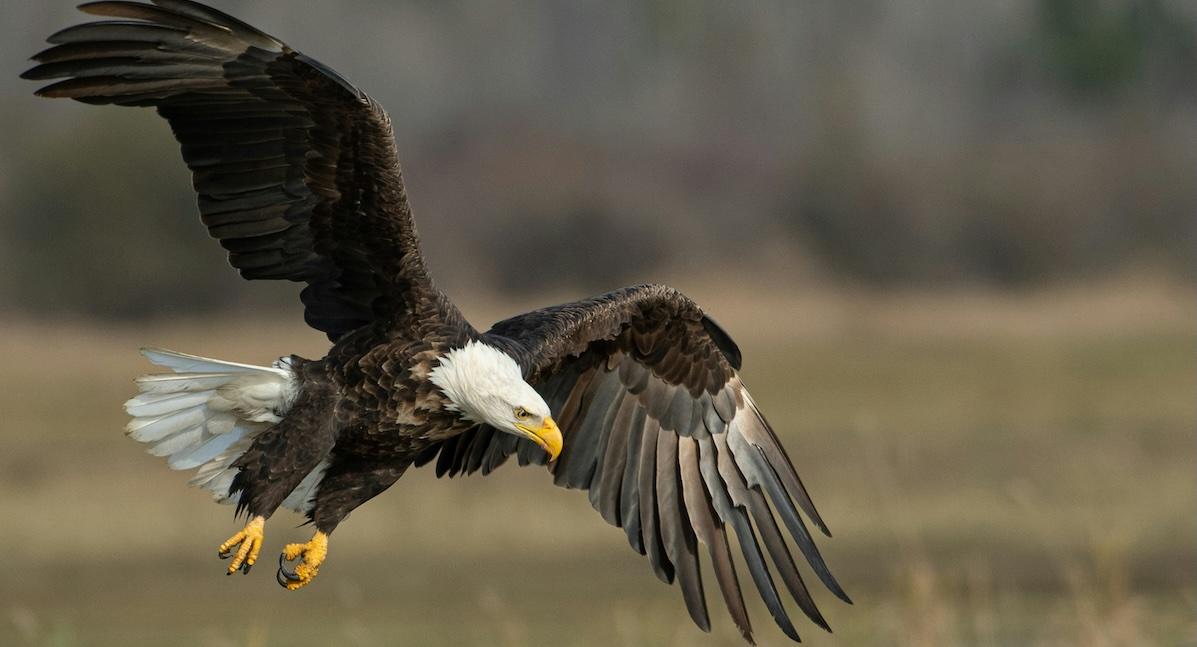
The Bald and Golden Eagle Protection Act was enacted in 1940.
According to the Bald and Golden Eagle Protection Act enacted in 1940, it prohibits anyone, without a permit issued by the Secretary of the Interior, from "taking" bald or golden eagles, including their parts (including feathers), nests, or eggs.
"The Act defines 'take' as 'pursue, shoot, shoot at, poison, wound, kill, capture, trap, collect, molest or disturb," the Act reads, per the Fish and Wildlife Service.
It goes on to specify that there are criminal penalties for persons who "take, possess, sell, purchase, barter, offer to sell, purchase or barter, transport, export or import, at any time or any manner, any bald eagle ... [or any golden eagle], alive or dead, or any part (including feathers), nest, or egg thereof."
The penalty for killing a bald eagle includes fines and possible jail time.
Per the law, "taking" or killing a bald eagle can result in a fine of $100,000, imprisonment for one year, or both. However, that is just for the first offense.
Penalties increase substantially for additional offenses, and a second violation is upgraded to a felony.
In 2024, an American man named Travis John Branson was accused of going on a bald eagle killing spree and pleaded guilty to conspiring to hunt and traffic bald and golden eagles.
He was sentenced to three years and 10 months in prison, to be followed by three years of supervised release, and ordered to pay $777,250 in restitution, according to the Department of Justice.
“The bald eagle, adopted as America’s national symbol in 1782, represents our country’s core ideals of freedom, strength, and justice. Once on the brink of extinction, eagles recovered only because of conservation efforts by the American people and federal laws protecting them. None of that mattered to Travis Branson," U.S. Attorney Laslovich said.
"Instead, Branson went on self-described ‘killing sprees’ for thousands of eagles and hawks, butchered them, and sold the parts and feathers for profit on the black market. He knew he was committing felonies and even joked his cost to kill them was the price of a bullet. But his conduct was no laughing matter."
The government estimated that from 2009 until 2021, Branson made between $180,000 and $360,000 by selling eagle feathers and parts for profit on the black market.
Bald eagles were once on the brink of extinction, reaching an all-time low of 417 known nesting pairs in 1963 in the U.S.
Now, the bald eagle population is estimated at 316,700 individual bald eagles, including 71,400 nesting pairs.