
The Lost Art of Guerrilla Marketing: Why This Founder Skipped the Ad Budget And Just 'Showed Up'
Andy Bachman says showing up still beats chasing customers through a screen, and his last-minute trip to Streamer University proved it.

Published June 24 2026, 9:05 a.m. ET

The price of finding a new customer keeps climbing. Acquisition costs have jumped 222 percent in the last eight years, Meta and Google keep raising what they charge, and for a lot of early-stage companies, paid ads have crossed the line from growth engine to money pit. Most founders respond by spending more. Andy Bachman did the opposite.
Instead of doubling down on impressions, the founder and CEO of BuzzStar reached for something most of the industry left behind years ago: guerrilla marketing.
Coined by Jay Conrad Levinson in his 1984 bestseller, the idea was simple: if you can't outspend bigger competitors, outmaneuver them. Rather than buy reach, you trade ad dollars for effort, turn up where your customers already are and build relationships before anyone else does.
Four decades later, the pendulum may be swinging back. The world Levinson wrote about barely exists anymore, but the idea still does. Social feeds are packed with AI-generated filler, consumers are increasingly skeptical of what they see online, and people seem more drawn than ever to things that feel human. In other words, the oldest part of guerrilla marketing, being there in person, suddenly feels modern again. And Bachman has seen it work firsthand.
After creator Markell Washington pointed out to BuzzStar's director of global sales, Bopeep Harrison, that Kai Cenat’s Streamer University had become one of the hottest gatherings in the creator world, the message quickly reached Bachman. By sunrise the next morning, Harrison, creator Never Miss Allie and other team members were on the first flight from Boston to Los Angeles, boxes of merch in tow.
"When your entire customer base is standing in one place, you don't sit at a laptop and buy ads to chase them later. You show up," Bachman said. "We hit the floor, demoed BuzzStar and signed up creators on the spot.” Twenty-four hours later, they did it all over again in Atlanta.
For the creator economy mogul, that kind of effort is the whole point. "We've become obsessed with scalable marketing. Meta ads. Google ads. Automated funnels," he added. "But sometimes the highest ROI activity is simply showing up."
It sounds expensive, and sure, flights and hotels aren't free. But the math behind the hustle is better than it looks. Referrals and word-of-mouth are consistently among the cheapest ways to acquire customers, and a handshake plus a live demo can stick better than an ad someone scrolls past.
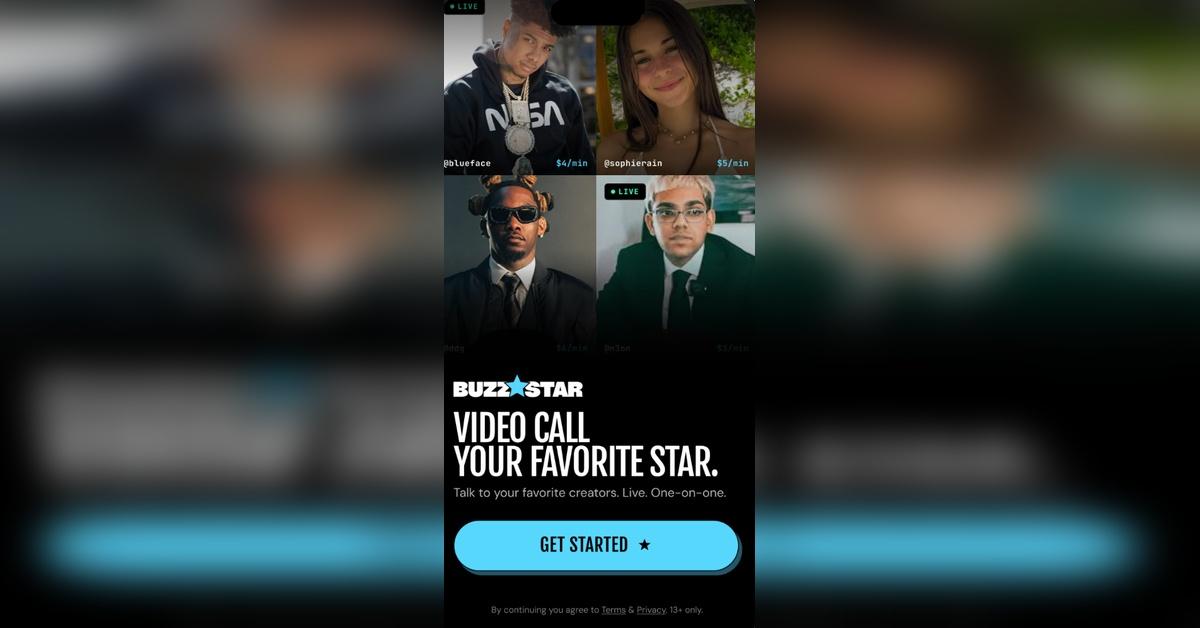
Of course, none of that matters if creators don't see a reason to join — but judging by the names already on the platform, plenty of them do. The roster runs deep with names like ACE Family founder Austin McBroom, rapper Blueface, celebrity jeweler Johnny Dang, streamer N3on and super-producer Scott Storch, who has made hits for Beyoncé and Dr. Dre.
What pulls them in is money they can count on. BuzzStar lets creators charge fans directly for one-on-one video calls, which means they earn without waiting on a brand deal, a sponsor or an algorithm to cooperate. The price is theirs to set, the schedule is theirs to keep, and the income lands without a middleman taking the first cut.
"Content can be copied and algorithms change, but the pull of wanting to talk to someone you admire never really goes away," Bachman said. "That's what we're building on."
Long before BuzzStar, Bachman grew Creators Inc. into a billion-dollar agency in the creator economy, scaling it from a laptop to more than $300 million in EBITDA without ever taking on a partner or an investor. A Babson grad and former White House honoree among the nation's top young entrepreneurs, he has been building companies since college, years before "creator" was a job title.
And if the mad dash to Streamer University proved anything, it's that some old ideas still work.
"People think guerrilla marketing means standing on a street corner handing out flyers," Bachman said. "Real guerrilla marketing is finding where your exact customer is already gathering and showing up before your competitors do."
At a time when everyone is fighting for attention on a screen, getting off one might be the smartest move a founder can make.