
A Fireball Meteor Cut a Path Across the Skies in Several Northeast States
NASA confirmed the sighting.

Published April 9 2026, 4:59 p.m. ET

While space enthusiasts across the country have been eagerly watching reports of the record-breaking Artemis II flight, something extraordinary was happening more locally.
At least, that's the case for multiple people across part of the U.S. who reported seeing a fireball streak across the sky in the middle of the afternoon. Days later, NASA confirmed the sighting, explaining that the bright light so many people saw was actually a fireball meteor cruising through the northeast.
And while it may sound rare to see a meteor during the day, and a fireball variety at that, NASA confirms that late winter and early spring may actually be the best time of the year to catch a glimpse of these celestial intruders who enter the Earth's atmosphere from parts unknown.
Curious to know what your chances are of seeing one of these bright balls of light the next time you look towards the sky? Keep reading as we explain what we know about the fireball meteor.
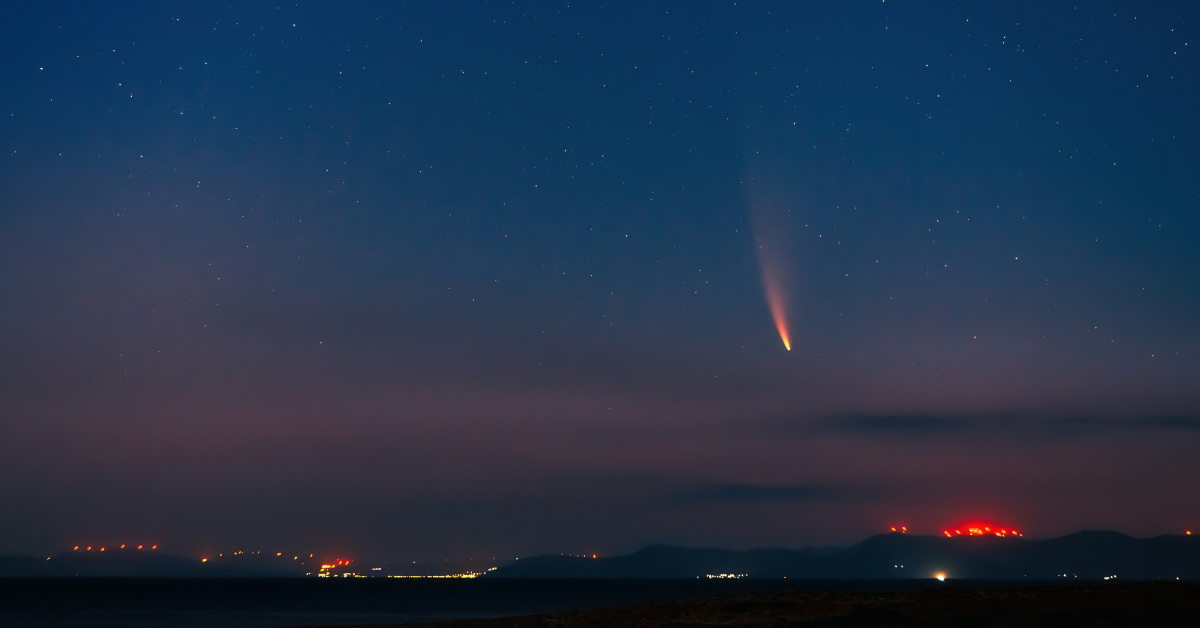
A fireball meteor was spotted in the northeast.
According to Newsweek, NASA confirmed that several people had reported seeing a fireball flash across the sky. “Eyewitnesses in Connecticut, Delaware, New Jersey, New York, and Pennsylvania reported a daytime fireball on Tuesday, April 7, at 2:34 p.m. EDT," the space agency reportedly said in a social media post.
Newsweek confirms that reports said that the meteor was spotted around 48 miles above the Atlantic Ocean in New York, where it was eventually clocked flying at 30,000 miles per hour.
NASA says the meteor later disintegrated approximately 27 miles above Galloway in New Jersey. Several cameras caught pieces of the bright light as it moved across the sky, including multiple dash cams that seemed to show a sliver of super-bright light following the curvature of the Earth as it moved across the sky, its tail appearing to get longer before it winked out of sight.
This isn't the first time one of these was spotted in 2026, as the start of the year is busy for meteors.
Earth has a peak meteor season from February through April.
The reason why people see more meteors during certain times of the year is that the planet has a fireball season, according to NASA. That season typically runs from February through April, and the number of sightings of fireball meteors can increase by 10 to 30 percent during the peak of the season.
NASA says the reason this happens more frequently during this time of year is still up for debate, but the agency says that the planet may just pass through more debris fields at this time.
Another reason NASA says we may "see" more meteors during these months has to do with the fact that there are more cameras around to catch sightings of the things that we may not have known about before, which is especially true of doorbell and dash cams.
Fortunately though, humans don't have much to fear about these passing fireballs, since their fiery appearance is often all we see of them as they burn up in the Earth's atmosphere before having a chance to touch down anywhere.