
New Dietary Guidelines Include Alcohol Intake Recommendations
The new guidelines do not offer a distinction between alcohol guidance for men and women.

Published Jan. 8 2026, 4:45 p.m. ET

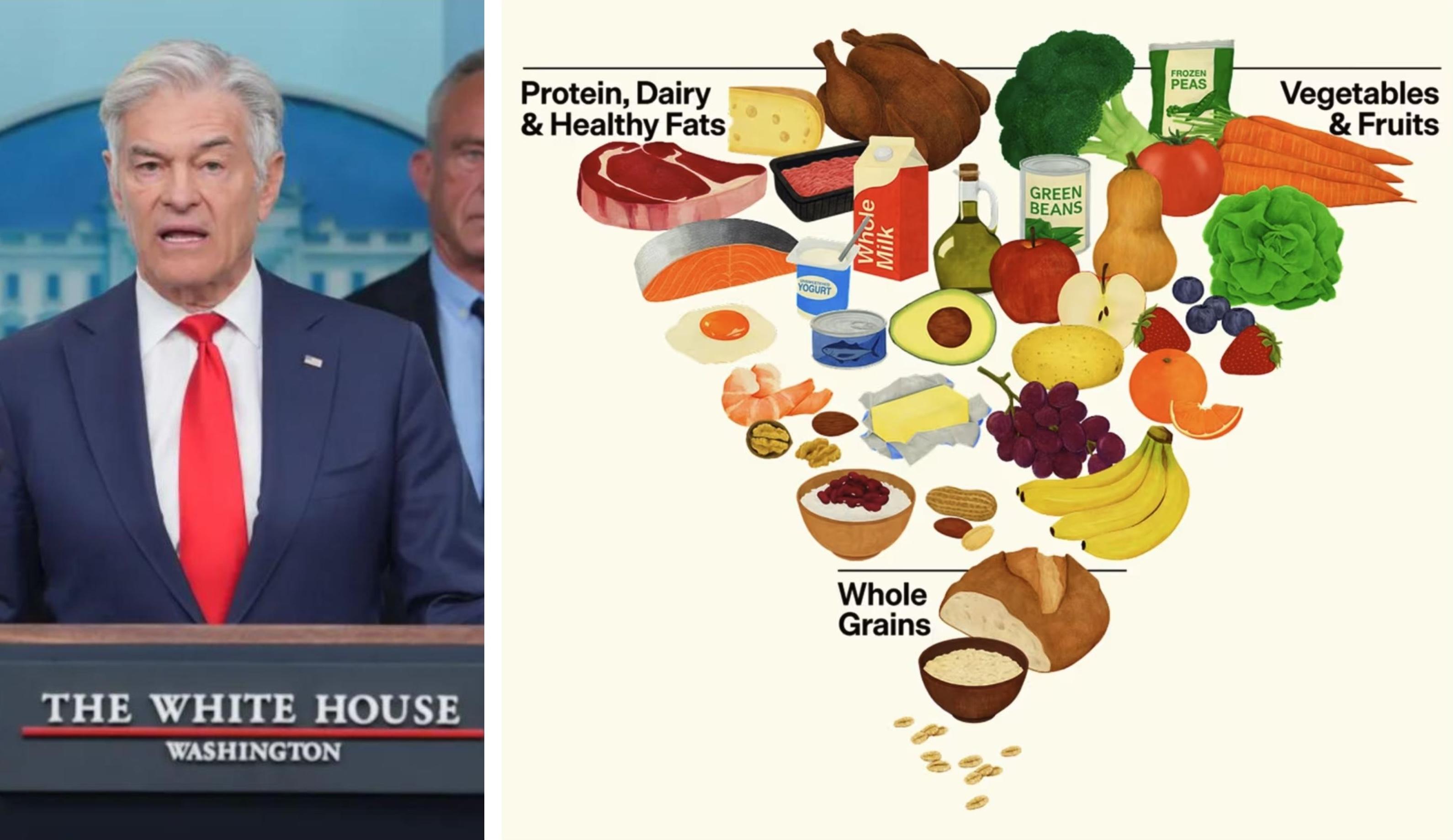
Less than a year after the departure of roughly 20,000 employees from the U.S. Department of Health and Human Services (HHS), a new set of Dietary Guidelines for Americans has been announced by HHS Secretary Robert F. Kennedy, Jr. The guidelines are accompanied by a reshaped food pyramid that encourages greater consumption of animal-based foods.
There is also a noticeable difference in how the consumption of alcoholic drinks are recommended.
Below, we make sense of the changes to the Dietary Guidelines, the food pyramid, and how the Trump Administration now views the consumption of alcohol. With so many changes forthcoming, buckle in for a bumpy ride through what's generally considered healthy and what has been obfuscated in order to distract from RFK's alliances with the meat and dairy industries.
The Dietary Guidelines for Americans contain new alcohol intake guidelines.
Per ABC News, the new Dietary Guidelines simply advise Americans to limit their alcohol consumption.
Additionally, per the report, "The new guidelines also do not make a distinction between alcohol guidance for men and women, though scientific research has shown the sexes metabolize alcohol differently."
Previously, as The Hill reports, the recommendation on alcohol intake was "one drink or fewer daily for women and two drinks or fewer per men."
According to a press release from the House Committee on Oversight and Government Reform, an alcohol intake and health study under the direction of the Biden Administration was fraught with biases and "undermined" the forthcoming Dietary Guidelines.
Details and opinions on the new RFK food pyramid:
RFK announced an inverted food pyramid that graphically depicts animal-based foods such as chicken and steak, whole milk, eggs, yogurt, and shrimp in the top half of the pyramid. It appears the Trump Administration is cultivating a country that will one day be riddled with even more chronic diseases and cancers.
Placing the blame for the country's chronic health issues, in part, on consumer choices ignores class- and race-based obstacles.
According to an HHS press release, the new Guidelines and accompanying food pyramid have been designed to "realign our food system to support American farmers [and] ranchers." This claim attests to the heavy influence that the meat and dairy industries have over food policy.
So says Switch4Good founder and vegan Olympic medalist Dotsie Bausch, who successfully pushed for the inclusion of soy milk in the previous iteration of the Dietary Guidelines.
Bausch has spoken at length about the deleterious effects of cow's milk and the impact of dietary racism on food policy. The new food pyramid and motto of "eating real food," she tells Green Matters, reinforces the disparities that exist between those who can afford to do so, and those who cannot.
“I am not deterred in the slightest by a redesigned food pyramid or shifting graphics in the Dietary Guidelines for Americans. I’ve spent my life proving on the world’s biggest athletic stage that performance, health, and longevity are built on plant-based foods, not meat and dairy," Bausch tells Green Matters exclusively. "What truly matters is policy that protects choice, equity, and science, and on that front, we are moving forward."
Bausch worked extensively alongside Animal Wellness Action and the Center for a Humane Economy President Wayne Pacelle to get Congress to pass a bill that will provide plant-based milk options in public schools. This forthcoming law will be unaffected by the new food pyramid and Dietary Guidelines.
"The plant-based milk provisions secured through the FISCAL Act provisions remain intact and untouched by this news, ensuring that students and families can continue to access nutritious, non-dairy options in the lunch line and at home," Bausch said. "That progress is real, it’s durable, and it reflects a future where our food system finally catches up to what athletes, doctors, and millions of Americans already know: plants fuel strength, resilience, and health for all.”