
Jackie Knight: Building Characters From the Clothes People Forget They Are Wearing
Published Oct. 5 2026, 1:43 p.m. ET

The costume designer and stylist brings an art-world eye to screen work, using real-life references and character-first research to make wardrobe feel observed rather than arranged.
Jackie Knight has a habit that would only make sense to anyone who has ever been distracted by a stranger’s coat.
She notices people. Not in the polished, fashion-week sense. More in the way someone tucks their tie into their shirt before eating. The way an older jacket hangs better because it has been worn past stiffness. The way a person’s shoes say they had somewhere practical to be before anyone thought to look at them.
That is where Knight’s work often begins. Before the racks. Before the fitting room. Before the actor steps in front of the camera.
“I am interested in what people wear when they are not trying to perform,” Knight says. “Those choices can tell you so much about who they are.”
Knight is a costume designer and stylist whose work spans commercials, film, music videos, and narrative projects. She has worked on projects for globally recognized brands including Instagram, Apple, Amazon, Ford Motor Company, and OVO, and styled a Drake music video that has been viewed more than 11 million times. Her credits place her inside a fast-moving industry, but her method is deliberately slow-looking.
She builds characters by watching the world.
Many stylists begin with online references, and Knight uses them too. But she does not want a character to feel assembled from a search result. She gathers ideas from real people, real streets, real combinations that would be too odd or too personal to appear on a mood board unless someone saw them first. She has talked about taking photos of outfits that catch her attention while traveling and moving through cities, then using those observations to build reference books for her work.
“The internet can give you a version of style that has already been flattened,” she says. “The best dressed people are rarely photographed.”
That difference matters in costume design. A character who looks styled can feel thin. A character who looks dressed can feel alive.
Knight is drawn to that line. Her work is character-driven, but not in a heavy-handed way. She is not trying to explain everything through clothing. She is trying to leave the right evidence. A sweater that feels sentimental without being precious. A bag that looks like it has survived more than one job. A color choice that says confidence on one person and armor on another.
The clothes do not have to announce the backstory. They only have to make the backstory believable.
“I like when wardrobe feels like it has been chosen by the character, not by me,” Knight says. “Even if I made every choice, the audience should feel like the person had a life before the scene started.”
That way of thinking did not come only from costume training. Knight originally studied curating and criticism at OCAD University after leaving a costume design program at Dalhousie. She went on to work as artist Shelley Adler’s assistant and at Franz Kaka gallery. The art world gave her a vocabulary for image-making, but also a respect for context. A painting is not only paint. An object is not only an object. A garment, in her hands, is not only something an actor wears.
“My background in art still informs everything,” she says. “I think about the concept first. What is the idea underneath the clothing? What is it doing in the world of the project?”
That art-world foundation also helps explain why Knight resists the idea that styling is frivolous. She admits she once misunderstood the job herself. From the outside, it can look like shopping and a good eye. Inside the work, she found something more exacting: creativity, problem-solving, and vision.
“I used to think it was much simpler,” Knight says. “Then I learned how much labor sits behind something looking effortless.”
That labor has carried her into campaigns and projects that have been covered by industry publications including Little Black Book, Ads of the World, Shots, Ad Age, and The Drum. Production companies and directors return to her because she is not just pulling clothing. She is building a visual argument that has to survive the camera, the edit, the client, and the story.
Commercial work has sharpened that skill. A commercial does not always have the luxury of time. It may need to suggest a family history, a profession, a personality, or a whole emotional world in a few seconds. Knight likes that pace. She likes the quick turnarounds, the shifting ideas, and the demand for immediate clarity.
But quick does not mean careless.
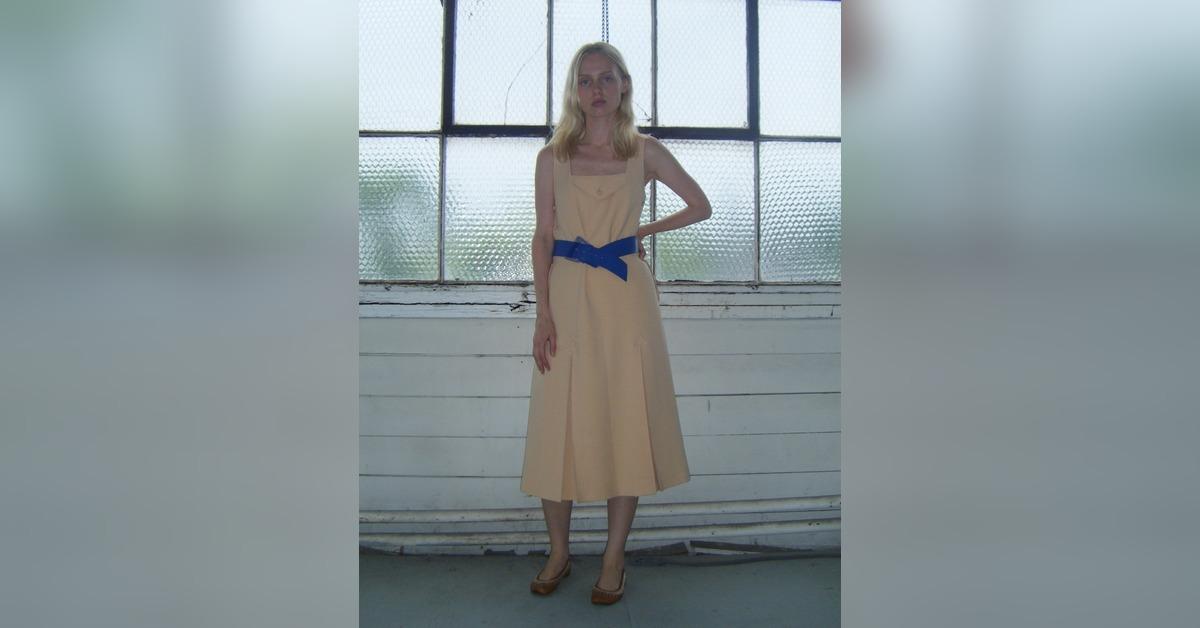
In the best commercial wardrobe, the viewer understands something before they can name why. The father’s shirt feels like it has been through years of mornings. The teenager’s outfit feels chosen against someone else’s opinion. The small accessory says the character has taste, or nerves, or a private joke no one else in the scene knows about.
That is the quiet work Knight is after.
“I steer away from overdressing people,” she says. “I have always felt like I'm in a costume when I overbuild my own outfits, so I carry that mindset when I'm building characters. Sometimes an old button or grass stains can be enough. You have to trust the audience's interpretation”
Her love of analog process runs through all of this. Knight has described herself as someone who cherishes handmade things, vintage, uniqueness, and human stories told by human beings. She is wary of the idea that creative work can be handed too easily to computers, not because technology has no use, but because she believes heart comes from lived observation.
Her work depends on the imperfect. The too-worn cuff. The patch that looks like it was added for a reason. The outfit that should not work but does because the person wearing it has made it theirs.
Those are not details a machine notices with affection.
“Real people are strange in the best way,” Knight says. “That is what I want to protect in the work. The specificity, the oddness, the feeling that someone is more than an image.”
Knight’s next chapter may bring more feature film work, a slower rhythm than the commercial projects that currently make up much of her career. She is drawn to independent film and to the chance to live with characters longer. Still, the central impulse will likely remain the same.
She will keep looking.
At people crossing streets. At gallery workers. At the choices nobody made for an audience.
Jackie Knight builds wardrobes from those observations, but the work is larger than clothing. She is building the feeling that someone on screen could step out of the frame and continue living.