
Yellowstone’s Most Acidic Geyser Erupts After Years of Inactivity
Park officials noticed changes in the guizer in the days before it erupted.

Updated March 4 2026, 2:57 p.m. ET

Yellowstone National Park is full of natural wonder and beauty. And while the vast landscape that is home to everything from wild animals to a sleeping supervolcano is visited by millions of people every year, there's one part of the landscape that holds a special fascination for most people who come through the park: Its geysers.
The national park is home to hundreds of geysers, each with their own features and fan bases (we're looking at you, Old Faithful).
While these geysers are all unique in their own way, people can't help but find them most fascinating when they erupt. According to Yellowstone, one geyser in particular is getting a little bit of extra attention after it started erupting after years of lying dormant.
Keep reading to learn more about some of the geysers at Yellowstone, including the eruption of the Echinus geyser, which started showing off again nearly a decade after it stopped producing regularly scheduled eruptions.
Echinus Geyser erupts at Yellowstone.
Nature lovers are absolutely tickled after the Echinus Geyser erupted in Yellowstone in February 2026. The new activity was the first major eruption in over five years, according to CBS News.
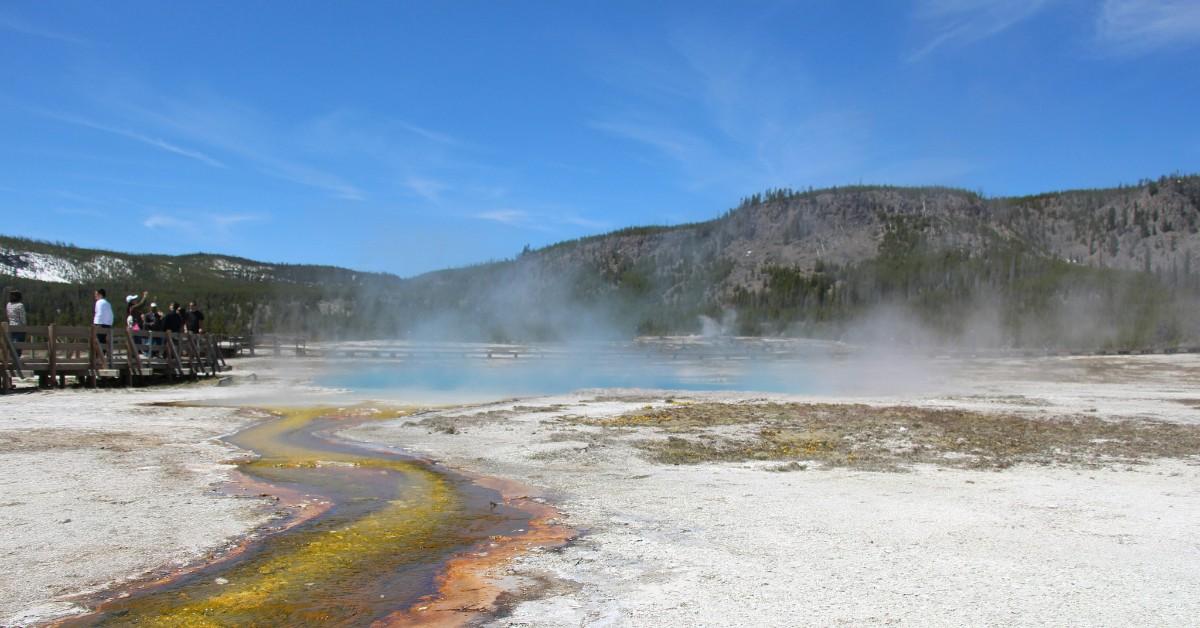
The geyser, which is the largest known acidic one in the world, spans about 66 feet across and is surrounded by a pool of rocks that closely resemble sea urchins, which is how the formation got its name. According to the publication, the geyser had been regularly active in the last half of the 20th century.
However, things began to change in the early aughts, and the nearly routine flows of water that could reach as high as 75 feet in the air stopped arriving every 40 to 80 minutes.
Then, in 2010 the eruptions waned more, with only 15 in a four-month period. They slowed even further until October 2017 when there was a spike in activity, and then things slowed to a near stop for years. However, February 2026 brought a new reign of activity, and the geyser roared back to life for the month.
While park officials are now able to monitor the temperature of the water so they can track the activity that typically comes right before an eruption, they tell CBS News that there's no way to know if the eruptions will continue with February's frequency, and for how long the revived action will last.
That will likely be disappointing news for those people who have plans to visit the park in the summer with the hopes of checking out the newly awakened geyser when they arrive.
Old Faithful Geyser has a webcam where you can watch eruptions.
The good news is that you don't have to travel all the way to Yellowstone to get to see the park's geysers in action. That's because some of them have their own webcams that will allow you to watch the water show from the comfort of your own home.
For example, Old Faithful and the Upper Geyser Basin have cameras pointing at them, which will allow you to become part of the action.
What's even better is that the National Park Service keeps a running schedule of the date and times the next geyser eruptions are expected, so you know exactly when to tune in to watch.
Unfortunately, Echinus Geyser isn't on that list yet, but maybe if it returns to a regular schedule, park officials will add some cameras for viewers at home.