
The Universe’s Earliest Heatwave Is a Massive Galaxy Cluster That's Growing Up Too Fast and Too Hot
Published Jan. 6 2026, 8:29 a.m. ET

Galaxy cluster glittering with zillions of golden diamond-like stars enguled in a shimmery blue halo
When a galaxy is born, it is cool and immature, much like a baby. Over the initial million years of its life or so, it feeds on the heat energy of neighboring stars and celestial objects, often getting excited by interactions with nearby black holes. Over time, the pool of gas grows into a reservoir, and the reservoir becomes hotter. Adulthood arrives, and the galaxy is then entitled to a “mature” status. However, a recent galaxy cluster scientists detected via radio telescopes defies everything they know about galaxy evolution. Dubbed “SPT2349-56,” this galaxy cluster cradles leviathan clouds rumbling with gas so hot that scientists are rethinking their understanding of the cosmos.
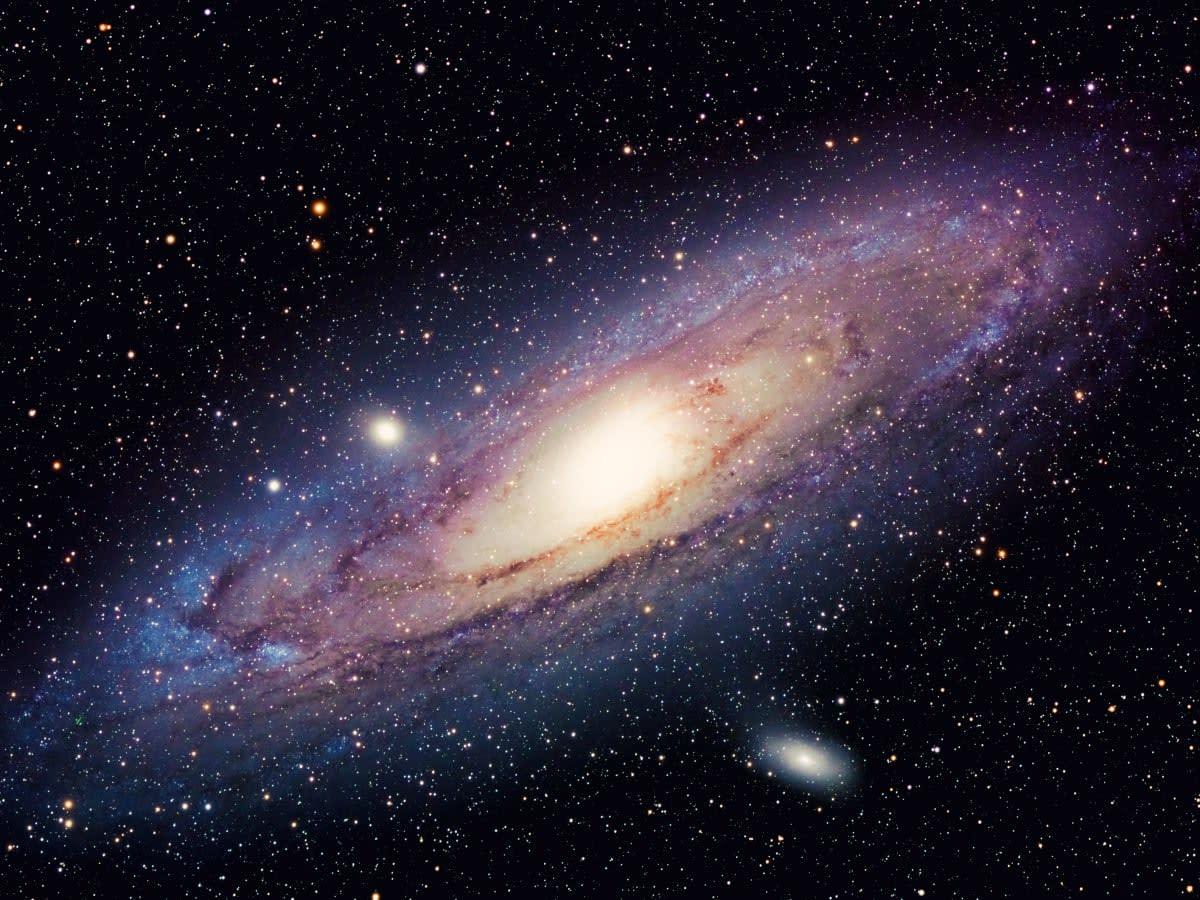
Low-angle view of a galaxy featuring a glowing epicenter, star clusters, and swirls of blue and red nebulae swirling around it
SPT2349-56 is an old soul in a modern world. In a study published in Nature, they documented that this supermassive galaxy cluster holds a faint glow leftover from the beginning of the universe, a.k.a. the Big Bang. Inside this cluster, stars are forming at a speed 5,000 times faster than anywhere observed before. As SPT2349-56 swirls around in dark space, the bounty of hot gas crammed into it makes it glow 500,000 times more intensely than the Milky Way’s halo. SPT2349-56 was first seen 1.4 billion years after the Big Bang. Given its relatively young age, scientists expected it to be cooler and less organized. In younger clusters like these, the mass and temperature are usually low. Only after a prolonged interval of heating do the clusters assemble themselves and become more energetic and hotter. As the gravity in the gas pulls neighboring galaxies towards each other, it shapes an intracluster medium, which further intensifies the energy spectrum.
SPT2349-56 was first detected in 2010 via observations from the South Pole Telescope in Antarctica. From the very beginning, signs suggested that it was unusual. Follow-up research published in Nature confirmed that despite being a juvenile cluster, it hosted more than 30 galaxies, furiously churning out stars at a whopping rate 1,000 times faster than the Milky Way. Scientists utilized a cluster of radio telescopes called the Atacama Large Millimeter/submillimeter Array (ALMA), to study this baby cluster by probing into the cosmic microwave background (CMB). Since CMB is smooth, any shadow that appears creates a contrast that the scientists measure to investigate the baby cluster.
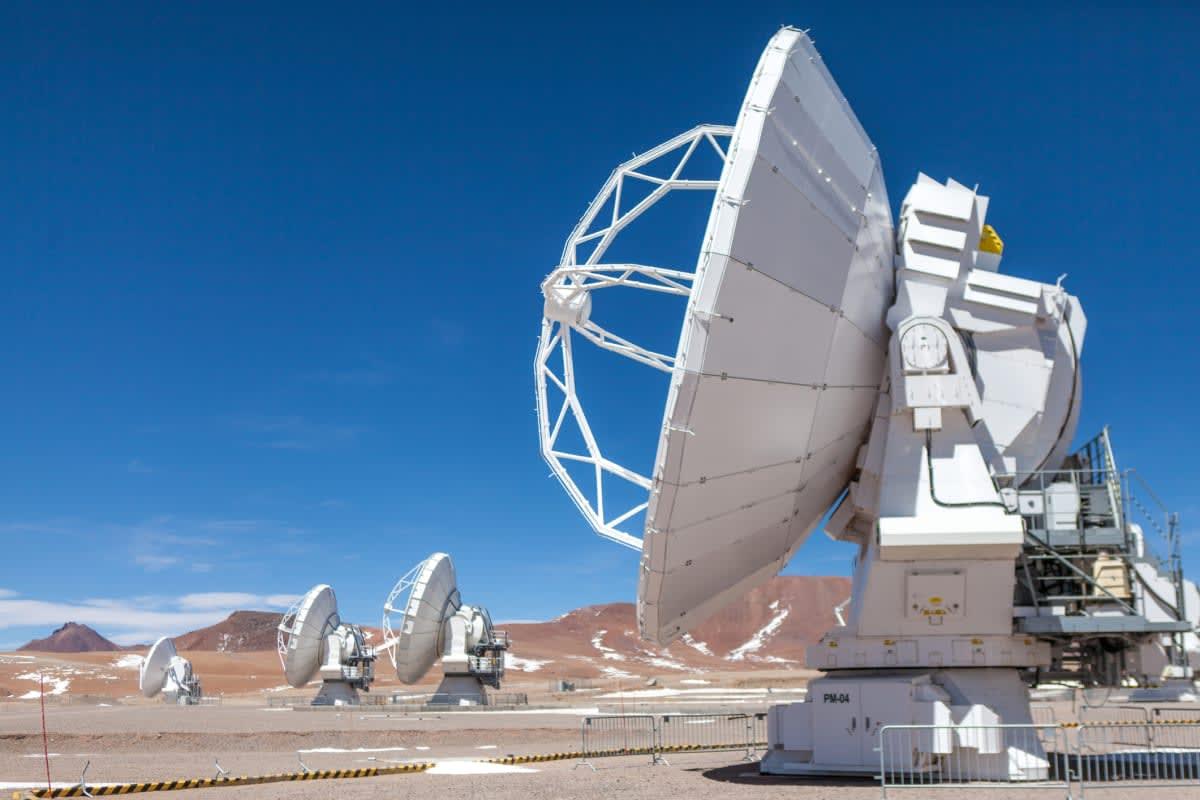
NASA's Atacama Large Millimeter/submillimeter Array (ALMA) in the Atacama Desert in Chile
“We didn’t expect to see such a hot cluster atmosphere so early in cosmic history,” said lead author Dazhi Zhou. Zhou, who led the study with a team of researchers from the University of British Columbia, said he was initially skeptical about the signal as it was “too strong to be real.” But after recurring verifications, it was confirmed that the gas is at least five times hotter than anticipated.
There could be an array of reasons why the gaseous cluster is so hot, but co-author Dr. Scott Chapman from Dalhousie University suspects that a family of black holes might be feeding it. As material gets pulled into the black holes, they release enormous amounts of energy, heating up the surrounding gas and re-shaping the galaxy cluster. This suggests that black holes might be the possible parents behind the birth and evolution of latter galaxies and galaxy clusters. That’s why studying the interactions between black holes and overheated atmospheric clouds can unravel a wealth of details about how stars form and how galaxies mature over time.
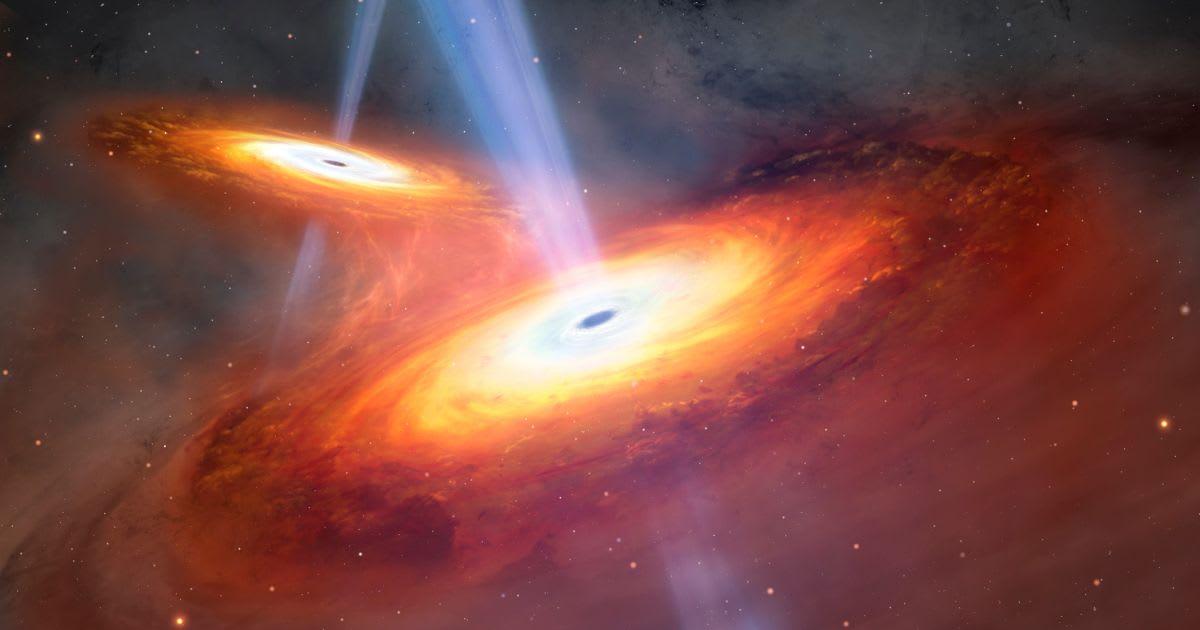
A family of black holes in a galaxy
“Understanding galaxy clusters is the key to understanding the biggest galaxies in the universe,” reflected Dr. Chapman. Zhou remarked that deciphering this mysterious process can help them understand the birth and the behaviors of young, compact star systems, down to the various events and phenomena they display on their growth trail. And while SPT2349-56 is growing up too fast, Zhou and his team are on the lookout for more hot, young clusters like this, hoping to unlock an unobserved trove of cosmic mysteries.