
Dark Energy Study Reveals the Universe’s Expansion Is Slowing Down— Could Lead To ‘Big Crunch’
Published Dec. 29 2025, 3:24 a.m. ET

Representative Image Source: Pexels | Lothar Knopp
For the longest time, the universe was thought to be constantly expanding, propelled by a mysterious force known as dark energy. However, a new finding, published in Monthly Notices of the Royal Astronomical Society, has challenged this long-held concept. A study conducted by a South Korean research team has argued that, instead of accelerating, the universe's expansion is actually slowing. "Our study shows that the universe has already entered a phase of decelerated expansion at the present epoch and that dark energy evolves with time much more rapidly than previously thought," lead researcher Professor Young-Wook Lee, of Yonsei University, said in a statement. For decades, scientists believed that dark energy, discovered in 1998, helped the universe propel itself against gravity and expand naturally.
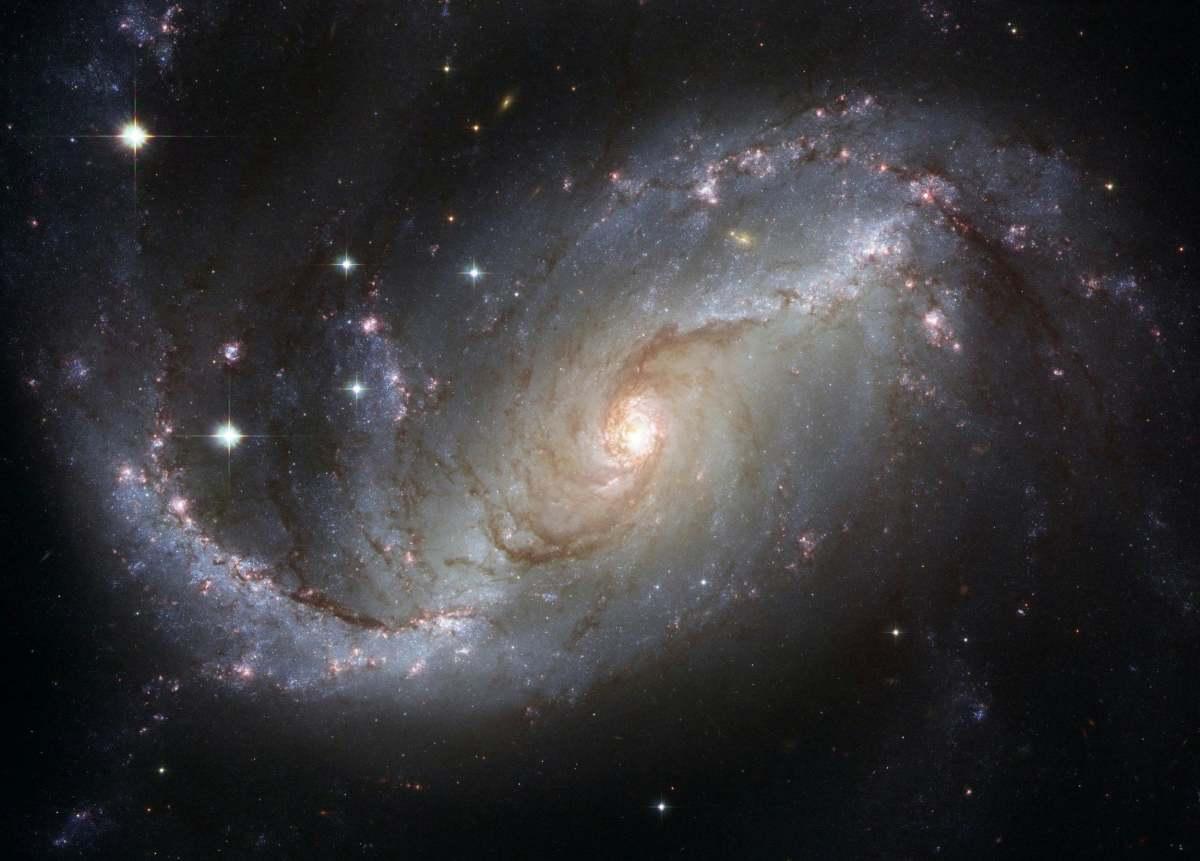
Gray and Black Galaxy.
They believed that the indefinite expansion would spread the stars so far apart that the sky would appear dark throughout and the atoms and galaxies would be torn apart. However, this scenario, known as the Big Rip, may just never occur. The new study suggests that galaxies will not move away but will be pulled together by gravity, creating a scenario that scientists have called the Big Crunch, as per BBC News. Lee explained that eventually the dark energy — the mysterious force propelling galaxies away — could be weakened, prompting gravity to regain the upper hand. "If dark energy is not constant and it's getting weakened, this will change the whole paradigm of modern cosmology," he told the outlet.
Stunning view of stars and blue-purple light in a galaxy
"The fate of the Universe will change. Rather than ending with a Big Rip, a Big Crunch is now a possibility," he added. However, the researcher asserted that which of the either scenario might occur depends on the true nature of dark energy. The controversial theory that challenges decades-old studies first emerged earlier this year when an instrument on a telescope in the Arizona desert called the Dark Energy Spectroscopic Instrument (DESI) found something unusual. DESI was built to closely study dark energy and the acceleration of galaxies, and recent data showed that the acceleration had shifted over time. "Now with this changing dark energy going up and then down, again, we need a new mechanism. And this could be a shake up for the whole of physics," said Prof Ofer Lahav of University College London, who is part of the DESI project.
A blue and gold galaxy glowing with stars and bright celestial objects
For the recent research, Lee and his team went back to Type Ia supernovae, which astronomers relied on to discover dark energy about 27 years ago. These supernovae were regarded as "standard candles" because of their uniform luminosity. However, Lee and his team argue that the brightness of these supernovae depends on the age of their progenitor stars or origin stars. They observed that supernovae from younger stellar populations have a faint shine compared to the older and brighter ones. This corrected supernovae data helps indicate that the effect of dark energy indeed weakened over time. "Our analysis — which applies the age-bias correction — shows that the universe has already entered a decelerating phase today," said Lee. The scientists are now conducting an "evolution-free test" which only focuses on supernovae in the young host galaxies across the whole redshift range.