
NASA's Hubble Captures 'Lost Galaxy' Glowing with Newborn Stars in Stunning Detail
Updated Jan. 2 2026, 8:21 a.m. ET

NGC 4535 is 50 million light-years away in the constellation Virgo. (Cover Image Source: NASA, ESA, CSA, STScI, J. Lee (STScI), T. Williams (Oxford), PHANGS Team)
Thirty-six years ago, a crew of NASA and European Space Agency (ESA) astronauts flew to space and installed a school-bus-like gadget, naming it the Hubble Space Telescope. It is currently hovering approximately 300 miles above Earth’s atmosphere. Ever since it started working, it has changed the way humans see the universe. Like a skilled detective, the Hubble Space Telescope gazes and observes a tiny patch of sky for days and weeks, collecting photons from galaxies, star fields, comets, and clusters. Its specialized light-dimming features allow it to spot the faintest of galaxies that other telescopes fail to detect. In the list of projects it has completed, Hubble’s extensive portfolio includes the discovery of an elusive galaxy. Nicknamed the “Lost Galaxy,” NGC 4535 would have lost in the dark ocean of time if Hubble had not spotted it.
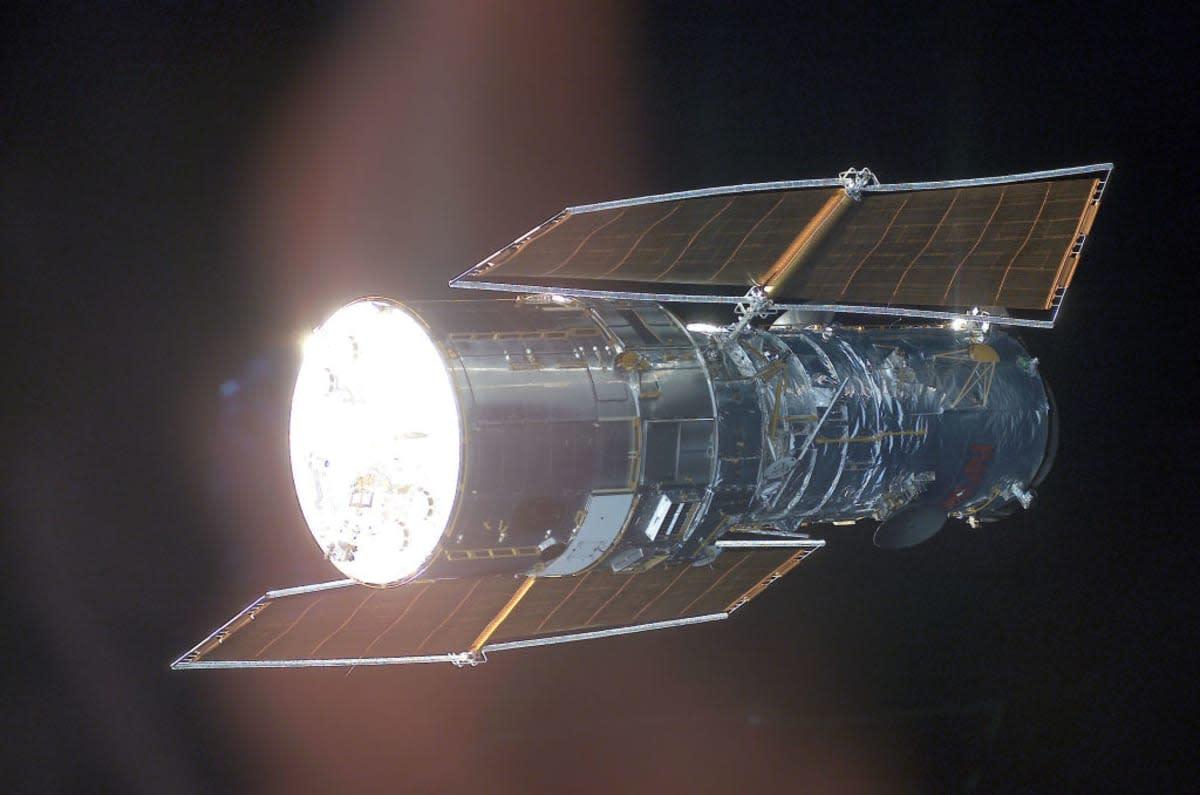
Hubble Space Telescope is backdropped against black space.
NGC 4535 is a shy, shadowy galaxy located far, far away. 52 million light-years away, to be precise. Though bustling with vigorous activity, it emits only a faint glow on the surface. Thanks to Hubble’s magnificent sensitivity, it pulled out a wealth of details hidden in faint light and brought this distant neighbour to spotlight. Hubble is studded with gold-flecked solar panels, an eight-foot mirror, and an arabesque of little-big cameras that cleverly collect light from the cosmos, break it down into colors, compress it into photographs through digital processing systems, and parcel these space images to scientists on Earth via radio waves. NGC 4535 resides in the constellation Virgo and is home to a rendezvous of starry activity.
Spread over an elliptical region, NGC 4535 features a luminous epicenter with sparkling spiral arms swinging outwards. Dancing along these spiraling arms are clusters of glittering stars burning furiously against their cool, blue ancestors. Strands of dark reddish dust are scattered throughout the galaxy’s disk, borrowing the glowing light from the disk’s center. Circling the arms are glowing pink clouds. These clouds, NASA says, are hot, gassy regions called H II (‘H-two’) marked by the presence of ionized hydrogen. They are like neon advertisements that indicate that young, hot stars are being born inside.
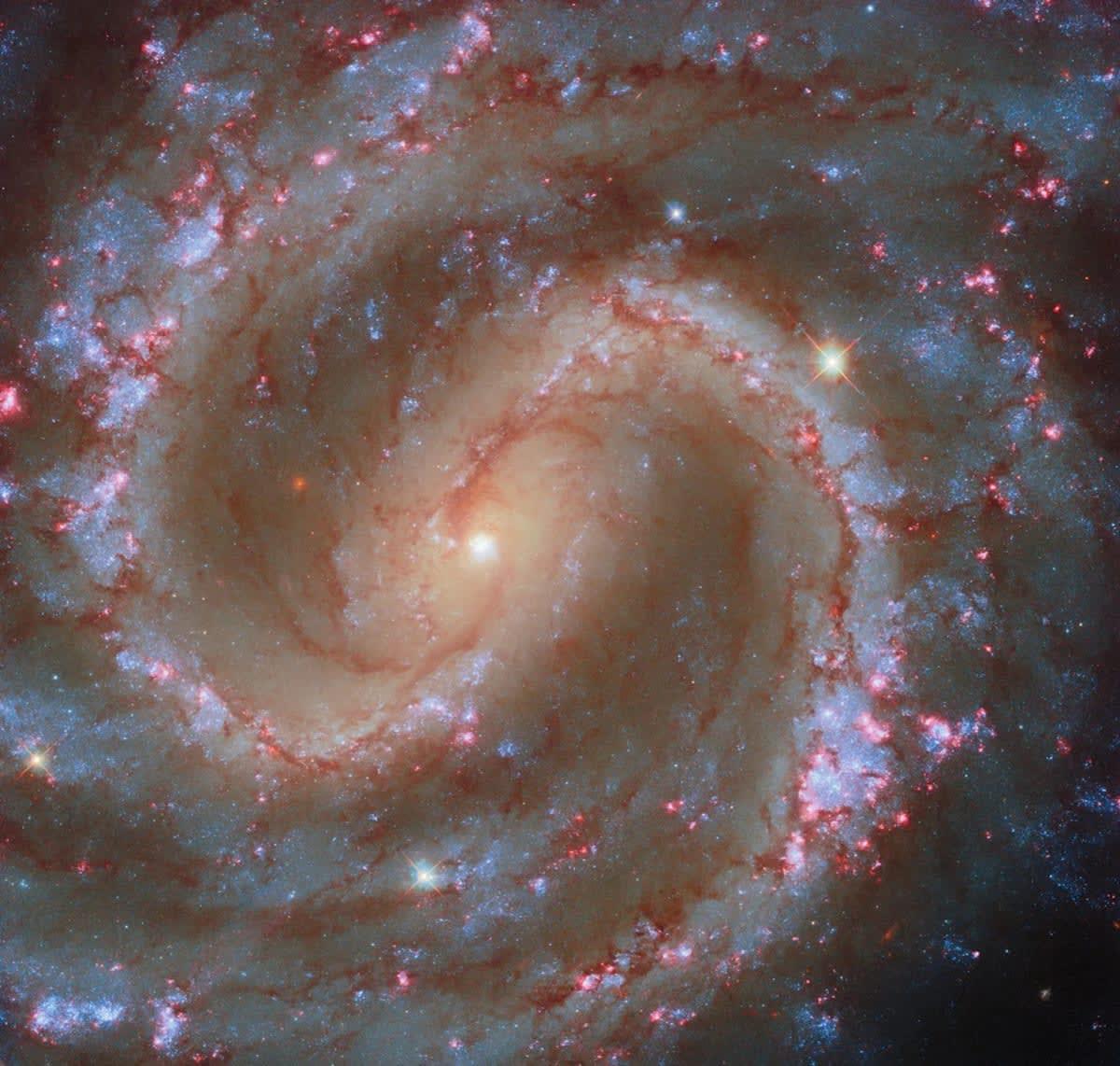
This image features NGC 4535’s young star clusters
These juvenile stars blaze with high-energy ultraviolet radiation. The waltz of their movement shakes up their surroundings, pouring out a deluge of radiation, which provokes vigorous stellar winds. Ultimately, they explode into supernovae, scattering gases into the neighbourhood, which spawns the formation of new stars. The discovery of NGC 4535 adds a new dimension to scientists’ understanding. The goal is to grasp the mysterious connection between young stars and cold gas, the raw material of star formation. How do stars form? How long does it take for them to form? How do newborn stars affect the cold gas from which they came, and how does this gas give birth to new stars? Hubble is making it easier for scientists to answer all these questions.
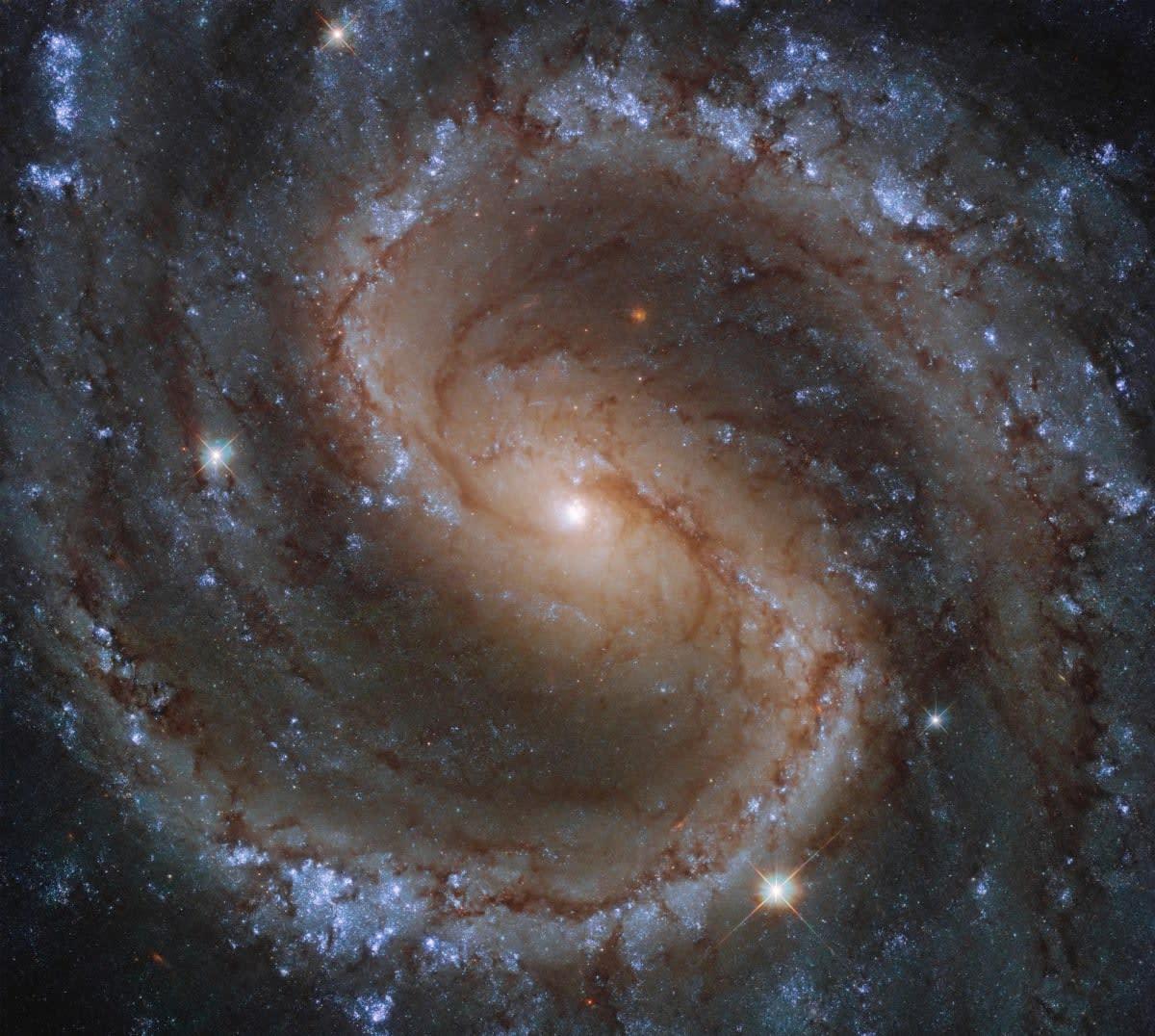
A 2021 image of Galaxy NGC 4535
The image was captured as part of the PHANGS observation project, which aims to map roughly 50,000 H-two galaxies, and so was the 2021 image (pictured above), a darker, ghostlier version of the latest picture. The latest picture adds the detail of the glowing red nebulae that weren’t detected in the earlier image. Nestled in an orange-red halo, this glowing nebula will encircle the little starry residents for the first few million years of their life, until they are mature enough to carve out their own pockets of gas where new stars may be born and rise.