
400 Rings in Nearby Nebula Provide Rare Insight Into Earliest Stages of Star Formation
Published Dec. 30 2025, 5:24 a.m. ET

A man on a road watches the Milky Way and lights the road with a flash.
The winter sky in the southeast brings some of the brightest stars on display—Orion's Belt, Betelgeuse, Sirius, Aldebaran, and Capella. While the array of bright stars is visible to the naked eye, something else resides just above it that you might not know about: the constellation Perseus. While it lacks brightness, the constellation hosts intense star-forming activity that can only be seen through powerful telescopes. Within Perseus lies NGC 1333, a region packed with young stars that rightfully earned its nickname, the Embryo Nebula, as per Live Science. NGC 1333 is a reflection nebula, which means its gas and dust shine by reflecting light from nearby newly emerged stars. Some of these stars shoot out high-speed jets of material. In a recent study published in Nature Astronomy, researchers observed a jet emerging from a newborn star named SVS 13.
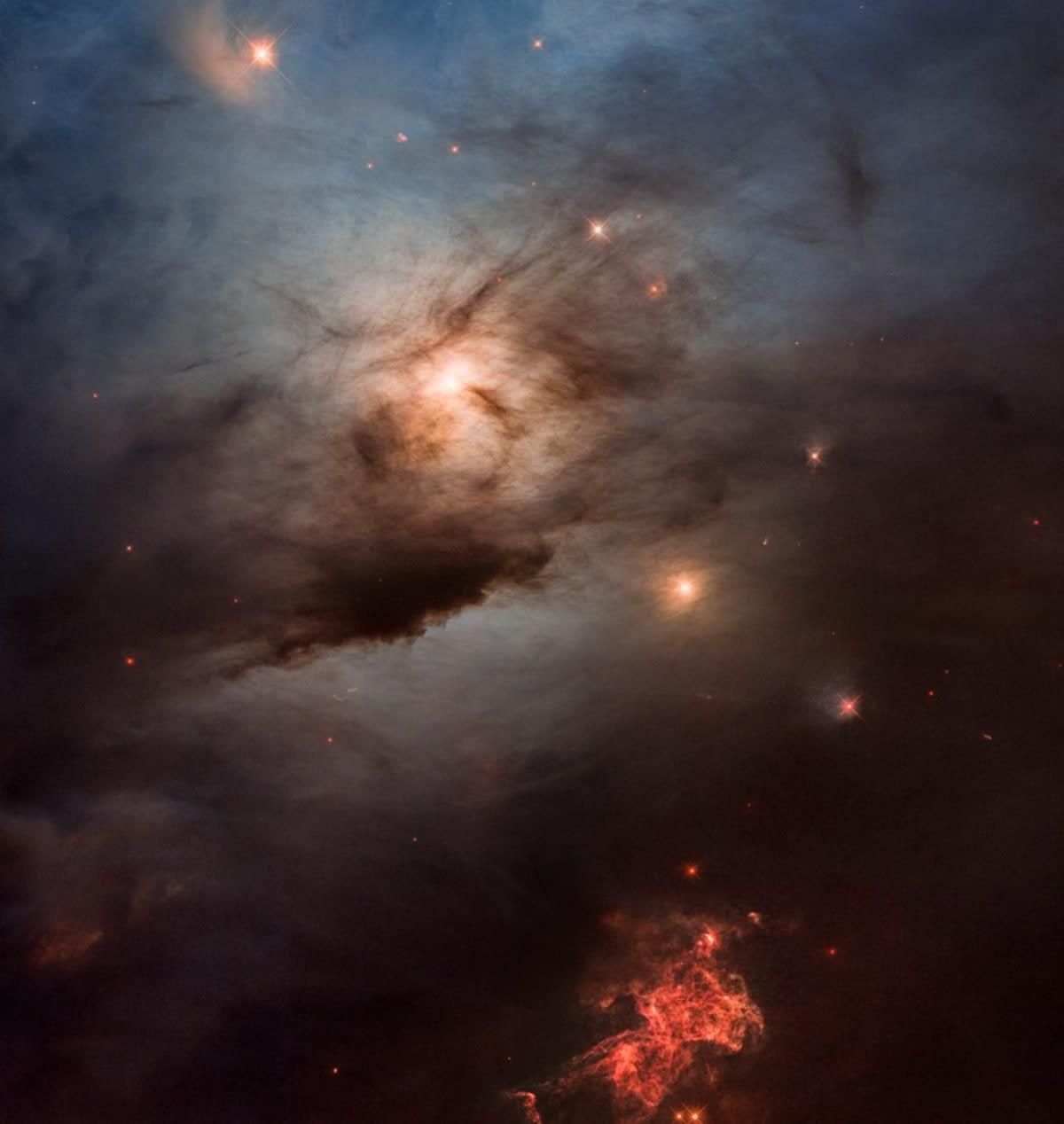
NGC 1333 photographed by NASA's Hubble Space Telescope (Image Source: NASA, ESA, and STScI; Image Processing: Varun Bajaj (STScI), Joseph DePasquale (STScI), Jennifer Mack (STScI))
The astronomers captured the most detailed images ever of the jet expulsion and observed hundreds of clear, molecular ring-like patterns. Each ring is formed in the aftermath of an explosion, giving insight into the dynamic activity of SVS 13 from its infancy. An international group of astronomers used the U.S. National Science Foundation Very Large Array (NSF VLA) to identify SVS 13 as a binary protostellar system. The system drives high-velocity "molecular bullets" and Herbig–Haro shocks, signs of powerful stellar jets, as per the National Radio Astronomy Observatory. SVS 13 is located in the star‑forming region, about 1,000 light‑years from Earth. Yet it is the nearest such star-forming region to our planet.
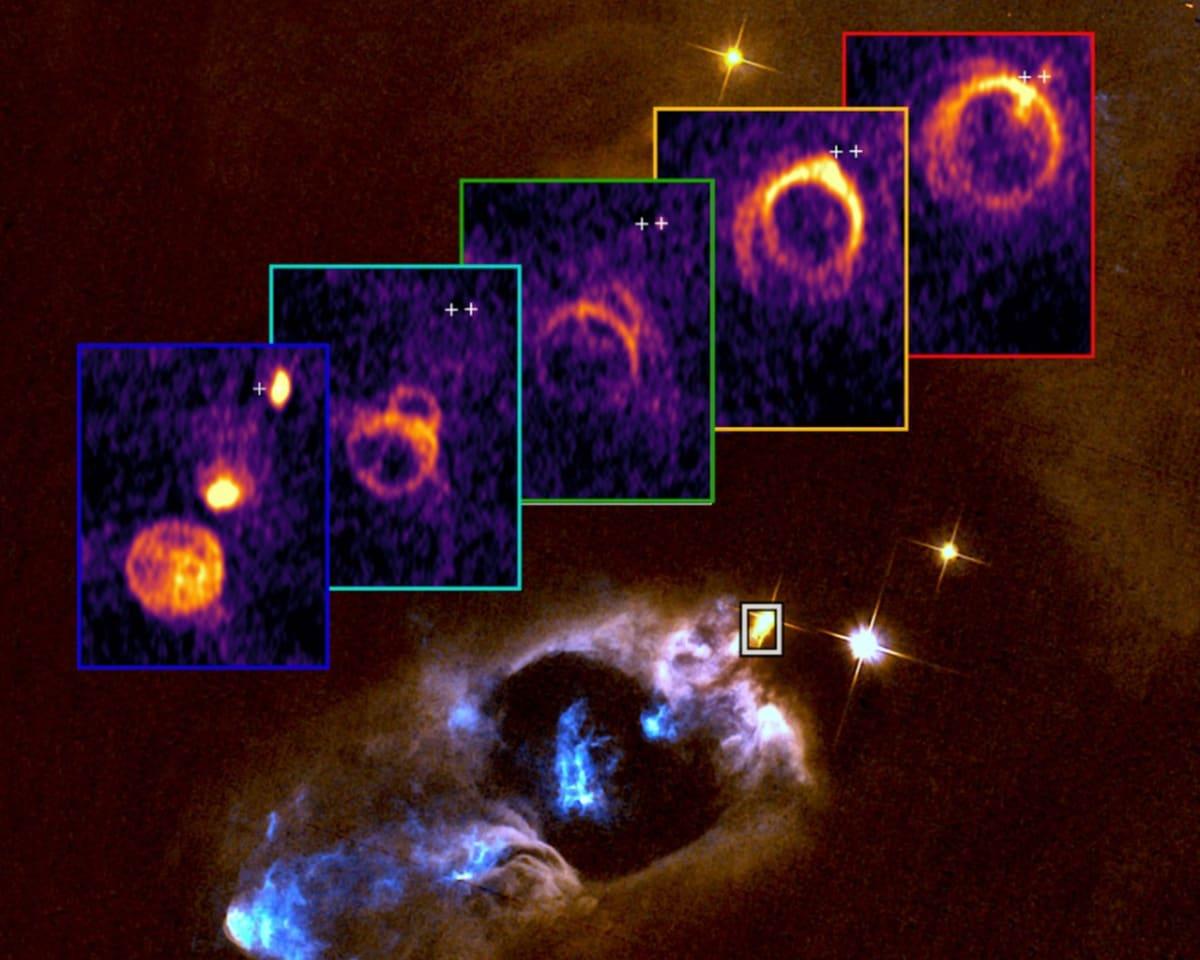
NSF VLA and ALMA reveal time stamps of star birth in dazzling cosmic jet.
"ALMA has provided a level of precision we’ve never been able to achieve before. These images give us a completely new way of reading a young star’s history," Gary Fuller, Professor of Astrophysics at The University of Manchester and a co-author on the paper, said in a statement. "Each group of rings is effectively a time-stamp of a past eruption. It gives us an important new insight into how young stars grow and how their developing planetary systems are shaped," he added. Through decades of radio observations, scientists were able to pinpoint the two young stars that power the jet: VLA 4A and VLA 4B. The new observation made using the ALMA allowed astronomers to detect a striking series of thin nested molecular rings within the jet, moving at a speed of about 100 kilometers per second or 62 miles per second.
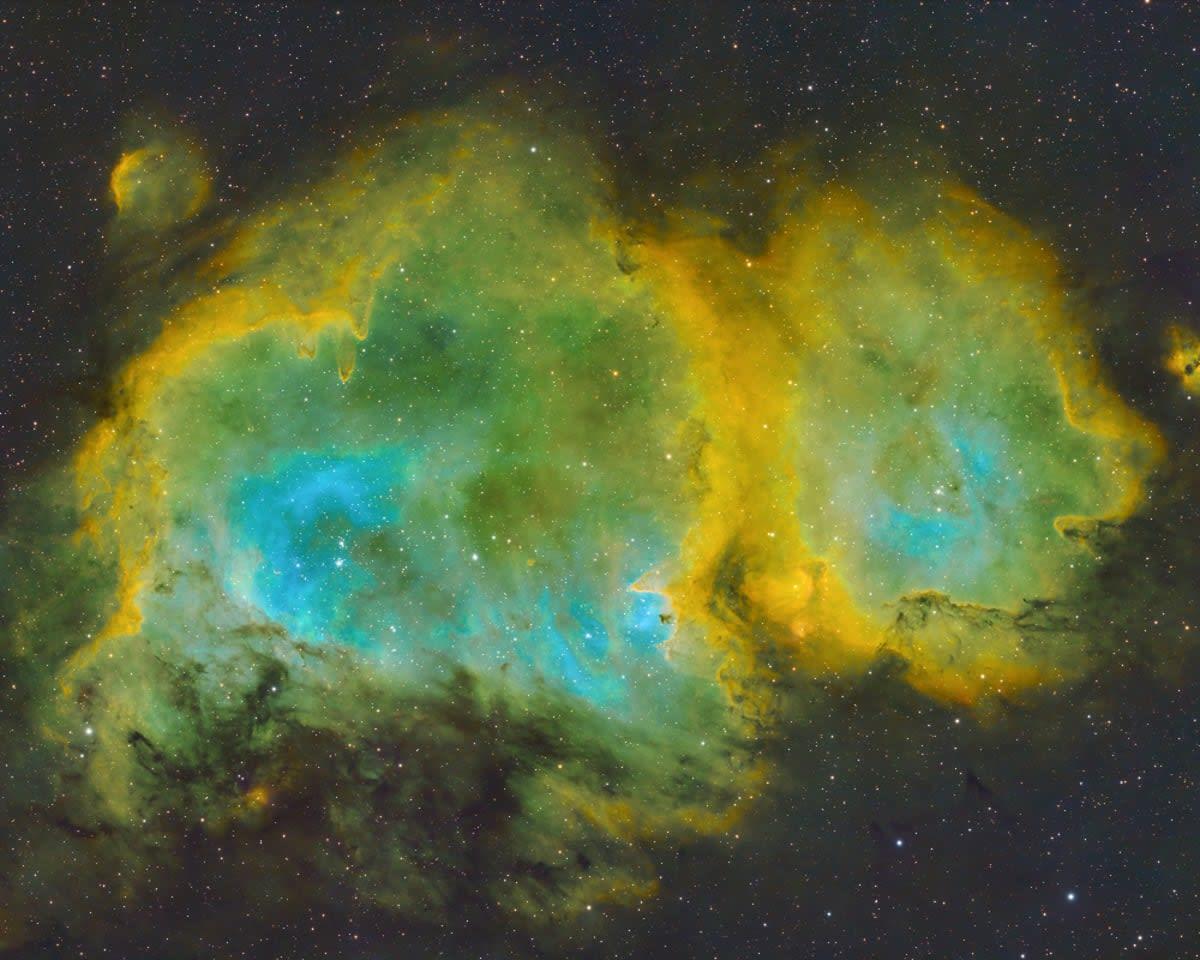
Nebula captured in the Perseus arm of our galaxy.
“Our observations show that these jets are not just dramatic side effects of star birth—they are also faithful record‑keepers,” said Guillermo Blázquez-Calero, a co-lead author of the study and a researcher at the Instituto de Astrofísica de Andalucía, CSIC. “Each sequence of rings in the jet carries a time‑stamp of a past outburst, letting us read the history of how material fell onto the young star and was then violently ejected back into its environment," the researcher added. By analyzing the 400 ring-shaped structures, the astronomers found that each ring behaves like a bow shock driven by a narrow jet. The youngest ring that dates back to the 1990s matches a known optical outburst from the star SVS 13 VLA 4B. This provides the first evidence that links bursts of material falling on a star with changes in jet speed.